256 results

This report summarizes the findings of an ICTJ research project on the contribution of transitional justice to prevention. Drawing from five country case studies, it contends that addressing the past can help to prevent the recurrence not only of human rights violations but also viole...

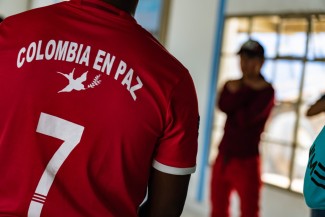
A young person with back facing the viewer is wearing a T-shirt that reads “Colombia in Peace"

To mark International Women’s Day, we invite you to read about four countries at the top of our gender justice priorities in the coming year, each with its own history, context, and complex sets of challenges.

This study explores a transitional justice approach to the dilemma of foreign fighters in violent conflict. Such an approach can help center human rights in comprehensive responses to foreign fighters, and shift the current focus from security and punishment to justice and long-term p...

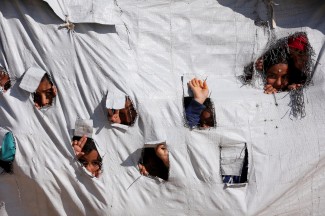
Image of Children looking through holes in a tent at al-Hol displacement camp in Hasaka governorate, Syria, on April 2, 2019.

This paper explores the challenges to uncovering the truth about the atrocities committed under the Khmer Rouge and achieving justice for victims in Cambodia. It discusses which transitional justice mechanisms are applicable and what opportunities to achieve truth and accountability e...

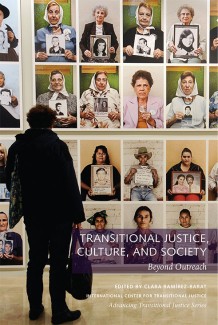
Transitional justice processes have a fundamental public dimension: their impact depends in part on the social support they receive. Beyond outreach programs, other initiatives, such as media and cultural interventions, can strengthen—or in some cases undermine—the public resonance of...

Since the Solomon Islands period of unrest, known as the tensions, between 1998 and 2003 a number positive steps have been taken through the creation of several transitional justice initiatives. These have included prosecutions for crimes committed during this period, traditional reco...

On August 20, 2009, Afghans went to the polls for the third time since the U.S.-led military intervention in 2001. Accountability and justice were underlying themes in the election, as made clear by many of the issues that attracted public attention. Nonetheless “calls for justice” re...

In February 2024, the Office of the United Nations High Commissioner for Human Rights hosted an event in Seoul, South Korea, marking the 10th anniversary of the release of the report of the United Nations Commission of Inquiry on Human Rights in the Democratic People's Republic of Korea. ICTJ Senior Expert Ruben Carranza spoke at the event and discussed lessons learned involving nonjudicial forms of accountability. In this interview, he talks about why a broader approach to transitional justice is necessary and how transitional justice measures can help promote peace and possible reunification on the peninsula.

Transitions focuses on truth and accountability. Galuh Wandita, Senior Associate for ICTJ in Indonesia, talks about a comprehensive study of truth and accountability in Indonesia.

The recent re-election of Colombia’s president, Juan Manuel Santos, brings hope to a country seeking to end a half-century of conflict. But, as with so many peace processes, finding a balance between creating a stable accord and acknowledging the terrible injustices that occurred during the conflict can be difficult to achieve.