



202 results

This briefing paper assesses the situation in Ukraine with respect to democratic reforms being undertaken in the country following the mass uprising that ousted former President Viktor Yanukovych in February 2014. It examines issues of corruption and impunity, as well as the historica...

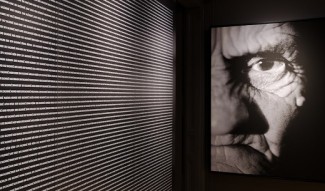
A new short documentary film “Remember Me” tells a powerful story of two young women whose fathers were disappeared during the conflict in Bosnia and Herzegovina.

ICTJ hosts human rights scholar Michael Ignatieff and UN High Commissioner for Human Rights Zeid Ra'ad Al Hussein for an online debate whether the international community is abandoning the fight against impunity.

Ahead of Pope Francis' visit to Bosnia Herzegovina, ICTJ's Communications Director, Refik Hodzic, asks the leader of the Catholic Church to actively contribute to "a genuine reckoning needed for a genuine peace" in a society still stuck in the past, even 20 years after the war.

Bosnia and Herzegovina is marking the twentieth anniversary of the Srebrenica genocide. In this Op-Ed, ICTJ's Refik Hodzic asks, can we constructively talk about reconciliation in a country still gripped by war?

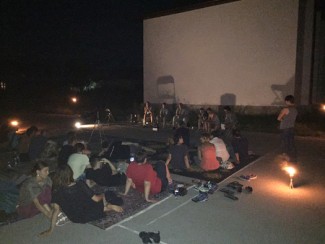
For the last three years, a group of young activists gather on the night of the 5th of August at the site of Trnopolje camp, out in the open, to reenact the way prisoners spent their night and through dialogue explore alternative ways of dealing with the past.

Some of the relatives’ stories start with the banging of a door at night, followed by a sudden abduction; others begin with a seemingly innocent citation to appear at a police station for a “routine procedure”. In any case, the stories always unfold in a desolate manner: as a loved one ...

In this analysis piece, ICTJ's Cristián Correa expresses concern about a decision by the Inter-American Court of Human Rights leaving room for interpretations that condone the use of methods for combating subversion and terrorism forbidden by international human rights law.

In this op-ed, ICTJ Vice President Paul Seils discusses how education can be used to address legacies of mass violence and dictatorship.

The intimacy of violence has left deep scars in Prijedor, Bosnia and Herzegovina. Seemingly overnight, neighbors turned into perpetrators of incomprehensible violence. Today, twenty years since the end of the war, mothers of the disappeared often live next to those who disappeared their...