


282 results

On International Youth Day, ICTJ reaffirms the importance of engaging youth in efforts to reckon with the past in societies grappling with repressive and violent histories.

In this op-ed, ICTJ's President David Tolbert urges President Uhuru Kenyatta and Kenyan institutions to take concrete actions without further delay to provide reparations for victims, tackle the struggling police vetting reform, and prosecute the serious crimes that were committed during the post-election violence.

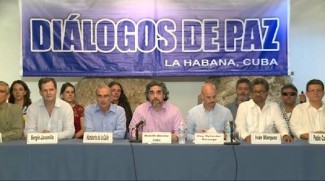
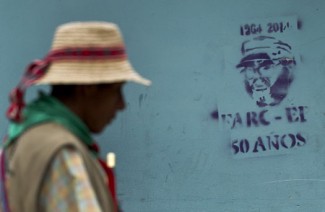
ICTJ welcomes the agreement reached between the Colombian government and the Revolutionary Armed Forces of Colombia (FARC) guerrilla group to create a truth commission, after a peace agreement is signed.

As Kenya moves closer to a climate where comprehensive reparations for victims of post-election violence are possible, ICTJ is supporting women victims of sexual violence to ensure that their needs are reflected in any program of restitution.

In the wake of the agreement between Colombia and FARC to form a truth commission, ICTJ's Fernando Travesí and Félix Reátegui discuss the role such a body should be expected to fulfill.

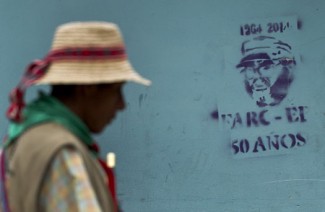
In this op-ed, ICTJ Vice President Paul Seils questions the policy objectives of punishing members of FARC accused of the most serious crimes in the ongoing Colombian peace negotiations.

A new paper by the ICTJ on the peace negotiations in Colombia considers the competing goals of punishing members of the FARC who are deemed most responsible for committing serious crimes.

This paper weighs the possible modes and competing policy objectives of punishing FARC members for serious crimes in the context of Colombia’s ongoing peace negotiations. It argues that punishment has to occur in a way that does not damage one of the underlying objectives of the peace...

In this op/ed, the head of ICTJ's Kenya Program, Christopher Gitari, argues that President Kenyatta's recent apology to victims—though commendable—must be supported by solid reforms and initiatives for rebuilding the lives of those who have suffered the most.

ICTJ, in alliance with organizations Corporación Caribe Afirmativo, Colombia Diversa and Santa María Fundación organized meetings with activists and victims of the conflict to learn more about the needs of the LGBTI community, and to consider how transitional justice measures—especially non-judicial approaches—can contribute towards protecting their rights.