

473 results

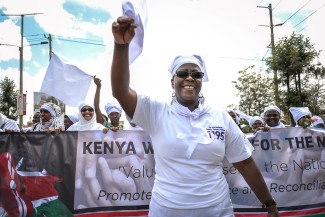
Thousands took to the streets across Kenya on January 27 following the gruesome slaying of more than a dozen women to denounce violence against women and demand action to end it. Protesters later gathered in Nairobi on February 14 for a Valentine’s Day vigil for the more than 30 women murdered in the country so far this year and to pressure the government to declare femicide and violence against women a national emergency and to establish a commission to address these crimes and thereby break the cycle of impunity. These efforts are laudable, if not inspiring. However, physical and sexual violence against women and femicide—at times perpetrated by law enforcement officers who are meant to protect them, as enshrined in Kenya’s 2010 Constitution—has persisted in Kenya for decades.

As Kenya moves closer to a climate where comprehensive reparations for victims of post-election violence are possible, ICTJ is supporting women victims of sexual violence to ensure that their needs are reflected in any program of restitution.

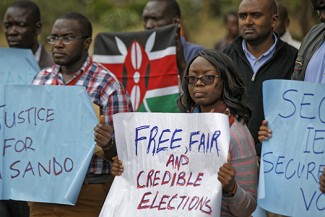
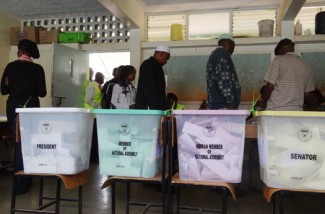
Kenya is just days away from the 2017 general election, but challenges dot the horizon, including the recent assassination of an election official. ICTJ's Chris Gitari calls for a strong, accountable security sector and the implementation of the Truth, Justice and Reconciliation Commission Report.

Many countries have endured a violent past or a dictatorship that left behind a trail of human rights violations. During transitions to peaceful societies or democracies, there is a need to address that painful past to ensure that the violations do not recur in future. While some countries have made or are making laudable efforts to deal with the atrocities of the past, others like Kenya are regrettably still at the phase of wishing the painful past away.

One year after its release, ICTJ presents a critical overview of the Final Report of Kenya’s Truth, Justice and Reconciliation Commission in a new study released today. The ICTJ study argues that, despite the controversies that surrounded the commission during its tenure, the Final Report should be read and treated with seriousness by those who support human rights and the rule of law in Kenya.

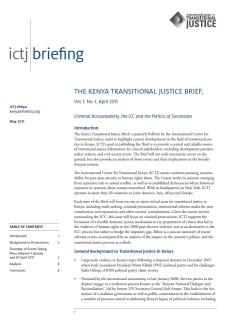
The Kenya Transitional Justice Brief, a quarterly bulletin by ICTJ highlighting current developments in the field of transitional justice in Kenya. This brief focuses on the process of implementing the 2010 constitution and the political context in which this takes place, providing a ...

The Kenya Transitional Justice Brief, a quarterly bulletin by ICTJ highlighting current developments in the field of transitional justice in Kenya. This first edition provides a summary and analysis of developments surrounding the International Criminal Court's (ICC's) involvement in ...

The findings of Kenya's Truth, Justice and Reconciliation Commission (TJRC) were due to be released in August of this year, providing citizens with a comprehensive report that establishes the facts, causes and alleged perpetrators of serious crimes in Kenya since its independence, almost 50 years ago. To date, Kenyans are still waiting to learn the truth.

The police response to the peaceful anti-government protests in Kenya over the past year has been deadly and brutal. Their actions have rocked the country and reaffirmed the 2013 findings of the Kenyan Truth, Justice and Reconciliation Commission (KTJRC) that state security agencies, particularly the police, have historically used excessive and disproportionate force and “been the main perpetrators of bodily integrity violations of human rights in Kenya including massacres, enforced disappearances, torture and ill-treatment, and sexual violence.”

After years of waiting for the government to take action by implementing the recommendations of Kenya’s Truth, Justice, and Reconciliation Commission, victims of past human rights violations and mass violence are demanding that something be done.