

147 results

National healing and reconciliation in Uganda requires a multilayered truth-telling process comprised of community and national processes that are mutually reinforcing and should not be mutually exclusive, as proposed by the JLOS report. A national truth-telling body should address is...

Since independence Ugandans have endured episodes of violence and human rights abuses across successive political regimes and transitions with devastating consequences. During two decades of conflict in the northern Uganda involving the Lord’s Resistance Army (LRA) and the government ...

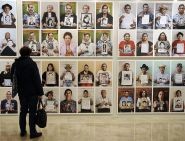
Forced disappearance is a crime against humanity. The decisions made by politicians and officials authorizing such practices in different countries cannot be justified legally or morally. They must be held to account and be shown for what they are: enemies of a civilized society.

As the world marks August 30, the International Day of the Disappeared, we are reminded that forced disappearances and transitional justice share a common history. Indeed, processes working in concert that came to form the field of transitional justice were born from the search for truth and justice about the disappeared.

Why pursue transitional justice in the aftermath of massive human rights violations? “The Case for Justice” provides a window into the debate about the relevance of transitional justice in today’s world.

Granito: How to Nail a Dictator, a recent documentary from Skylight Pictures, shows the international effort that has worked tirelessly to bring Montt to account for his crimes. ICTJ is pleased to announce that Granito will be aired on Thursday, June 28 at 10pm on the PBS series P.O.V.

In societies confronting the legacies of war, tyranny, or entrenched injustice, the experiences of indigenous people have often been marginalized. ICTJ has published a handbook offering guidance on planning truth commissions and commissions of inquiry that safeguard the interests of indigenous communities and address violations against them.

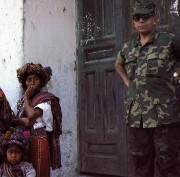
Indigenous peoples are among those most affected by contemporary conflict. The resource-rich territories they occupy are coveted by powerful, often violent groups. Their identity is perceived with mistrust, sometimes with hate. Indigenous communities live at a precarious intersection ...

The search for justice in Guatemala continues, more than 15 years after the end of its long and brutal civil war. Claudia Paz, Guatemala’s prosecutor general and head of the Public Prosecutor’s Office, spoke with ICTJ about the struggle of victims and survivors to obtain justice for the crimes they suffered.

The last few decades have seen a revolution in the global struggle against impunity, but the decision to put General Efraín Ríos Montt on trial for crimes against humanity and genocide in Guatemala ranks among the most astonishing developments. Belatedly, but valiantly, a new breed of prosecutors, led by Attorney General Claudia Paz, have finally allowed his victims' pleas for justice to be heard.