

80 results

In 2021, there were significant developments, some hopeful and some devastating, in the struggle for truth, accountability, and redress in countries around the world. ICTJ experts covered these events in commentaries and feature stories published on our website and in our newsletters. While 2022 is already underway and we at ICTJ are hard at work, we would like to pause a moment to take stock and reflect on the year that was.

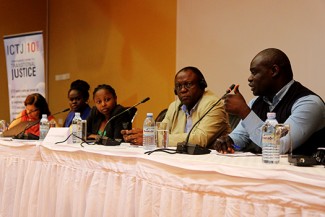
A new ICTJ report argues that in Africa's interconnected Great Lakes region, each country’s attempt to provide justice for past violations offers lessons for similar processes in others. We gathered civil society activists from across the region to discuss which strategies have worked for them, which have not, and opened up about the greatest challenges they face in securing justice.

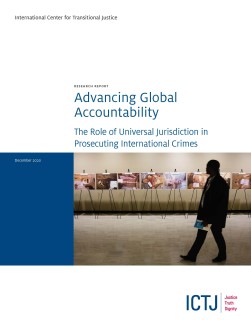
Invoking the principle of universal jurisdiction opens the door to the possibility of some accountability in circumstances where justice is not possible in countries where the crimes took place. This study considers the challenges facing the exercise of universal jurisdiction and asse...

In a major effort to promote accountability for serious crimes in Africa, ICTJ joined hundreds of human rights groups and transitional justice partners to ask the African Union to prioritize justice. Addressed to the new African Union (AU) Chairperson Dr. Nkosazana Dlamini-Zuma, the letter warns that strained relationships between the AU and the International Criminal Court (ICC) may put justice at risk.

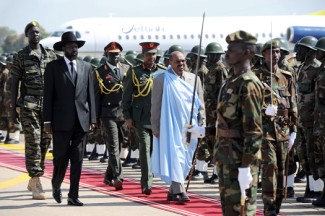
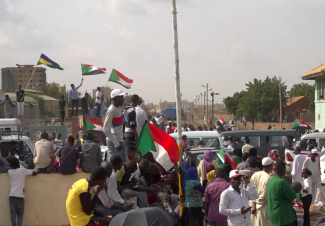
This April, Sudan marked a double anniversary: one of the 2019 revolution that toppled President Omar al Bashir’s decades-long repressive regime, the other of the 2023 outbreak of the ongoing civil war that has devastated the country. These contrasting occasions bring with them great hopes and deep pain. They also raise pressing questions: How long will Sudan have to suffer while the world’s attention seems turned the other way? How long will the voices of Sudanese who yearn for peace and justice continue to be sidelined?

This is the second of our Stories of Change series; in it, Tarek al-Massri, an 18-year-old from Homs now living in Germany, knows all too well the horrors of the Syrian conflict and its devastating impact on schools.

For many victims of human rights violations and international crimes around the world, the prospects of holding perpetrators to account, especially high-level individuals, have long seemed farfetched, given current political and legal hurdles and the limitations of international criminal justice mechanisms. For this reason, the multiple ongoing investigations into international crimes committed in Syria and court cases against suspected perpetrators based on the principle of universal jurisdiction across Europe have offered a ray of hope in an otherwise bleak justice landscape.

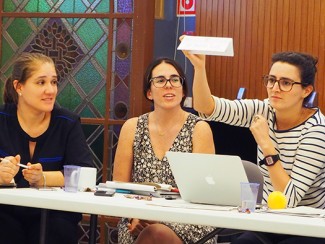
From October 1 to October 5, 2018, ICTJ hosted its eleventh intensive course on transitional justice in collaboration with the International Peace Center for in Barcelona. Participants included leaders in their respective fields, including human rights law, community justice and legal services, peacebuilding, education, and humanitarian affairs.

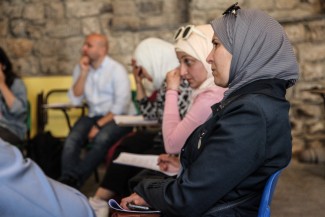
At the end of April in Syria, dozens of local residents in several cities and towns sat down together for the first time to finally speak about their experiences during the 14-year conflict that tore society apart and resulted in countless human rights violations. These community dialogues, organized by ICTJ in partnership with the Bridges of Truth project, provided a safe space for participants to share their stories and hardships, discuss their needs, and express their hopes for justice and reconciliation.

A new report on attacks on schools in Syria harnesses documentation to call attention to atrocities and advance storytelling, truth seeking, acknowledgment. It is the product of Save Syrian Schools, a collaborative project led by 10 Syrian civil society organizations and the ICTJ that demands an end to the killing of Syrian children and justice for the bombing of schools.