



461 results

As ArcelorMittal, the world’s largest steel company, invests 19.2 million pounds of steel to construct a monument marking London’s Olympic Games, a disturbing story is emerging about the refusal to memorialize a former concentration camp in Bosnia it owns today. Not only is ArcelorMittal unwilling to provide even a fraction of the cost of the London “Orbit” to commemorate the suffering of Bosnians in the notorious Omarska camp, but it has recently started denying victims access to the site.

On April 9, Colombia commemorated for the first time the National Day of the Memory and Solidarity with the Victims. This photo gallery collects the expressions of commemoration that took place in three cities in the country: Bogotá, Medellín and Villavicencio.

Colombia marked the country’s first National Day of Memory and Solidarity with the Victims April 9. For the millions who have suffered human rights violations in Colombia’s entrenched armed conflict, this was a day for their voices to be heard and their suffering to be acknowledged by the state; a nationwide call for accountability and reconciliation in a highly divided society.

The search for justice in Guatemala continues, more than 15 years after the end of its long and brutal civil war. Claudia Paz, Guatemala’s prosecutor general and head of the Public Prosecutor’s Office, spoke with ICTJ about the struggle of victims and survivors to obtain justice for the crimes they suffered.

NEW YORK, March 22, 2011—The International Center for Transitional Justice (ICTJ) congratulates Pablo de Greiff, director of ICTJ’s Research Unit, on the nomination as the first UN Special Rapporteur on the promotion of truth, justice, reparation and guarantees of non-recurrence of serious crimes and gross violations of human rights.

NEW YORK, March 15, 2012—Brazilian federal prosecutors announced yesterday that they have opened a criminal investigation against a military officer accused of the enforced disappearance of civilians during the 1964–1985 military dictatorship. This is a welcome blow against the use of a 1979 amnesty law to shelter government agents who committed horrific crimes against civilians from accountability.

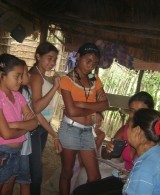
In a simple house made of wood and straw and smelling of earth, women, girls, and the occasional man narrate, sometimes laughing and other times crying, the stories of how their life used to be before being forcibly displaced to San Juan Nepomuceno. This is one of the many local memory initiatives taking place throughout Colombia today.

Canada’s Truth and Reconciliation Commission (TRC) released its interim report and a new historical publication titled They Came for the Children in Vancouver today. The TRC was established in 2008 to examine and make public the truth about Canada’s former Indian Residential Schools, a system designed to forcibly assimilate aboriginal children. From 1874 to 1996 more than 150,000 children were taken from their families and placed in church-run schools. They were prohibited from speaking their native languages and practicing cultural traditions, and physical, sexual, and emotional violence was commonplace.

The civil war in El Salvador officially ended 20 years ago, yet justice and accountability for past violations remain acutely absent. To launch a Spanish language podcast series focusing on Latin America ICTJ spoke with Carlos Dada, editor of the digital newspaper El Faro, about the critical role the media has played in uncovering the truth about past atrocities in El Salvador.

The War Crimes Chamber of Bosnia’s State Court is one of the most successful undertakings to address the legacy of mass atrocities in national courts. As this important institution finds itself under serious threat, the European Union must act quickly to put a stop to attempts of the Bosnian Serb political leadership to undermine Bosnia’s capacity to prosecute war crimes at state level.