123 results

On January 15, 2019, victims of the 2010-2011 post-election violence in Côte d'Ivoire were shocked, yet again, to learn that the Trial Chamber I of the International Criminal Court in The Hague had acquitted former President Laurent Gbagbo and the former Youth Minister Charles Blé Goudé of crimes against humanity allegedly committed during the crisis.

This report aims to help practitioners in the transitional justice field to understand the experience of establishing and operating hybrid courts and to address some common assumptions about these entities. To do so, it looks at hybrid or mixed courts in practice, drawing on experienc...

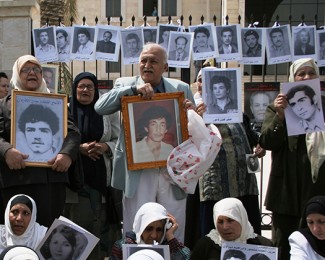
On November 12, 2018, Lebanon finally passed the long-awaited, landmark Law for Missing and Forcibly Disappeared Persons in Lebanon. This breakthrough development is a result of the steadfast commitment of mobilized families and years of joint advocacy efforts, lobbying, and initiatives by local and international organizations aimed at advancing the families’ cause.

Ever since the armed conflict in Lebanon broke out in the mid-1970s, the main demand of the families of the missing and disappeared has been to secure the right to know the truth and the right to an effective investigation, verification of facts, and public disclosure of what happened. These families persisted in their demands over the decades, against the odds and despite social, political, and cultural forces pushing for collective amnesia. Their perseverance, along with civil society’s invaluable efforts, shined a continuous light on the issue of the disappeared, igniting a public debate that parliamentarians could no longer ignore. Last month, they voted in favor of the Law for the Missing and Forcibly Disappeared Persons in Lebanon.

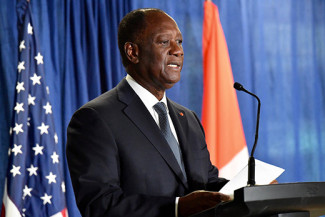
On the eve of Côte d'Ivoire’s 58th independence anniversary, in a dubious attempt at “social cohesion,” President Alassane Ouattara granted amnesty to 800 persons accused or convicted of crimes against the state during the post-election crisis of 2010-2011. Former First Lady Simone Gbagbo — who had been tried for undermining state security — and other high-ranking officials associated with former President Laurent Gbagbo’s party, the Ivorian Popular Front (FPI), were among those released. The lapses in accountability and acknowledgment in Cote d’Ivoire have emboldened perpetrators and made it impossible for many victims to move on with their lives. The challenges of transitional justice processes present clear obstacles to the sustainable peace that the people of Cote d’Ivoire have been working toward.

Life continues to stand still for the many families of the missing and disappeared in Lebanon. The Lebanese War ended 28 years ago, but for these families the war rages on. A recent legislative breakthrough, however, might finally pave the way for Lebanon to confront this legacy.

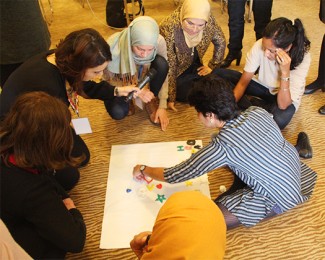
Although youth are key political and social stakeholders who have much to contribute to—and gain from—transitional justice processes, they often remain marginalized from such processes or are given only a limited and predetermined space in which to engage. In recent years, the peacebu...

A new, photo-filled publication from the International Center for Transitional Justice details how photos taken by Lebanese young people across the country helped to spark discussion about the disturbing, often-overlooked legacy of the Lebanese civil war.

Lebanon’s civil war continues to impact the Lebanese people, both those who lived through the war and those born after it. While the widespread harms it caused are still visible today, the official denial of both the war and its lasting consequences has left a hole in Lebanon’s histor...