

450 results

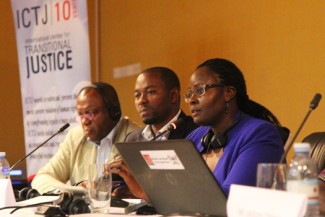
Civil society leaders, members of victims' groups and state officials throughout the Great Lakes region will convene in Kampala, Uganda next week at a conference hosted by ICTJ. Attendees will share their experiences working for redress in their communities and discuss what strategies have proven effective at the local level.

Human Rights Network-Uganda (HURINET-U), The Uganda Coalition on the International Criminal Court (UCICC), The International Center for Transitional Justice, Avocats San Frontiers and Atrocities Watch are dismayed to learn that Government of Uganda has extended an invitation to President Omar al...

After a society is torn apart by conflict or repression, who decides whether to remember or forget the painful past? Can forgiveness happen without acknowledgement of wrongdoing? Is there a difference between forgetting and denial? Join us as ICTJ debates the impact of remembrance on reconciliation with David Rieff and Pablo de Greiff.

ICTJ joins groups calling for an anti-terrorism approach that respects citizens' rights in Tunisia. “Institutional reform can be a strong tool to prevent recurrence of human rights abuses and build a strong and credible democracy in Tunisia," said Salwa El Gantri, ICTJ Head of Office in Tunisia. "The current transitional justice process aims to shed light on similar violations that took place under the dictatorship, and we don’t want them to be committed again under the ‘fight against terrorism’ slogan.”

In a new briefing paper, ICTJ's Paul Seils and Roger Duthie examine what steps the international community can take during a crisis to support democracy and accountability.

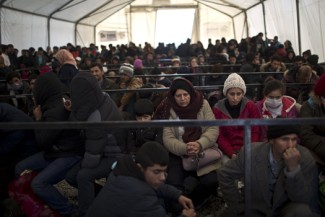
As the refugee crisis deepens, does action on transitional justice issues have to wait for peace? A new paper explores what sort of consultation and documentation work can be done now, while conflict is ongoing, to shape outcomes moving forward.

The International Center for Transitional Justice (ICTJ) condemns in the strongest terms the Egyptian government’s crackdown against human rights activists and calls on it to halt its ongoing investigation of independent human rights organizations in relation to the legitimate exercise of their activities and to close Case No. 173 (the “NGO foreign funding” case) once and for all.

As we search for ways to halt the violence and foster lasting peace in societies grappling with a legacy of massive human rights abuse, there is arguably no more important day to reflect upon the importance of the struggle for truth and justice than today, March 24. Thus, we take a moment to mark the International Day for the Right to the Truth concerning Gross Human Rights Violations and for the Dignity of Victims.

Eastern DRC continues to be affected by conflict and serious crimes continue to be committed against civilians living in the area by the national army (FARDC), national armed groups, and foreign armed forces. Holding perpetrators accountable is essential to dismantling the structures that allow the ongoing cycle of abuses to continue in the DRC.

The International Center for Transitional Justice (ICTJ) and the Barcelona International Peace Resource Center (BIPRC) are pleased to announce an Intensive Course on Transitional Justice and Peace Processes, taking place in Barcelona, Spain, June 6 - 10, 2016. It will focus on practical examples of recent or paradigmatic peace processes where the question of justice formed a significant part of the negotiating context.