68 results

To commemorate the 20th anniversary of the Justice and Peace Law—which created Colombia's first transitional justice system—media outlet Verdad Abierta, the Friedrich Ebert Stiftung, and ICTJ partnered to produce an investigative four-part series in Spanish that critically assesses its legacy. Now translated into English, this first installment provides an overview of the process.

The field of transitional justice is increasingly recognizing the relevance of mental health and psychosocial support (MHPSS) in contexts of massive human rights violations. Despite growing advocacy and awareness at the global policy level, however, the field lacks a systematic approa...

an image of colorful painting featuring a young girl

Canadian youth not only want to know the truth about what happened at the Indian Residential Schools –they want to learn about it in their classrooms.

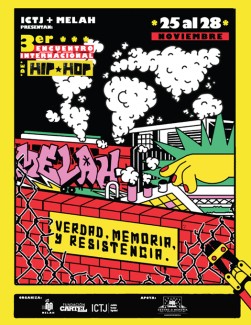
Bogotá, November 20, 2020—ICTJ and the Movement of Latin American Hip Hop Expressions have joined forces to cohost the third International Hip Hop Encounter, which will take place virtually this week from November 25 to November 28. The four-day online event will bring together artists and musicians from across Latin America and Africa along with activists, social leaders, and civil society representatives. The festival’s theme is the role of hip hop music and culture in uncovering truth, preserving memory, and resisting violence and oppression.

ICTJ was pleased to host the newly elected United Nations Special Rapporteur on the promotion of truth, justice, reparations, and guarantees of non-recurrence, Fabian Salvioli (Argentina), at its New York office, where he discussed his vision and priorities.

Although youth are key political and social stakeholders who have much to contribute to—and gain from—transitional justice processes, they often remain marginalized from such processes or are given only a limited and predetermined space in which to engage. In recent years, the peacebu...

To mark 15 years of ICTJ, we asked staff past and present for memories that stand out to them - moments that throw the stakes of our work into sharp relief and resonate with them years later. Virginie Ladisch and Clara Ramirez-Barat recall how one Canadian student, in exploring the legacy of the country's Residential Schools, arrived at the concept of "never again."

In the Netherlands, a court sentenced an arms dealer to 19 years in prison for his role in war crimes in Liberia. What does his case tell us about pursuing justice for economic crimes in Liberia and beyond?

South Africa Parliament faces a historic moment. In this op-ed, ICTJ's Vice President Paul Seils remembers the great hope that marked the ICC’s emergence: "No country embodied that hope and that reality more powerfully and more inspiringly than South Africa."

The Africa Union's resolution to collectively support a strategy to withdraw from the ICC looks more like a machination of those who have instrumentalized an argument against the court to protect themselves from the long arm of justice, write ICTJ's top experts on Africa.