

1537 results

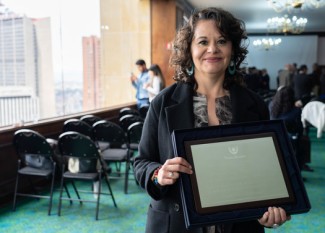
During the Ben Ali dictatorship in Tunisia, Najet Gabsi, an educator pursuing a diploma in law, was imprisoned for six months for her political activities. Through her participation in the "Voices of Memory" art exhibition, she was able to reignite her passion for activism and articulate the harms she endured at the hand of the regime.

1,300 are still missing in Nepal, nearly a decade after the country's bloody civil war ended. The peace agreement was meant to provide for the families of the disappeared, but today they are still searching for answers. As a new government body begins investigations, victims wonder: is the commission fully committed to addressing their needs?

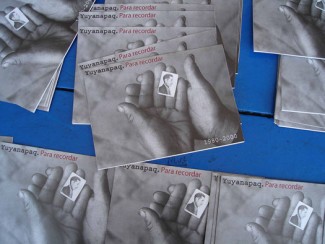
Ten years ago, on August 28, 2003, the Truth and Reconciliation Commission (TRC) of Peru presented its final report, clarifying the grave human rights violations committed between 1980 and 2000 during the internal armed conflict and the regime headed by Alberto Fujimori. This month, ICTJ joins Peru to examine the legacy and impact of the TRC.

As ICTJ celebrates ten years of existence and contribution to the development of the field of transitional justice, we are poised for a future of continued engagement with partners and communities seeking to overcome legacies of mass violence and repression. Ten years on, we now work in a world increasingly aware of the of the costs of failing to systematically transition from conflict and human rights abuse to the rule of law and equal rights for all citizens, and on the other hand, of the increasing complexity of doing so.

Bosnians have a range of expectations of the ICTY—or as it is known in the region, “the Hague Tribunal” or simply “The Hague”—comparing their hopes to the goals enunciated by the Security Council when it created the Tribunal and by the ICTY itself.

Drawing from data and testimonies of Syrians both inside the country and in the diaspora collected by civil society organizations, this report looks at the justice needs of Syrian victims of human rights violations in the context of ongoing debates on refugee returns. It critically ex...

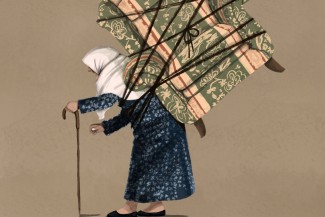
Illustration depicting an elderly woman carrying an armchair on her back

This briefing paper reviews the Kenyan government’s response to sexual and gender-based violence committed against women, men, and children during the 2007/2008 post-election crisis. It draws on interviews with over 40 survivors about their experience and analyzes the laws and transit...

This report analyzes the response of Congolese judicial authorities to international crimes committed in the territory of the Democratic Republic of the Congo from 2009 to 2014, with a particular focus on the war-torn East (North Kivu, South Kivu, and Ituri). It finds that the number ...

This briefing paper summarizes the findings of an ICTJ report (by the same name) on the judicial response to international crimes in the Democratic Republic of the Congo. It makes substantive recommendations to justice stakeholders in the DRC on how to advance prosecutions of internat...

The purpose of Resolution 1325 is to highlight the particular way in which women and girls suffer in situations of conflict, as well as the critical role they play in peacebuilding. To commemorate the 20-year anniversary of the resolution, ICTJ would like celebrate the life and work of one its own women peacebuilders: María Camila Moreno Múnera, head of ICTJ’s Colombia office. She exemplifies what a woman leader can achieve in advancing truth, justice, reparation, and peace.