



1537 results

ICTJ welcomes the release of the final report of Brazil’s National Truth Commission after two and a half years of work to unveil the truth about serious human rights violations that took place in the country between 1946 and 1988, especially during the military dictatorship of 1964 to 1985. The final report is a historic contribution to truth and justice in a country where serious crimes have remained unaddressed for decades and calls on the Brazilian judiciary to disregard the Amnesty Law and act in cases of crimes against humanity.

ICTJ welcomes the historic peace agreement signed today between the Colombian government and the Revolutionary Armed Forces of Colombia (FARC) – an essential step toward building lasting peace in the country.

ICTJ is pleased to announce the addition of three new members to its Board of Directors: Ms. Nina Lahoud, Ms. Rajakumari Jandhyala, and Mr. Max Gleischman. “These three individuals bring a wealth of expertise in law, economics, diplomacy, and strategic communication to ICTJ. Their diverse perspectives and proven leadership will help steer ICTJ as it continues to support victims, strengthen institutions, and foster inclusive societies in the aftermath of conflict and repression,” said Chairperson Robert Cusumano.

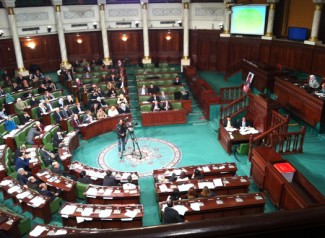
ICTJ welcomes the historic passage of the Draft Organic Law on the Organization of Transitional Justice Foundations and Area of Competence by the Tunisian National Constituent Assembly (NCA). In a nearly unanimous vote on Sunday, 125 of 126 deputies voted in favor of the law.

NEW YORK, August 19, 2019—The International Center for Transitional Justice announces the addition of two distinguished members to its Board of Directors. Ellen Taus and Brad Smith bring to ICTJ decades of experience in leadership roles at major global institutions.

ICTJ is pleased to announce the “Overseas: Writing Contest,” an open call for young migrants originally from or currently residing in Lebanon, Libya, or Tunisia to share their personal experiences of migration in the form of a short, written testimony.

In this amicus brief to the Indonesian Constitutional Court, ICTJ submits that the legislation establishing the Indonesian Truth and Reconciliation Commission ("TRC law") contravenes international law. ICTJ contests the provisions of the TRC law that allow for the granting of amnesty ...

As we prepare to welcome the New Year, we hope all practitioners will find this special edition of the World Report of particular interest, as it provides a unique overview of the most significant developments in transitional justice in 2012. As part of the 2012 ICTJ Year in Review, our website presents a multimedia gallery which highlights ICTJ’s work in 2012, and includes stories spanning from Colombia to Canada to Cote d’Ivoire. We also invite you to listen to this month's ICTJ Forum, in which ICTJ President David Tolbert reflects on significant events of the past year in the field of transitional justice.

On December 2 to 6, 2024, the International Criminal Court’s (ICC) Assembly of States Parties—the court’s management oversight and legislative body—held its 23rd session in The Hague. As in previous years, ICTJ took an active part, and its experts joined many of the discussions sharing their knowledge and insight. ICTJ organized two side events, one focusing on Syrian victims and another on reparations for victims in Northern Uganda.

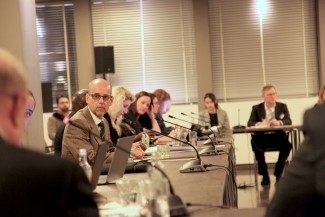
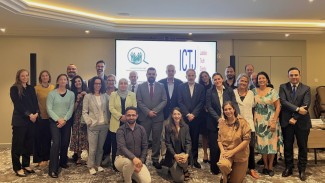
ICTJ, in collaboration with the Dutch Ministry of Foreign Affairs, recently convened the first international dialogue in Geneva in support of Syria’s two new justice commissions. From July 10 to 11, members of the National Commissions for Transitional Justice and for the Missing joined representatives of Syrian victim groups and experts and practitioners from around the world to discuss the present opportunities and challenges for peace and justice in Syria and how best to support the nascent institutions in fulfilling their mandates and advancing acknowledgment, truth, accountability, and repair.