1532 results

Among the key challenges facing the Democratic Republic of Congo (DRC) today is the question of how the country will address the massive human rights atrocities of its recent past to establish a foundation for peace and security, the rule of law, and respect for human rights to prevai...

In the brutality of armed conflict or tyranny of a repressive regime, many who go missing are never found again: whether “disappeared” by agents of the state or abducted by an armed faction, the whereabouts of thousands are still unknown to this day. On this International Day of the Disappeared, ICTJ recognizes that enforced disappearances constitute crimes against humanity, and they affect women in ways unique from the impact on men.

This report examines the impact on women of enforced disappearances committed during Lebanon’s civil war, focusing in particular on the effects on wives of the missing or disappeared—and their children. The research is based on interviews conducted by ICTJ with 23 wives of missing or ...

Local justice is sometimes presented as an alternative to or substitute for other measures of transitional justice, often due to political, cultural, or practical considerations. This chapter argues that local justice addresses the (comparatively neglected) reintegration asp...

The millions of Syrians displaced by the grinding decade-long war have sought out safety far and wide, in safe havens within the country, in neighboring countries in the region, and further afield. Those who managed to reach Europe often did so against the odds and often after experiencing displacement more than once. Now, one of these countries, Denmark , is taking away from Syrians living in its borders the protection they so desperately sought and still need and, with it, the tiny bit of hope that they have worked so hard to preserve.

As subscribers, you enjoy timely commentary on what’s happening in transitional justice around the world written by one of our experts exclusively for our monthly World Report newsletter. In this month’s edition, we bid farewell to 2019 by looking back on the experts’ choices of the past year.

As part of a transitional justice process, truth commissions are crucial mechanisms for clarifying the past and safeguarding victims’ rights. With over 50 truth commissions worldwide, they remain relevant in increasingly complex contexts shaped by rapid technological change and challe...

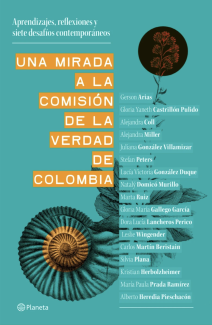
Cover of the book Una mirada a la Comisión de la Verdad de Colombia

The study of macro-criminality is critically important to transitional justice and specifically to efforts to pursue accountability for large-scale, systematic human rights violations. To help enliven debates concerning macro-criminality and broaden access to them, ICTJ has translated into Spanish for the first time ever the seminal essay "Can Politics Be Criminalized?" written by German criminologist Herbert Jäger.

In cooperation with the High Judicial Council, ICTJ held a seminar today with senior representatives of the Congolese military and civilian judiciary and prosecutor’s office to discuss the dual jurisdiction of military and civilian courts over international crimes in the DRC.

The Maine Wabanaki-State Child Welfare Truth and Reconciliation Commission (TRC), the first of its type in the United States, marks one year of work.