



1519 results

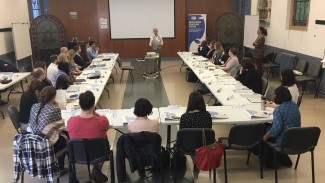
A new ICTJ report on truth and memory in Nepal sparked discussion – and calls for victim-centered policies – at national and local launch events.

Is reconciliation a central aim of transitional justice processes? Or does it have different bearings in different settings? A new paper presents possible understandings of the concept of reconciliation as well as its relationship to the field of transitional justice.

When armed conflict or atrocities have torn a society apart, it can be difficult for people to regain trust in the government and reconcile with those they see as their enemies or abusers. While the idea of reconciliation has been closely linked to transitional justice, misunderstandings of the term have sometimes led to superficial, even harmful approaches to addressing the past. A new paper from the International Center for Transitional Justice looks at different understandings of reconciliation and its place in transitional justice.

The term reconciliation has long been associated with the field of transitional justice and is often presumed to be one of its goals. At the same time, reconciliation has been both controversial and vague as a concept, giving rise to different understandings and approaches. This paper...

Criminal accountability and the search for truth about abuses committed during Nepal’s armed conflict have become inextricably intertwined, at the expense of victims’ broader rights to truth. But for conflict victims, the truth is more than just a pathway to criminal justice writes ICTJ's Aileen Thomson.

The removal of monuments to Confederate heroes is an important blow to the white-supremacy ideology that underpins ongoing racial injustices in the United States today, from mass incarceration to institutional violence. ICTJ President David Tolbert calls for a reckoning with these haunting injustices through memorials, acknowledgements and more.

ICTJ is pleased to announce an intensive course on transitional justice and peace processes to be held in Barcelona, Spain on October 9-13. Applications are now open.

Chile has shown slow but steady progress on ​criminal justice​​. Two recent court decisions convicted a total of 139 ​state ​agents for their roles in the enforced disappearances of 21 Chileans. The rulings – one handed down by the Supreme Court, the other by a first instance judge – highlight the growing momentum towards obtaining justice for victims of the 1973-1990 dictatorship​.​

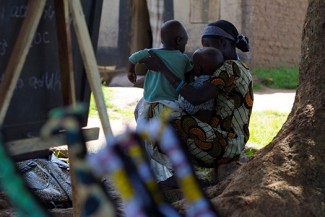
Children born of wartime sexual violence often face rejection from the communities their mothers call home. For these families, the failure of the state to address the harm they suffered and the enduring stigma leads to their further marginalization. An ICTJ film on this stigma, and the paths to overcome it, sparked discussion at a panel held at the Austrian Mission to the United Nations.

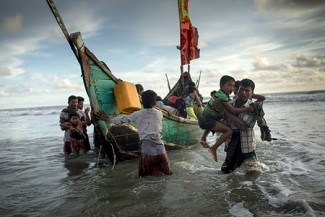
A new ICTJ report argues that discussions about a future return of refugees and coexistence among groups currently at war in Syria must begin now, even in the face of ongoing violence and displacement.

Even in the face of ongoing brutality, many of the nearly 12 million Syrians displaced by the conflict long for their return home – dependent, of course, on certain conditions being met. For our latest report, ICTJ interviewed dozens of Syrians refugees in Lebanon to discuss the impact of the conflict on their lives, their expectations for a potential return home, and their view of what coexistence in Syria might look like. We sat down with the report's authors, Rim El-Gantri and Karim El Mufti, to discuss their findings.

Discussions about a future return of refugees and coexistence among groups currently at war in Syria must begin now, even in the face of ongoing violence and displacement. This report, based on interviews with refugees, makes it clear that the restoration of dignity will be important ...

In 1986, Wachira Waheire was whisked off the street, taken to Kenya's most infamous torture chamber, and sentenced to four years in prison. Over the next 30 years, his quest for justice led him to meetings with his torturers to courtroom showdowns with the country's Attorney General. Discover his ongoing struggle for truth, acknowledgement, and reparations alongside all survivors of abuse in Kenya.

Ongoing economic and social inequality, a legacy of the dictatorship, affects Tunisians across generations, but has particularly pronounced impacts on young people. ICTJ worked with four young photographers to confront the consequences of marginalization and explore its impacts on Tunisian youth. Their four photo galleries comprise the exhibition "Marginalization in Tunisia: Images of an Invisible Repression.”

Ongoing economic and social inequality, a legacy of the dictatorship, affects Tunisians across generations, but has particularly pronounced impacts on young people. ICTJ worked with four young photographers to confront the consequences of marginalization and explore its impacts on Tunis...

Ongoing economic and social inequality, a legacy of the dictatorship, affects Tunisians across generations, but has particularly pronounced impacts on young people. ICTJ worked with four young photographers to confront the consequences of marginalization and explore its impacts on Tunis...

Ongoing economic and social inequality, a legacy of the dictatorship, affects Tunisians across generations, but has particularly pronounced impacts on young people. ICTJ worked with four young photographers to confront the consequences of marginalization and explore its impacts on Tunis...

A new report from the International Center for Transitional Justice and the Martin Chautari Institute highlights the continued need for truth about the human rights abuses committed during the country’s 10-year civil war. The report is aimed at helping those working on truth seeking in Nepal to better understand the gaps that currently exist between victims’ needs and rights, public policy and the current transitional justice process.

There is widespread misunderstanding of transitional justice in Nepal, and relevant policy is often motivated by the interests of political leaders and other powerful actors, like the Nepal Army, with little regard for the rights and needs of victims. This report, a collaboration betw...

A new book by ICTJ titled Justice Mosaics: How Context Shapes Transitional Justice in Fractured Societies examines the challenges of responding to massive human rights violations in different and difficult circumstances in today's world.

After periods of conflict and authoritarianism, education institutions often need to be reformed or rebuilt. But in settings where education has been used to support repressive policies and human rights violations, or where conflict and abuses have resulted in lost educational opportu...

This report presents the main findings of a multiyear research project conducted by the International Center for Transitional Justice on the challenges and opportunities of responding to serious and massive human rights violations in different contexts. The project commissioned 21 stu...

What hope is there for justice for victims of atrocities in profoundly fractured societies, where systems of government have broken down and social and political divisions run deep? What is the role of transitional justice in forging peace in countries like Colombia, after decades of ...

The International Center for Transitional Justice today repeated the call for the withdrawal of the revamped “Economic Reconciliation” Draft Law. As one of the key expert organizations that has supported the transitional process in Tunisia since its inception, ICTJ has opposed the flawed “Economic Reconciliation” Draft Law since it was first presented in 2015, because its provisions undermine key goals of transitional justice: accountability, truth and reform.

To mark 15 years of ICTJ, we asked staff past and present for memories that stand out to them - moments that throw the stakes of our work into sharp relief and resonate with them years later. Virginie Ladisch and Clara Ramirez-Barat recall how one Canadian student, in exploring the legacy of the country's Residential Schools, arrived at the concept of "never again."