

1519 results

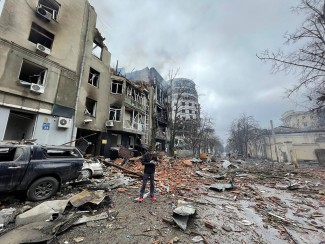
On May 12, the Council of Europe’s Committee of Ministers agreed to create a mechanism to receive claims for damages caused by the Russian crime of aggression in Ukraine. The new registry is intended to receive information on claims of damage, loss, or injury caused by Russia’s invasion of Ukraine since February 24, 2022 and assess their eligibility for future adjudication or compensation. Many of the register’s chief proponents are hailing its creation as a key step toward accountability for the many violations of international law that Russia has committed in or against Ukraine. However, the register alone will not be sufficient to address the multitude of harms caused by the war.

ICTJ interview with Pablo Parenti, of the Attorney General’s Unit for coordination and monitoring cases involving violations of human rights during the Argentine dictatorship.

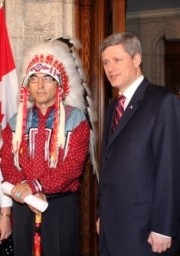
The Canadian Truth and Reconciliation Commission (TRC) will hold its second of seven national events from June 28 to July 1 in Inuvik, Northwest Territories. The event will provide survivors of Canada’s Indian Residential Schools (IRS) and other participants an opportunity to contribute to documenting and publicizing what took place in this program of forced assimilation.

The numerous atrocities committed by Russia in Ukraine have been part of the former's aggression since its initial invasion of the Crimea and Donbas regions in 2014, though they have skyrocketed in number and severity since the full-scale invasion in 2022. Among these crimes are enforced disappearances, which serve as the means by which the Kremlin more broadly intends to subjugate Ukrainians and eliminate any traces of the Ukrainian national identity.

This report is based on data obtained from extensive interviews and focus group discussions conducted in July and August 2003 with representatives from a broad cross-section of the Iraqi population. The report’s conclusions and recommendations are divided into seven main areas: past h...

The report by the United Nations Fact Finding Mission on the Gaza Conflict has reaffirmed the importance of justice in the pursuit of sustainable peace in Israel and the Occupied Palestinian Territory. Released September 15, 2009, the 575-page report (PDF) documents violations of international law...

NEW YORK, Oct. 4, 2010--Ten years after Israeli security forces killed 13 Palestinian demonstrators, 12 of them citizens of Israel, the families' calls for accountability have gone unanswered, the International Center for Transitional Justice (ICTJ) said today. "Despite an official commission of...

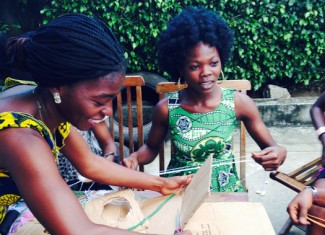
A new youth coalition has announced they will act as advocates for the rights of their fellow young Ivorians, and tell a new history of the violence that has so far been silent.

NEW YORK, Mar. 18, 2011—“Those responsible for the shelling of a market in Abidjan must be identified and held accountable,” said ICTJ president David Tolbert referring to yesterday’s attack on a food market in Abobo, a suburb of the Ivory Coast’s capital, in which 100 people were killed or wounded...

In this op-ed, ICTJ President David Tolbert argues that Japan's recent, controversial apology to South Korean "comfort women" falls short of international standards.

On April 11, 2019, Jaqy Mutere, cofounder and coleader of Grace Agenda, accepted an award from Physicians for Human Rights recognizing the work of the Survivors of Sexual Violence in Kenya Network and Grace Agenda, a leader in this movement. Jaqy cofounded Grace Agenda after she began working with women who, like her, had experienced sexual violence during the protests that erupted in Kenya after the contested December 2007 elections.

Situation brief on the International Criminal Court's upcoming pretrial hearings on whether to pursue charges against Jean-Pierre Bemba for crimes his troops allegedly committed in the Central African Republic (CAR) in 2002-03. The ICC prosecutor opened an investigation in May 2007 in...

June 20, 2019 — In a tightly packed room at the United Nations, human rights experts gathered for a historic symposium to commemorate a dark chapter of South Korea’s past, the Jeju Uprising and Massacre that began on April 3, 1948, and continued until 1951, which Koreans now refer to as “the 4.3 Jeju” events. Over 100 persons, including notable academic panelists, human rights experts, journalists, diplomats, religious leaders, and peace activists attended the symposium.

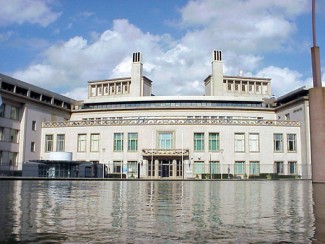
The Italy-based research center Osservatorio Balcani e Caucaso is hosting an online debate on the ICTY's contribution to reconciliation. The debate, featuring Refik Hodzic of ICTJ and Dr. Janine Clark of the University of Sheffield, who will present arguments for and against the notion that ICTY has contributed to reconciliation. Outside audiences are invited to participate online.

Following field research in late 2009 and a 2010 workshop in Kinshasa, ICTJ produced a report in French on the challenges of enforcing court-ordered reparations. This briefing paper outlines and summarizes the challenges and recommendations discussed in the report. It also proposes ad...

Following field research in late 2009 and a 2010 workshop in Kinshasa, ICTJ produced a report in French on the challenges of enforcing court-ordered reparations. This briefing paper outlines and summarizes the challenges and recommendations discussed in the report. It also proposes ad...

On February 6, 2022, President Kaies Saied announced that he would dissolve Tunisia’s Supreme Judicial Council. While his supporters welcomed the declaration with satisfaction, many more across broad segments of society greeted it with outrage and resentment. That the president made this unilateral announcement on the premises of the Ministry of Interior—responsible for public security—stung all the more, as if to send a message that he would not hesitate to use executive power to counter perceived disobedience, judicial or otherwise.

In the latest round of negotiations between Ukraine and Russia, the Turkish president called on both delegations to act responsibly and agree to a ceasefire. He reminded them of their historical mission to achieve a "just peace." While we may not know how and when this conflict will end, we already know some of what Ukrainian society will be grappling with in the near future. Significant portions of country’s civilian infrastructure have been destroyed. More than 4 million Ukrainians are now refugees; another 10 million are internally displaced; and a rising but still undetermined number have been killed, are missing, or are wounded. The real question is what does a just peace mean for Ukrainians.

This paper considers the UN-sponsored regime established to respond to the crimes committed in East Timor during the Indonesian occupation between 1975 and 1999. The story of the quest for justice in East Timor perhaps can be summed up as one involving good intentions that were not ba...

South Sudan’s transition to democratic governance through a highly anticipated, first-ever post-independence general election has to wait once again for another two years. Despite this latest extension, the country has achieved notable milestones in its transitional justice process.

View the live broadcast of tonight's Annual Emilio Mignone Lecture on Transitional Justice, from 6:00pm–7:40pm. Try Ustream's free video streaming desktop app

This year’s Annual Emilio Mignone Lecture on Transitional Justice, coordinated by ICTJ and the Center for Human Rights and Global Justice at the NYU School of Law, focused on the intersection between transitional justice and international development.

Colombia continues to endure a complex conflict spanning more than four decades that has resulted in almost 400,000 registered victims and has displaced more than three million people. In a podcast with ICTJ’s vice president Paul Seils, we explore the concepts of prioritization and selection of cases and their relevance to Colombia's Justice and Peace process.

It has been nearly seven years since the passage of the Justice and Peace Law (JPL) in Colombia. The process continues today amidst controversies and important reflections on the direction it should take. What progress has been made and what are the shortcomings of how the law has been implemented?

ICTJ convenes a high-level conference in Abidjan to discuss the progress in investigating and prosecuting serious crimes committed in Cote d’Ivoire during the 2010 post-election violence.