

1526 results

After several months of intense political debate, Colombia’s Senate passed constitutional reform measures containing extensive transitional justice provisions. The Legal Framework for Peace was adopted to confront decades of massive human rights violations and help to bring a sustainable peace to Colombia’s ongoing internal armed conflict.

What does the obligation to provide reparations mean when serious human rights violations are at issue? This report explores the evolving interpretation of the right to reparation in international law and jurisprudence and how domestic courts have provided judicial reparations at the ...

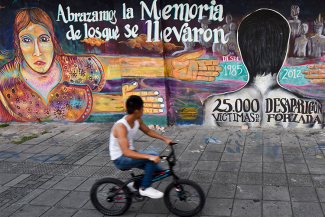
A man on a bicycle rides past a building whose exterior wall is covered in a colorful mural with writing in Spanish.

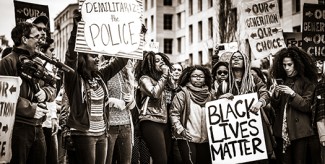
“No peace without justice” is a chant that filled the streets of the United States last year following the murder George Floyd by police in May 2020. This same chant has animated protest movements and social and political upheaval in many countries around the world. We at ICTJ know from our experience that these calls for justice are for something far more encompassing than criminal accountability alone.

This paper focuses on the issue of reparations in Darfur. It particularly emphasizes victims' right to reparation for the harm done to them, and aims to ensure that this right is recognized and upheld in any peace process. Drawing on experiences from other regions, it reviews and addr...

The reparations policy for victims of Peru’s internal armed conflict, which lasted from 1980 to 2000, includes the internally displaced population among its beneficiaries under the Official Register of Victims. However, displaced persons are given lower priority than the other categor...

Although the conflict in Turkey remains ongoing and a political solution to the “Kurdish question” has not been reached, in recent years, the Turkish government has developed a series of laws and policies regarding the situation of displaced Kurds. The most significant of these polici...

The establishment of the International Criminal Court's Trust Fund for Victims (TFV) , in combination with its reparations function, is unprecedented in international law. It affirms the importance of victims in international justice efforts. However, the creation of a Trust Fund cl...

The conviction of Thomas Lubanga is a milestone for the international criminal justice system established by the Rome Statute, and may make an important contribution to the development and definition of the right to reparations in international human rights law. ICTJ has produced a br...

The conviction of Thomas Lubanga is a milestone for the international criminal justice system and may make an important contribution to the development and definition of the right to reparations in international human rights law. Accompanying a submission filed with the ICC in advance of its reparations proceedings, ICTJ has produced a briefing note examining what lessons the court can learn from the broader transitional justice field.

The design and implementation of reparations for victims in the aftermath of large-scale and serious human rights violations is an area rife with challenges.

Since independence Ugandans have endured episodes of violence and human rights abuses across successive political regimes and transitions with devastating consequences. During two decades of conflict in the northern Uganda involving the Lord’s Resistance Army (LRA) and the government ...

This report evaluates the government of Peru’s partial results in providing compensation to victims of the internal armed conflict that devastated the country from 1980 to 2000. It provides a detailed analysis of the process of implementing the Comprehensive Reparations Plan, establis...

In the aftermath of massive or systematic violations or more generalized conflict,providing reparation in a meaningful way poses a daunting challenge. This 15 page paper covers the nature and objectives of reparations, forms of reparations, policy design of reparations, and financing...

This report is intended to contribute to the work of National Commission for Social Action (NaCSA) and of other organizations involved in providing reparations to victims in Sierra Leone. It aims to identify some of the lessons from the Year One Program program, and to help define the...

With socio-economic development a crucial priority in Africa, transitional justice practitioners are asking whether methods of addressing past human rights abuses can also help tackle development issues. ICTJ, in conjunction with the Japan International Cooperation Agency (JICA), expl...

This report serves as practical guide for those working in truth commissions and fact-finding bodies to convert large amounts of data and information into a final report. The manual draws on real life experiences from multiple truth commissions and includes extracts and examples from ...

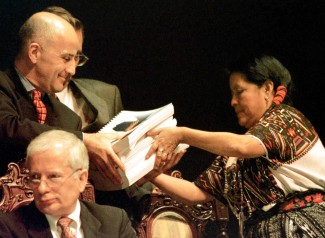
A man takes in his arms a large stack of reports from a woman.

This research brief provides case studies on the use of pardons in Argentina, Chile, El Salvador, Peru and South Africa following periods of mass abuse, and highlights subsequent political and civil society action to overcome impunity exacerbated by pardons and amnesties.

Case studies on the use of pardons in Argentina, Chile, El Salvador, Peru, and South Africa.

States have the obligation to prevent human rights violations, investigate them, identify and punish their intellectual authors and accessories after the fact, and may not invoke existing provisions of domestic law to avoid complying with their obligations under international law. ...

ICTJ provides an overview of investigative reports into detention and interrogation practices by the U.S. government. The purpose of this brief is to provide a sampling of reports to survey the ways in which these have been commissioned, what they have covered, and how they relate to ...

ICTJ provides an overview of various United States Commissions of Inquiry. This publication includes briefs on the Senate and House Committee Investigations of the Palmer Raids in 1920, the Senator Frank Church Committee in 1975, a commission into wartime relocation and internment of ...

Details the range of measures that will be needed to address the consequences of abuses committed during the U.S. "war on terror," including independent investigations, public disclosure of the truth, prosecutions of those responsible for abuses and redress for victims of serious harm...

The paper focuses on security sector reform (SSR) programmes in view of the prominence SSR now has in donor policy discourse and the ambitious objectives and broad scope of contemporary donor SSR policy. Issues such as human security, transitional justice and gender are also considere...

Recent years have seen an increased recognition of the need to address the housing, land, and property (HLP) rights of displaced populations in post-conflict situations; however, the implementation of restitution programs is challenged by the fact that in most countries affected by in...

While contemporary understandings of restitution have been shaped by international responses to displacement and are primarily humanitarian in nature, restitution has its conceptual roots in traditional rules governing remedies for breaches of international law and is related to trans...