




1519 results

Truth commissions can make important contributions to peace processes if all parties can agree on common objectives and there is genuine local political will to shed light on past events. This is the key finding of a new study – titled “Challenging the Conventional: Can Truth Commissions Strengthen Peace Processes?” – to be released on 19 June 2014 by ICTJ and the Kofi Annan Foundation.

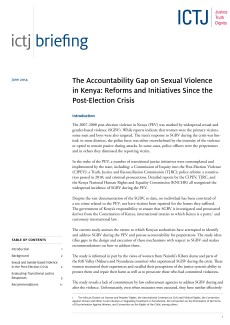
A new study from the International Center for Transitional Justice (ICTJ) shows that the Kenyan government has not effectively addressed the harms suffered by victims of sexual crimes committed during the violence that followed Kenya's disputed 2007 elections or ensured the accountability of perpetrators.

This briefing paper reviews the Kenyan government’s response to sexual and gender-based violence committed against women, men, and children during the 2007/2008 post-election crisis. It draws on interviews with over 40 survivors about their experience and analyzes the laws and transit...

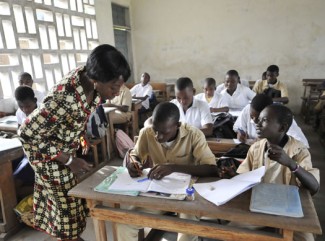
On the Day of the African Child, ICTJ recognizes the power of education to transform society, and acknowledges children and young people as agents of societal change, especially in countries dealing with a legacy of abuse.

This joint report by ICTJ and the Kofi Annan Foundation explores common assumptions about why truth commissions are created in the wake of armed conflict and what factors make them more likely to succeed – or fail. It arises from a high-level symposium hosted by the two organizations ...

Recent developments in the country are challenging the taboos of publicly acknowledging sexual violence and paving the way to addressing the impact of conflict on women. Steadily, a broader conversation on a gender-sensitive approach to truth and accountability is burgeoning in Colombia, as well as on promoting women’s active participation in decision-making processes to redress victims of human rights violations.

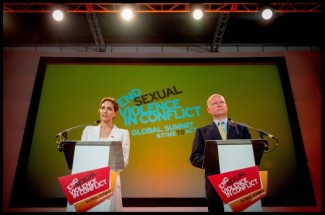
ICTJ joins more than 100 countries and over 900 experts for the Global Summit to End Sexual Violence in Conflict, held this week in London.

A new report by ICTJ and the Kofi Annan Foundation explores common assumptions about why truth commissions are created in the wake of internal armed conflict and what factors make them more likely to succeed – or fail. The new study will be released on June 19, 2014, at a public presentation jointly hosted by ICTJ and the Kofi Annan Foundation in Geneva.

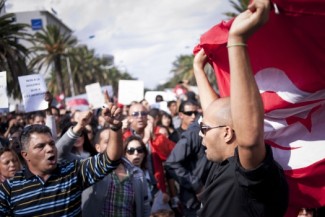
ICTJ welcomes the launch of Tunisia’s Truth and Dignity Commission (TDC), a momentous step in the country’s effort to establish the truth about past human rights violations.

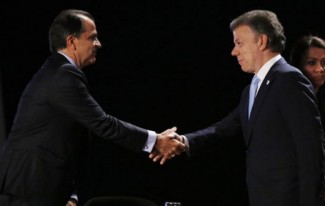
Colombia is at a crossroads after the results of the first round of the presidential elections, and the results could have grave consequences for the country's ongoing peace talks. In this interview, Maria Camila Moreno, director of ICTJ's Colombia program explains what's at stake.

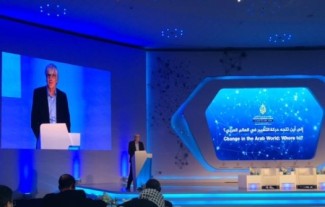
Three years after the so-called the “Arab Spring,” the post-revolution era has so far been marked by a mix of hope and hardships. At the 8th Al Jazeera Forum, ICTJ President David Tolbert explains what went wrong.

Since the uprising that sparked the "Arab Spring," Tunisians have demonstrated unwavering commitment to transitional justice. In this interview, ICTJ's Head of Office Rim El Gantri gives an overview of the country's efforts to address the truth about the past, seek justice for abuses committed under decades of repression, and provide reparations for harm suffered under the former regime.

This briefing paper summarizes the findings of consultations undertaken by ICTJ with women’s groups in Gulu, Lira, and Soroti on confronting impunity and engendering transitional justice processes in northern Uganda. Its purpose is to help incorporate women’s needs and justice demands...

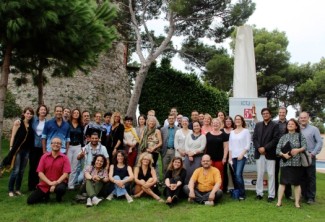
ICTJ and the Barcelona International Peace Resource Center (BIPRC) are pleased to announce the 6th Intensive Course on Truth Commissions, focused on a practical approach about the challenges in the design and implementation of a truth commission and, this year, exploring its intersections with peace processes.

In early May, the African National Congress (ANC) held on to power in South Africa’s general election. However, there is a widespread feeling that the party that oversaw the creation of the groundbreaking Truth and Reconciliation Commission has walked away from its obligations to the South African people.

ICTJ participated in the launch of a new report on the relationship between transitional justice and development, launched by the Swedish International Development Agency (Sida).

Three human rights groups have joined together to publish a new English edition of Hatun Willakuy, a book presenting the abridged findings of Peru’s Truth and Reconciliation Commission, on its tenth anniversary. The book, which is available online, will allow a larger number of readers to benefit from the findings of Peru’s truth-seeking process.

ICTJ President David Tolbert will be a featured speaker at this year’s Al Jazeera Forum in Doha, Qatar. Al Jazeera Forum is the flagship event of Al Jazeera Media Network, at which Al Jazeera showcases its contribution to the world of media and politics.

Seven and a half years after the signing of the Comprehensive Peace Agreement, Nepal's Parliament voted to establish the Truth and Reconciliation Commission and a Commission of Investigation on Disappeared Persons. In this op-ed, ICTJ's Eduardo González Cueva explains why many victims have rejected the bill.

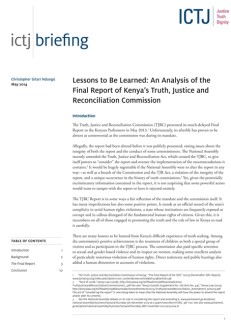
One year after its release, ICTJ presents a critical overview of the Final Report of Kenya’s Truth, Justice and Reconciliation Commission in a new study released today. The ICTJ study argues that, despite the controversies that surrounded the commission during its tenure, the Final Report should be read and treated with seriousness by those who support human rights and the rule of law in Kenya.

This paper analyzes the contents of the Final Report that the Kenyan Truth, Justice and Reconciliation Commission (TJRC) presented to President Uhuru Kenyatta on May 21, 2013, after four years of investigations. In particular, it evaluates the report’s information and findings, the lo...

A new amnesty law passed by the government in the Democratic Republic of the Congo (DRC) will grant amnesty to hundreds of members of armed groups engaged in hostilities, including members of the infamous M23 rebels, but stops short of pardoning serious crimes.

After emerging from its revolution with a new constitution and a comprehensive transitional justice law, Tunisia is setting into motion a process to learn the truth about the country’s time under repressive rule.

ICTJ is pleased to announce it will host a series of online debates on new challenges and cutting-edge issues in transitional justice.

ICTJ is pleased to announce the addition of Dr. Amra Sabic-El-Rayess to its Board of Directors.

A new book from ICTJ explores the ways in which cultural and social factors interact with national efforts to achieve accountability and reform in the wake of human rights abuses or conflict. How can journalists influence national views on a legacy of violence? How can art be used to spark discussions on accountability? These and other questions are addressed in Transitional Justice, Culture, and Society: Beyond Outreach.

More than six years after the war in Uganda came to a formal end, the country has taken a landmark first step by unanimously adopting a resolution to establish a reparations fund informed by the experiences of both men and women.

ICTJ is pleased to announce the opening of an innovative site-specific theater performance in Beirut to mark the 39th anniversary of the Lebanese Civil War.

As Nepal’s Parliament discussed key proposal to establish truth-seeking bodies, the ICTJ expresses deep concern that the bill retains flaws already rejected by the country’s Supreme Court in January.

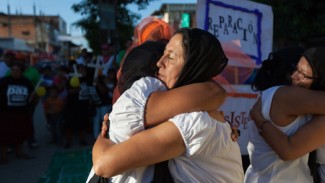
For the past three years, April 9th has become an important date to recognize more than 6 million victims of the armed conflict in Colombia. This year, hundreds of Colombians again went to the streets, to mark the National Day of Memory and Solidarity with Victims, as established by Law...

From March 27 to 30, some 20,000 Canadians gathered in Edmonton, Alberta, for the final national event of the Truth and Reconciliation Commission of Canada (TRC). Established in 2008, the TRC is now entering a new stage: the writing of its final report based on the more than 6,500 statements it has gathered.

In this op-ed, ICTJ President David Tolbert argues that in order to meet the EU’s high standards on the rule of law and human rights, Serbia must address the legacy of its recent past in which Slobodan Milosevic’s regime and the institutions under its control were involved in some of the most notorious crimes committed in Europe since World War II.

Lebanon has ruled that families of missing and disappeared persons would be allowed access to the investigation files and full report of the Commissions of Inquiry on the Missing and Forcibly Disappeared in Lebanon. In a new episode of our ICTJ Forum, we speak with lawyer Nizar Saghieh about what the ruling means for Lebanese families who continues to search for their missing loved ones.

In the span of only one month, Tunisia has witnessed the historic passing of a transitional justice law and adoption of a new constitution. A key actor in the country's transition is the media.

ICTJ has expressed deep concern over the criminal proceedings that resulted in the imposition of death sentences on 529 supporters of former President Mohamed Morsi in Egypt on Monday. The verdict, announced by a criminal court in Minya, came after a trial that lasted less than an hour, according to news reports.

To mark International Women’s Day, we invite you to read about four countries at the top of our gender justice priorities in the coming year, each with its own history, context, and complex sets of challenges.

ICTJ is deeply saddened by the death of Guatemalan Supreme Court Justice Doctor Cesar Barrientos Pellecer, this past March 2. Guatemala has lost one of its greatest crusaders against impunity in the country.

For decades, Lebanese governments have made only partial and ineffective attempts to hold powerful individuals, groups, and foreign states accountable for violations committed on Lebanese soil, including against civilians. The consequences of their failure to act – for victims and Lebanese society – are grave. ICTJ's new report looks at the culture of impunity for serious violations of human rights continues to thrive in Lebanon.

A culture of impunity for serious violations of human rights continues to thrive in Lebanon, says a report released today by ICTJ.

The Maine Wabanaki-State Child Welfare Truth and Reconciliation Commission (TRC), the first of its type in the United States, marks one year of work.

This report examines the situation of impunity in Lebanon that has persisted since the 1975-1990 war through the lenses of core elements of transitional justice. It analyzes Lebanon’s past experience of ineffective transitional justice measures -- including limited domestic trials, na...

Join ICTJ and the Center for Global Affairs for a conversation on how the ICC and the African Union can move forward, and what the AU position means for effective prosecutions within Africa and elsewhere.

In December, ICTJ partnered with NYU School of Law and the Center for Human Rights and Global Justice to host Auschwitz survivor and Judge Thomas Buergenthal for the 7th Annual Emilio Mignone Lecture on Transitional Justice.

As the Tunisian government takes firm steps to investigate human rights abuses committed since 1955, including under the Ben-Ali regime, ICTJ calls for care and attention in appointing members to the upcoming Truth and Dignity Commission.

Nearly three years after violence in Cote d’Ivoire claimed the lives of over three thousand civilians and displaced hundreds of thousands, victims have yet to receive adequate reparation for the harm they suffered. ICTJ convened victims’ organizations, civil society, government officers and others to assess how the country should move forward to ensure victims see their right to reparation fulfilled.

Transitional justice processes have a fundamental public dimension: their impact depends in part on the social support they receive. Beyond outreach programs, other initiatives, such as media and cultural interventions, can strengthen—or in some cases undermine—the public resonance of...

As the Special Court for Sierra Leone formally ended its work on December 2, 2013, a new museum opened on the former premises of the court, dedicated to peace. The SCSL was a hybrid criminal court, established jointly by the UN and Sierra Leone to prosecute perpetrators of serious crim...

Marking three years since Tunisia's revolution, ICTJ President David Tolbert argues that transitional justice developments in the country are not only worthy of attention, but serve as useful markers for transitions in the region and beyond.

Three years after Tunisia's revolution, victims in the south of the country are still facing severe economic and social marginalization. In recent workshops with ICTJ, they explain why collective reparations and development are both central parts of their vision of justice.

ICTJ welcomes the historic passage of the Draft Organic Law on the Organization of Transitional Justice Foundations and Area of Competence by the Tunisian National Constituent Assembly (NCA). In a nearly unanimous vote on Sunday, 125 of 126 deputies voted in favor of the law.