


1519 results

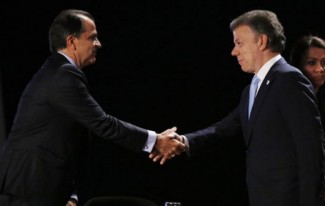
Colombia is at a crossroads after the results of the first round of the presidential elections, and the results could have grave consequences for the country's ongoing peace talks. In this interview, Maria Camila Moreno, director of ICTJ's Colombia program explains what's at stake.

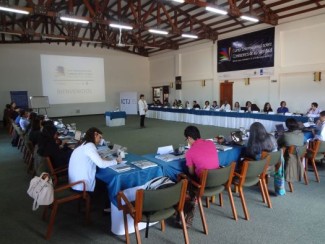
Nearly a decade after Colombia’s first transitional justice mechanisms were created, the country is now weighing options for the establishment of an official truth commission. To examine and inform these options, the International Center for Transitional Justice is hosting the International Course on Truth Commissions from March 11-15, 2013, in Villa de Leyva, Colombia. The course will be modeled after ICTJ’s international Intensive Course on Truth Commissions, which has been held for five consecutive years.

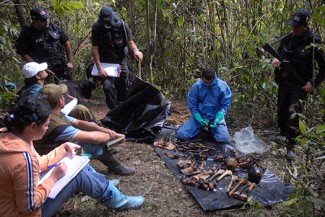
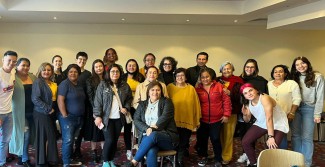
In societies grappling with conflict or repression, LGBTQ+ individuals are often targeted with violence and discrimination and experience some of the cruelest human rights violations. In 2022, Colombia Diversa began collaborating with members of ASFADDES, a prominent association of relatives of the missing or disappeared in Colombia. In June, 24 representatives from the two organizations met in Bogotá to for a series of workshops in which they exchanged knowledge and best practices and developed a better understanding of how to search for missing or disappeared LGBTQ+ persons.

In Colombia, international crimes can be tried under the ordinary national jurisdiction as well as a limited number of cases under the Justice and Peace Law of 2005 (JPL). Neither jurisdiction has served to highlight the widespread or systematic nature of state-sponsored violence. ...

To commemorate the 20th anniversary of the Justice and Peace Law—which created Colombia's first transitional justice system—media outlet Verdad Abierta, the Friedrich Ebert Stiftung, and ICTJ partnered to produce an investigative four-part series in Spanish that critically assesses its legacy. ICTJ has now translated the first two installments into English.

December 16, 2011 saw the world’s first ruling mandating reparations be paid for the unlawful recruitment of minors into armed forces. More than 300 former youth paramilitaries in Colombia will receive reparations including monetary compensation and medical and psychological care.

ICTJ, in alliance with organizations Corporación Caribe Afirmativo, Colombia Diversa and Santa María Fundación organized meetings with activists and victims of the conflict to learn more about the needs of the LGBTI community, and to consider how transitional justice measures—especially non-judicial approaches—can contribute towards protecting their rights.

This manual was created as part of the Framework Cooperation Agreement between the International Center for Transitional Justice and the Attorney General’s Office, with the aim of providing technical assistance to the National Unit for Analysis and Context (UNAC) and supporting the de...

This year, Colombia commemorates the 20th anniversary of Law 975, which established the country’s first transitional justice process, called Justicia y Paz (or Justice and Peace). With this anniversary top on mind, and as the current government engages with eight of the remaining armed groups in pursuit of its “Total Peace” strategy, ICTJ recently teamed up with podcast producers Sillón Estudios to create a four-part series that delves into the peace process with the AUC and considers key lessons learned.

A new paper by the ICTJ on the peace negotiations in Colombia considers the competing goals of punishing members of the FARC who are deemed most responsible for committing serious crimes.