
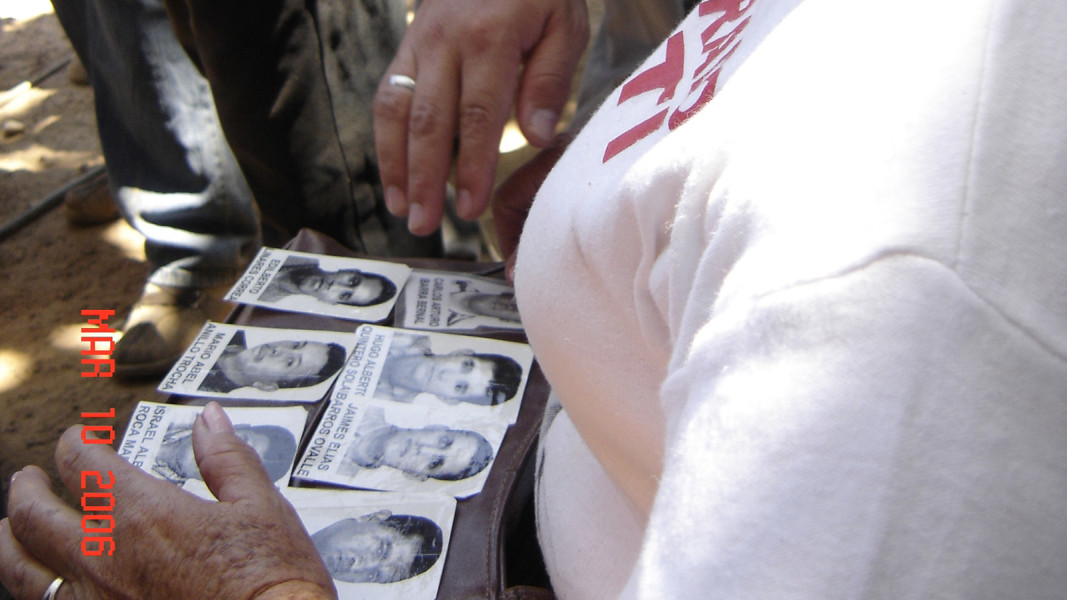
In 2005, Colombia passed the Justice and Peace Law, which established the country’s first formal transitional justice process. More than two decades have passed since the law’s enactment and the subsequent creation of a special criminal justice system to prosecute the serious crimes committed by paramilitary groups before their last mass demobilization in 2006.
To commemorate the anniversary, media outlet Verdad Abierta, the Friedrich Ebert Stiftung in Colombia (FESCOL), and ICTJ partnered to produce an investigative four-part series that critically assesses Colombia’s first transitional justice experience. The series presents an overview of the law and its legacy, examines the extent to which the mechanism uncovered the truth about the crimes committed and the fate of those who went missing, considers the perspective of victims who are still waiting for justice, and evaluates past and proposed reforms to this landmark law.
Verdad Abierta first published the series in Spanish. In an effort to share this incisive research with a wider audience, ICTJ has now translated the first two installments into English. The first, “From Laboratory to Transitional Justice Benchmark,” introduces the Justice and Peace Law, describing its key victories and very clear shortcomings, which have become lessons for present and future peace processes worldwide. The second, “Many Truths Revealed, But More to Come,” delves further into the law’s achievements in advancing truth, as well as its limitations. ICTJ, alongside its partners Verdad Abierta and FESCOL, invite English-speaking audiences to explore this groundbreaking collaborative project.
_______
PHOTO: Dozens of relatives of victims gather at the site where the paramilitaries laid down their weapons to inquire about their loved ones. (MAPP/OAS Audiovisual Archive)

