

1519 results

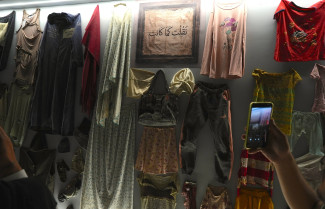
From May 25 to June 1, 2025, ICTJ held a series of community dialogues in three rural regions of the Gambia on sexual and gender-based violence, including crimes committed during the Yahya Jammeh dictatorship. The dialogues brought together 122 individuals, including community leaders, victims, and young people, to share their experiences and discuss pathways for justice.

This study explores specialized units established in 23 countries to investigate and prosecute serious international crimes. Notwithstanding the challenges faced by these units, the study concludes that countries with a specialized institutional approach are considerably more successf...

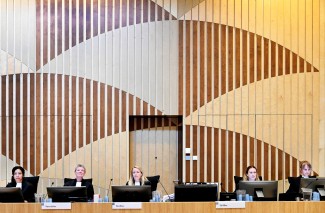
several judges dressed in black gowns sit on a judicial bench.

This report assesses the gender sensitivity of the African Union Transitional Justice Policy (AUTJP). Drawing on continental practice and scholarship, it identifies opportunities for AU member states, civil society, and donors to strengthen the policy’s implementation and its responsi...

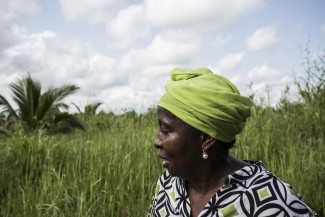
A woman stands in the profile position in a field of green plants on a sunny day with a clear blue sky

Displacement is one of the most widespread and tangible consequences of conflict, and has been chronically high in Africa’s Great Lakes region by any standard. This paper focuses on three salient gender-specific dynamics of conflict and displacement in the region that need to be incor...

Your Excellency, We, the undersigned civil society organizations, are writing to urge your government to support recommendations in the Report of the United Nations Fact Finding Mission on the Gaza Conflict (Goldstone Report) and work with others in the General Assembly to secure adoption of a...

The Liberian Truth Reconciliation Commission (TRC) was necessitated by the Accra Comprehensive Peace Accord signed in 2003. The insertion of the TRC in the peace agreement was largely seen by various actors as Liberia’s maiden step towards addressing a history that was fraught with gr...

The arrest of Ratko Mladic reignited debates on a wide spectrum of related issues, from its implications on the prospects for true reckoning with the past in the countries of the former Yugoslavia to the possible jolt it will give to Serbia’s hopes of joining the European Union. Beyond the immediate impact on the region, the strongest reverberations of Mladic’s transfer to the International Criminal Tribunal for the former Yugoslavia (ICTY) will be felt in the discourse on international justice.

On Tuesday, March 19, the genocide trial of General Efraín Ríos Montt began at the High Risk Tribunal in Guatemala. To talk about this historic development in Guatemala’s pursuit of accountability we talk with us one of the key players: Guatemalan Attorney General Claudia Paz y Paz Bailey

On a historic day for justice in Guatemala and the world, the trial for Guatemala’s former military dictator José Efraín Ríos Montt began this morning in Guatemala City. Ríos Montt and his co-accused, José Mauricio Rodríguez Sánchez – are standing trial on charges of genocide and crimes against humanity during the civil war in Guatemala, in which some 200,000 people were killed or disappeared, a majority of them indigenous Maya.

The International Criminal Court (ICC) opened its second trial against Germain Katanga and Mathieu Ngudjolo Chui on November 24, 2009. The men are former leaders of armed rebel movements from the Ituri district in the Democratic Republic of Congo (DRC).