1526 results

Six years into the carnage in Syria, atrocious crimes run rampant, with savage abuses committed against all groups in the devastated country, and the murderous regime, abetted by powerful allies, is still in power. The UN Security Council remains deadlocked and unable to take any steps towards...

The fall of the Assad regime marks the beginning of a long-overdue transformation in Syria. For the first time in decades, space has opened to speak freely about justice, accountability, and reconciliation. It is a moment filled with uncertainty and pain, but also one of immense hope.

This report presents qualitative data collected by ICTJ on how individuals in Greater Beirut talk about the Lebanon wars and the need for truth, justice, and an end to violence in their country. For the study, 15 focus group discussions were held in 5 neighborhoods in Greater Beirut, ...

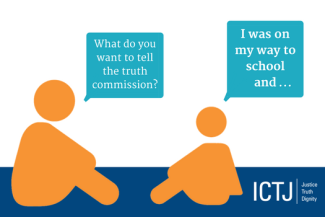
Societies seeking to grapple with the past have much to gain by speaking with young people about their experiences and ideas more effectively. But by the same token, they have a responsibility to gather those statements in a way that both protects and respects youth voices. We sat down with Valerie Waters, author of a new report on taking statements from young people, to discuss the guide and clear up common misconceptions about the statement-taking process.

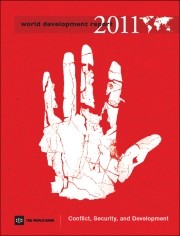
In April, the World Bank released its 2011 World Development Report (WDR) entitled Conflict, Security, and Development. It is the first WDR that links transitional justice to security and development and places human rights violations at the heart of its analysis of conflict. ICTJ has...

In April, the World Bank released its 2011 World Development Report (WDR) entitled Conflict, Security, and Development. It is the first WDR that links transitional justice to security and development and places human rights violations at the heart of its analysis of conflict. ICTJ has produced a fact sheet outlining the core findings of the report as they pertain to transitional justice.

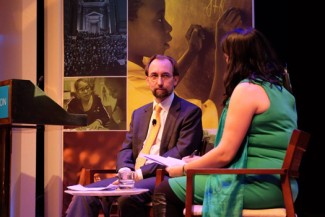
On December 8, ICTJ and the Center for Human Rights and Global Justice at New York University hosted UN High Commissioner for Human Rights Zeid Ra’ad Al Hussein for the 8th Annual Emilio Mignone Lecture on Transitional Justice.

ICTJ recently convened human rights defenders, journalists, and lawyers from Libya, Sudan, Syria, Tunisia, and Yemen for a workshop on digital, open-source investigations. Held on November 3-8 in Kampala, Uganda, the course trained participants on open-source tools with a view to strengthening their work investigating, documenting, and monitoring human rights violations.

Donald Trump is on a road to undermine the progress that decades of struggle has achieved - the time for action and resistance is now. The human rights movement must come together to resist his agenda, writes ICTJ President David Tolbert.

After three years on trial and a total of seven in detention, Thomas Lubanga gained the dubious notoriety of becoming the first person to be convicted by the International Criminal Court (ICC) in The Hague. It would be encouraging if the court, including the prosecution, indicated it saw Lubanga’s judgment as an opportunity to learn critical lessons as well as celebrate a historic day in international justice.