

1538 results

In a new briefing paper, ICTJ's Paul Seils and Roger Duthie examine what steps the international community can take during a crisis to support democracy and accountability.

A new ICTJ paper released today challenges the notion that criminal prosecution is the sole use for documentation of violations in Syria. Titled "Justice for Syrian Victims Beyond Trials", it urges the international community, human rights groups and Syrian civil society organizations to use the tools at their disposal to pursue overlooked avenues towards justice. These include the search for the truth, public acknowledgement of violations, and laying the foundation for future truth-seeking and truth-telling processes or reparations process.

Today, we are facing a global public health crisis of unprecedented proportions. Only time will tell the devastating toll that COVID-19 will exact on human life. The breakneck speed at which the virus is spreading does not give us reason for optimism in the near future. We at ICTJ fully grasp the gravity of the situation, and we take our responsibility for the health and safety of our staff, partners, and communities where we work seriously.

In October 2008, fighting erupted in the North Kivu province in eastern Democratic Republic of Congo (DRC) between rebel troops of Laurent Nkunda's Congrès National pour la Défense du Peuple (CNDP) movement, local militia groups, and troops of the Forces Armées de la République Démocr...

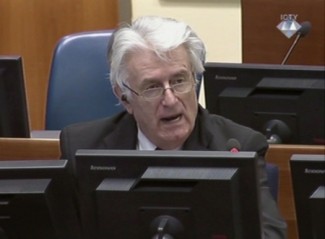
In this op-ed, ICTJ's Refik Hodzic says that five years of a trial, thousands of documents and evidence exhibits, hundreds of witnesses, and hours testimony have not moved Radovan Karadzic closer to acknowledgement of the suffering he inflicted on countless lives.

Civil Society Groups Protest Attempts to Derail Justice for Victims of Post-Election Violence (Johannesburg, January 25, 2011)—The Kenyan government should reaffirm its commitment to the International Criminal Court (ICC), African civil society organizations and international organizations with a...

The decision of the International Criminal Court (ICC) confirming charges of crimes against humanity against William Ruto, Joshua Sang, Francis Muthaura, and Uhuru Kenyatta, and declining to confirm charges against Henry Kosgey and Mohammed Ali is a reminder that the vast majority of victims have still not seen justice done, the International Center for Transitional Justice (ICTJ) said.

A new paper from the International Center for Transitional Justice on police vetting in Kenya charges that the Kenyan government has failed to undertake needed reforms to root out corruption and abuses from the National Police Service and restore public trust in the police. Four years into the vetting process, the National Police Service Commission, tasked with vetting over 77,000 officers, has faced allegations of corruption and been criticized for failing to vet senior police officers implicated in graft and other crimes.

Kenya plunged into a dark episode of violence following the controversial presidential election of 2007. The International Criminal Court’s (ICC) recently announced its investigation into issues of complementarity, peace, justice, victims, and affected communities in the country. ...

Ambassador Bethuel Kiplagat’s recent attempt to return to the Truth, Justice and Reconciliation Commission (TJRC)—pending resolution of serious allegations implicating him in acts connected to human rights violations and corruption—threatens the viability and credibility of the TJRC process, ICTJ said.