

1519 results

The United Nations has proclaimed December 10 as International Human Rights Day. The date commemorates the signing of the Universal Declaration of Human Rights in 1948, which represented the reaction of the international community to the horrors of the Second World War. Today is a day for reflection more than celebration. A cursory scan of events from the last few weeks has thrown up examples that demonstrate that the belief in human rights for all - in treating all states the same - is more of a tissue-thin membrane than a robust bulwark.

ICTJ spoke with Pablo Parenti about the trial that just concluded which investigated human rights violations and crimes against humanity that occurred at the Naval Mechanics School (ESMA), used as a detention and torture center during the Argentine dictatorship.

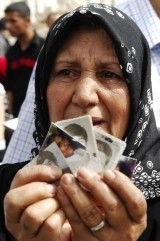
Lebanon has yet to seriously address the issue of thousands of people who went missing or were forcibly disappeared during the country’s civil war. ICTJ spoke with Lebanese activists to discuss a recent initiative taken by the families of the missing and civil society organizations to create a draft law on the missing.

Five years ago, in August 2018, to mark his 100 days in office, Armenian Prime Minister Pashinyan addressed a large rally in Yerevan’s Republic Square to officially announce his government’s intentions to incorporate transitional justice mechanisms into Armenian post-revolution reform agenda. Since then, Armenia has been pursuing a range of transitional justice initiatives alongside other democratic reforms, and it has made some limited headway, despite setbacks and major challenges including renewed conflict with Azerbaijan.

Around the world, the COVID-19 pandemic has revealed enduring legacies of repression. Some leaders have taken advantage of emergency measures meant to protect the population and curb the spread of the disease to instead crack down on civil society or political opposition and restrict ci...

This paper makes explicit some of the connections between transitional justice and development, two sprawling fields characterized by fuzzy conceptual borders and by both internal and external dissent. Taking seriously the idea of connecting, however, also means preserving the integri...

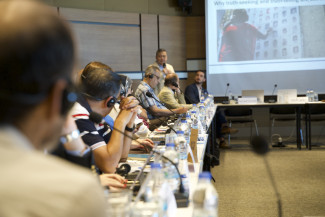
JAKARTA, Nov. 15, 2011—Experts and stakeholders from Cambodia, the Philippines, Bangladesh, Indonesia, Burma, Timor-Leste, Thailand, and Nepal, along with international experts are gathering in Jakarta’s Hotel Atlet from November 15–16 to discuss the need for progress on prosecuting serious crimes in Asia.

Since Georgia’s independence in 1991, successive governments have struggled to deal with endemic corruption, organized crime, and various disputes along its borders, which sometimes sparked into armed conflict. Efforts to combat corruption and organized crime through its “zero-toleran...

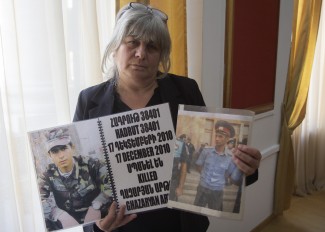
In the wake of the April uprising, the International Center for Transitional Justice (ICTJ) undertook a weeklong mission in Kyrgyzstan to assess whether a transitional justice approach might assist the country in its transition process.

The African Union and the European Union successfully concluded the fifth AU-EU expert seminar on transitional justice, held from June 19 to 20, 2025, in Abuja, Nigeria. Hosted under the Initiative for Transitional Justice in Africa, the seminar brought together more than 50 experts, policymakers, researchers, and civil society representatives to discuss the critical role of reparations in fostering justice, reconciliation, and sustainable peace.