

1538 results

The ICTJ continues to support human rights victims in Nepal in their pursuit of justice, truth, reparations, and institutional reform. This briefing paper presents a summary of findings and recommendations from workshops that ICTJ conducted with women victims, as well as meetings it h...

As the number of victims of violence against demonstrators in Syria, Yemen, Bahrain and elsewhere in the region rises, a question emerges for the government of Bashar al-Assad of Syria, but also those of Ali Abdullah Saleh of Yemen, Hamad bin Isa al-Khalifah of Bahrain and the vacillating international community: Can impunity for such crimes be permitted in this day and age?

David Tolbert, President of International Center of Transitional Justice: "I join many others in giving a final salute to Nino Cassese. He was man of extraordinary energy, singular determination and extraordinary intellectual talents but at the same time was an unassuming man, with a ready smile, an engaging anecdote and plenty of self-deprecation. Nino was a driving force behind the field of international criminal justice, not only through his leadership of both the International Criminal Tribunal for the former Yugoslavia (ICTY) and the Special Tribunal for Lebanon (STL) but through his unstinting writing and advocating on this most crucial of subjects."

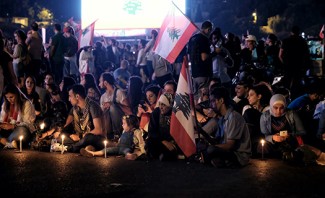
For over a month now, Lebanese people have been in the streets peacefully calling for an end to corruption, economic disenfranchisement, and government mismanagement, calling instead for accountability and reform of the systems that have allowed these things to occur. The protests are historic for several reasons: their scope and magnitude, as well as the way they have unified a country that has for so long had division baked into nearly every aspect of life, down to its system of governance.

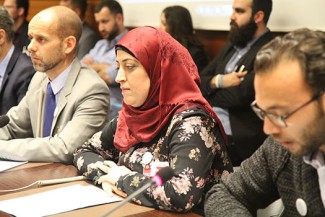
On March 22 in Geneva, we listened to the experiences of Syrians affected by attacks on schools. The Save Syrian Schools project presented the results of its one-year-long research—an unprecedented collaboration of 10 Syrian human rights organizations and the ICTJ.

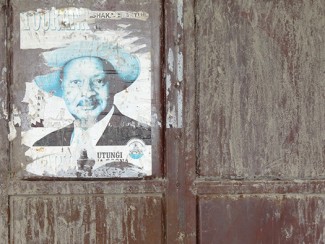
On January 14, 2021, Uganda held presidential and parliamentary elections. Incumbent President Museveni, who has been in power for 34 years, faced off against 10 opposition candidates, including pop star-turned-politician and main contender Robert Kyagulanyi, also known by his stage name Bobi Wine, of the National Unity Platform (NUP). The 2021 elections saw unprecedented state-sponsored violence, harassment of opposition candidates, and repression of civil society.

Côte d’Ivoire is obligated to provide reparations to victims of both the political violence that shook the country following the 2010 presidential elections and the different episodes of political violence and armed conflict since 1990. Fulfilling this obligation will show that the st...

The Working Group on Transitional Justice and SDG16+ calls on the international community, including policymakers, donors, and practitioners, to: provide consistent support and investment to context-specific transitional justice, as a tool of sustainable peace and development. formulate development...

Myanmar may have a new government under Aung San Suu Kyi, but former political prisoners continue to face challenges throughout the country. A new report sheds light on prisoners' challenges and recommends steps the government can take to offer redress.