42 results

With the war in Sudan now in its fourth year and amid unspeakable atrocities, 12 Sudanese human rights defenders and experts recently gathered with international stakeholders for a policy roundtable in The Hague to discuss what can be done now to advance justice in Sudan.

Civil society actors involved in transitional justice processes use narrative communication in strategic and agile ways. This work is vitally important, and yet it does not receive the attention and support it should.

Long before ICTJ existed, societies everywhere wrestled with the justice-related dilemmas caused by violent conflict, and victims, communities, and courageous leaders found answers of their own. What was missing was a place where people who took part in those different experiences could meet, share knowledge and lessons, and build a community to respond together to the evolving challenges to justice and peace. In 2001, ICTJ was created to be that place and to catalyze a collective effort to address massive human rights violations and build a peaceful, inclusive, and just future.

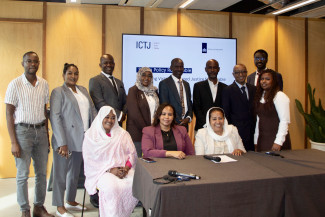
As Sudan’s devastating conflict enters its fourth year, the priorities of victims and Sudanese civilians must be central to efforts to end the violence and build sustainable peace. Against this backdrop, ICTJ and the Government of the Netherlands convened a policy roundtable in The Hague on advancing victim-centered justice for durable peace in Sudan.

This research report examines how civil society actors involved in transitional justice processes narrate and communicate their role, impact, and value. The study focuses on actors in Colombia, The Gambia, and Kenya, describing the content, form, and audiences of their communication w...

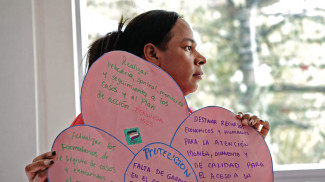
A person holds up a poater collage made up of pink paper with text in Spanish

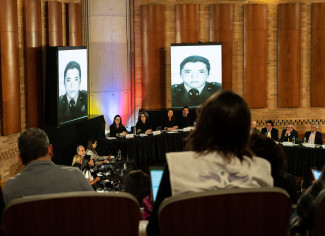
In an interview first published in "El Espectador," ICTJ’s María Camila Moreno discusses the first rulings of Colombia’s Special Jurisdiction for Peace, the state’s obligations to implement them, and why restorative justice is vital to lasting peace.

Colombia currently faces a transformed, fragmented form of violence centered on territorial and social control rather than the traditional insurgency. This briefing paper argues that state security strategies remain misaligned, relying on outdated military approaches and metrics. To a...

Image of first page of the briefing paper "From Combat to Territorial Control"

Colombia currently faces a transformed, fragmented form of violence centered on territorial and social control rather than the traditional insurgency. This report argues that state security strategies remain misaligned, relying on outdated military approaches and metrics. To avoid lon...

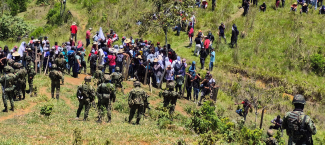
An aerial view of a group of soldiers interacting with a large civilian crowd in a rural setting

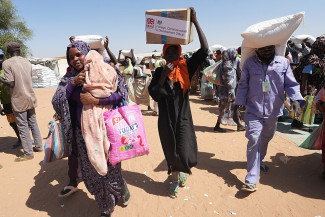
As the world marks the third anniversary of the brutal war in Sudan, it is a moment to reflect on a conflict that rarely receives the media attention it deserves and to consider the millions of Sudanese caught in cycles of violence.

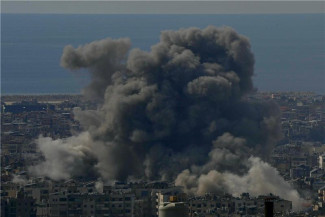
Recent Israeli strikes in Beirut and other populated areas in Lebanon, among the conflict's most intense so far, have destroyed critical infrastructure and devastated civilian communities. ICTJ stands unequivocally with the Lebanese people and all victims across the region and calls for an immediate end to all attacks on and threats to civilian communities and infrastructure.