

104 results

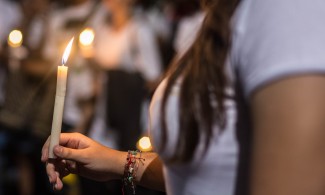
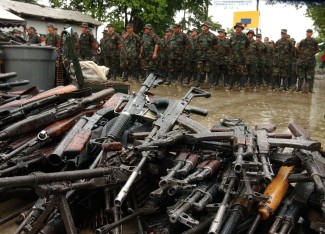
In July, Colombian President Gustavo Petro traveled to New York to address the UN Security Council on the status of the implementation of the 2016 peace agreement between the Colombian government and the guerrilla group Revolutionary Armed Forces of Colombia. During his visit, Petro also inaugurated a monument commemorating the country's enduring pursuit of peace.

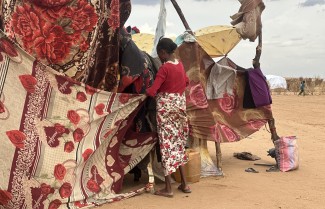
This study aims to communicate the perspectives, expectations, and needs of South Sudanese displaced persons to relevant policymakers and thereby inform the ongoing transitional justice efforts emanating from South Sudan’s 2018 revitalized peace agreement. It also provides lessons lea...

several women in colorful dresses crouch around an open fire pit, cooking food in a large pan.

The recent move by the signatories to the Revitalized Agreement on the Resolution of Conflict in South Sudan (R-ARCSS) to extend the peace agreement’s life for another 24 months has not come as a surprise. While there have been some positive, though sporadic steps toward fulfilling the R-ARCSS, its...

In February 2024, the Office of the United Nations High Commissioner for Human Rights hosted an event in Seoul, South Korea, marking the 10th anniversary of the release of the report of the United Nations Commission of Inquiry on Human Rights in the Democratic People's Republic of Korea. ICTJ Senior Expert Ruben Carranza spoke at the event and discussed lessons learned involving nonjudicial forms of accountability. In this interview, he talks about why a broader approach to transitional justice is necessary and how transitional justice measures can help promote peace and possible reunification on the peninsula.

Since long before Russia’s full-scale invasion of Ukraine in 2022, Moscow has spread disinformation to justify its aggression, disguising their longstanding premises that Ukraine is, allegedly, not a sovereign nation, and its statehood is conditioned upon an alliance with Russia. Countering these narratives is not only valuable for Ukrainians, but also for buoying any democratic transformations in Russia and for establishing a more nuanced understanding of the history of Central and Eastern Europe.

This report provides an analysis of international economic sanctions from a transitional justice perspective. It considers the role that sanctions may play in advancing or hindering accountability, redress, and prevention in response to massive and serious human rights violations. The...

in two different photos, people hold signs for and against sanctions

On August 13, 2024, the International Crimes Division of the High Court of Uganda delivered its long-awaited verdict in the case of Uganda versus Thomas Kwoyelo, a former commander and colonel in the rebel group the Lord’s Resistance Army. Mr. Kwoyelo was convicted on 44 counts of crimes against humanity, war crimes, and other serious crimes committed during the decades-long armed conflict in Northern Uganda between the LRA and the Ugandan government. This judgment represents a significant milestone in the pursuit of justice and accountability and a crucial step toward acknowledging the suffering of the victims of these horrific mass atrocities.

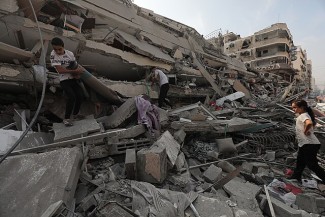
Recent Israeli strikes in Beirut and other populated areas in Lebanon, among the conflict's most intense so far, have destroyed critical infrastructure and devastated civilian communities. ICTJ stands unequivocally with the Lebanese people and all victims across the region and calls for an immediate end to all attacks on and threats to civilian communities and infrastructure.

In a fast-changing world, ICTJ regularly reexamines and adapts its methodology to develop innovative solutions to emerging problems, advance its mission, and achieve justice for victims of human rights violations. In that spirit, ICTJ recently launched an exciting new website and newsletter design. After over a year of research, planning, surveying stakeholders, designing, and testing, we unveiled a site that better aligns with what ICTJ and transitional justice are today.

On October 7, the world watched in horror as members of the militant group Hamas slaughtered over 1,400 Israelis, most of whom were civilians including children and the elderly, in a premeditated and sophisticated attack. Israel’s response has so far been no less horrific. Incessant waves of indiscriminate airstrikes on Gaza have hit residential buildings, medical facilities, and other critical civilian infrastructure, besieging the entire enclave and leaving more than 5,000 people dead including 2,000 children. Unfortunately, these unspeakable atrocities—the condemnation and rejection for which we have run out of words—are not isolated events happening in a vacuum. They are, in fact, just the latest episodes in a 75-yearlong cycle of violence.