
Throughout 2025, ICTJ’s experts offered thoughtful analysis on conflicts and major political developments in more than 10 countries as part of the World Report newsletter. Their insightful commentaries shed light on the obstacles that victims, civil society, and their partners must navigate as they pursue sustainable peace and justice. In this edition, we look back on the past year through the Expert’s Choice column.
Our experts closely followed some of the world’s most devastating and protracted conflicts. Head of Program for Sudan Ilaria Martorelli, together with Programs Expert Emma Merritt-Cuneo and Policy Analyst Yasir Masoud, considered the bittersweet double anniversary of the country’s 2019 revolution and the second year of the current civil war, which has created the world’s worst humanitarian crisis. Later in the year, Martorelli examined the International Criminal Court’s landmark conviction of former Janjaweed leader Ali Muhammad Ali Abd-Al-Rahman for war crimes and crimes against humanity in Darfur, and what it means for victims amid ongoing atrocities in the country.
With the war in Ukraine approaching its fourth anniversary, Legal Advisor for Ukraine Kateryna Busol and Programs Expert Alec Knight weighed in on Russia’s widespread and systematic use of enforced disappearances, underscoring the anguish of families searching for their missing loved ones while assessing the legal and institutional responses to this crime against humanity. Deputy Executive Director and Director of Programs Anna Myriam Roccatello and Knight also analyzed Russia’s extensive use of disinformation and propaganda—particularly on social media and other digital platforms—to justify its invasion and erode support for Ukraine, arguing that countering these false narratives is crucial to any future transitional justice process.
In Syria, Head of Program Nousha Kabawat reflected on the fall of the Assad regime, the war’s effective end, and the opening they present for long-overdue transformation in the country. She stressed the importance of preserving sites of abuse, meeting the demands of families of the missing and detained, and ensuring that Syrians—especially victims and civil society—guide any future transitional justice process.
Experts also monitored ongoing peace processes and associated transitional justice efforts around the world. In South Sudan, Head of Program Agatha Ndonga considered the milestones the country has achieved in its peace process, despite recent setbacks including another two-year postponement of a highly anticipated, first-ever post-independence general election. Later, Program Coordinator for Armenia Maria Abrahamyan analyzed the Joint Declaration on Future Relations signed by Armenia and Azerbaijan, asserting that while it offers a framework for peace between the two countries, it lacks strong guarantees and risks sidelining victims’ rights in favor of political and economic incentives. In Colombia, Head of Office Maria Camila Moreno Múnera reflected on the assassination of Senator Miguel Uribe Turbay, the specter of renewed political violence it raises, and the obstacle it poses to President Gustavo Petro’s “Total Peace” strategy ahead of the 2026 elections.
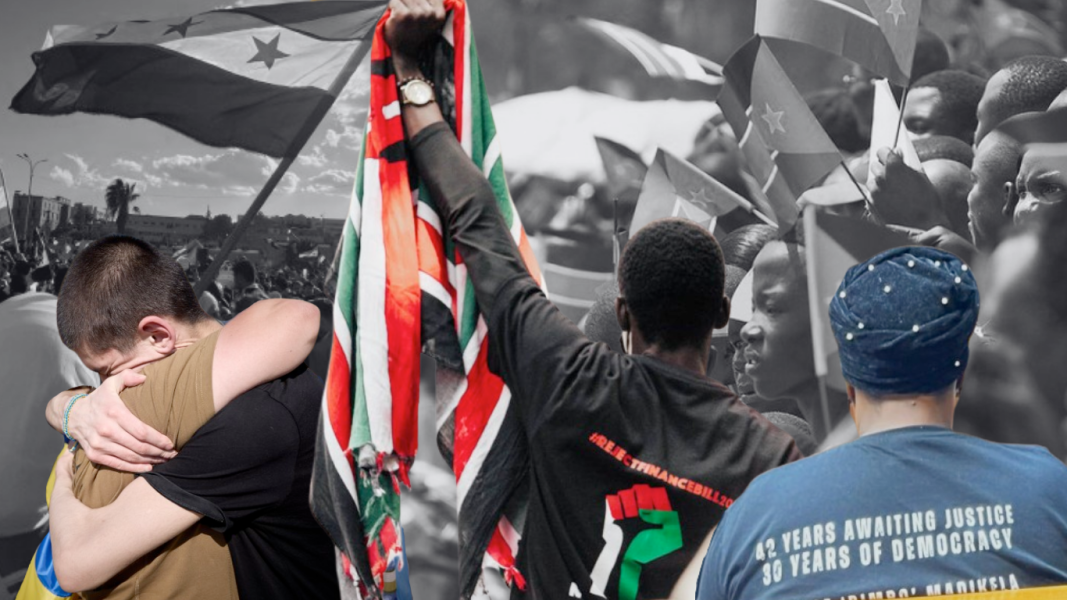
In 2025, young people in numerous countries across the globe took to the streets to demand political and economic change. In Kenya, Agatha Ndonga discussed youth-led protests against government tax hikes and corruption and the deadly police crackdown that followed, condemning the violence and calling for renewed police reforms. Later in the year, Programs Expert Clément Eyraud explored how Generation Z-led protest movements in Morocco, Madagascar, and Cameroon, are reshaping democratic governance and transitional justice processes in their countries and across the African continent.
Finally, in South Africa, the Johannesburg High Court handed down a landmark judgment opening new avenues for accountability for international crimes. Senior Programs Expert Howard Varney assessed the decision, which allows apartheid-era crimes against humanity charges to be pursued in a domestic court for the first time, and its implications for international criminal justice.
As conflicts persist, democratic institutions face unprecedented pressures, and mounting disinformation undermines truth and memory, peace and justice will face no shortage of challenges in the year ahead. We at ICTJ will continue working on the ground side by side with victims, advocating at the national and international levels, and monitoring developments in transitional justice around the world. Please make sure you have signed up for our newsletters and be the first to receive our monthly World Report and Expert’s Choice.

