
This interview first appeared in the outlet PassBlue on January 11, 2026.
Twenty years into his career in transitional justice, human rights and the rule of law, Fernando Travesí-Sanz says the best chance to achieve justice in post-conflict zones is to reject a formula.
“When countries face these massive challenges, they all feel very unique,” said Travesí-Sanz in an interview with PassBlue, “and it’s important to keep them that way.”
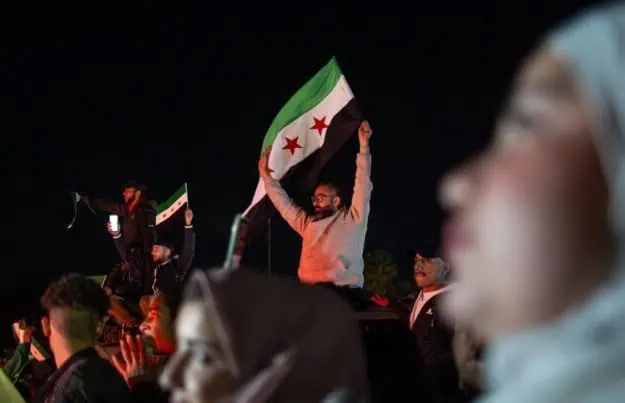
After Islamist rebels overthrew the decades-long Bashar al-Assad regime in Syria in December 2024, the New York City-based International Center for Transitional Justice (ICTJ), where Travesí-Sanz is the executive director, asked survivors of the regime how the country should move forward while repairing the countless lives and livelihoods that were victimized by the dictator.
The ICTJ, a nonprofit group, helps to answer such questions, saying that it works “side by side with victims to obtain acknowledgement and redress for massive human rights violations, hold those responsible to account, reform and build democratic institutions, and prevent the recurrence of violence or repression.”
Having operated in 50 countries across five continents, the center aims to ensure that the voices and demands of victims are recorded, considered, and enacted, whether a conflict is resolved, peace is being negotiated, or violations continue. But the nature of justice in such settings can be both manifold and unending. Syria is a prime example.
After Ahmed al-Sharaa led a rebel army to topple al-Assad in 2024, simultaneously ending a 14-year civil war during which al-Assad oversaw massacres, disappearances, and imprisoned hundreds of thousands of his own people, the ICTJ set out to help Syrians mold what had then seemed an inaccessible future for the country.
Teaming with Bridges of Truth, a Syrian advocacy group, and local civil society leaders, the center created forums for victims to map out the future of their country and convened international dialogues to support the new Syrian government’s own pursuit of transitional justice.
“It’s a constant exercise of dialogue at the community level, at the national level, and at the international level,” Travesí-Sanz said. “How do we live together after this? How do we continue writing the history of a country in which this doesn’t happen again?”
PassBlue interviewed Travesí-Sanz at the center’s New York City office, asking him about the challenges and breakthroughs the organization has encountered while facilitating a victims-led path to transitional justice in post-Assad Syria. Travesí-Sanz, who is from Spain, compared the experience to the lessons learned from Colombia’s post-conflict transition, revealing the nuanced, fragile nature of both retroactive justice and long-term peacebuilding.
He also talked about the United Nations’ role in this process and touched on how the recent erosion of the organization’s work financially and existentially by the Trump administration, saying that “Attacking the UN is not just attacking the institution. It’s attacking the principles, the values, the Charter, the international human rights framework. It’s an attack on multilateralism. It’s an attack on cooperation.”
The conversation has been edited and condensed for flow.
PassBlue: How do the government and various human rights commissions in Syria ensure that the full diversity of the Syrian population can be respected in the post-Assad transitional period?
Fernando Travesí-Sanz: It’s a difficult question that doesn’t have an answer, because that is the objective, right? A new government in every transition needs to demonstrate gradually that they include all the minorities and all the diversity that a country represents. That doesn’t happen from one night to another, especially when you come back from either an authoritarian regime or conflict. So, there are usually marginalized groups that need to be brought in as active stakeholders and participate.
How does that happen? In the case of Syria, that happens by looking at the frameworks and making sure that there is inclusion in them that should be reviewed, developed, or created. And that will have to happen with a new constitution, with new, fair, transparent, and equal elections. So far, there is a time frame for that, but right now, the government needs to ensure that day-to-day decisions follow those principles. I think the new commissions [National Commission for Transitional Justice and the National Commission for Missing Persons, or NCMP] have made very strong, principled declarations about inclusivity and about how they will interpret the decrees they created to bring all the victims together.
The government made initial declarations about bringing accountability for all the violations committed in the Syrian conflict. After a few months, they created two major commissions [above]. One is for the search for the disappeared, and the other is for transitional justice. Those commissions will have the responsibility and the obligation to put in place inclusive systems that center on victims of the Assad regime.
PassBlue: Based on your findings with Bridges of Truth, an NGO, which you’ve been working with in Syria, how can you create a system for transitional justice there, and how do the results echo, say, the Colombians’ experience that you might have worked with?
Travesí-Sanz: They’re very different cases, but they are still connected in their goals and principles. I think that transitional justice is only relevant when it’s really tailored to the context and is based on the reality on the ground. I think it fails every time that it adopts a technocratic approach or a template.
We all know that in any authoritarian regime, there is an objective of cracking down on civil society and suppressing dissent. Over many years of the authoritarian regime in Syria, civil society was very weak, as opposed to Colombia, where civil society is very strong and institutions are very strong. In Syria during the Assad regimes [al-Assad and his father, Hafez al-Assad] and then during the war, civil society really flourished in the diaspora, and our work with many organizations — including with Bridges of Truth — was to strengthen their capacity and work with them to prepare for when the moment comes. And the moment came last December [2024].
Civil society’s role is always key. I don’t think there is any possibility of success in a transitional justice process if it is not led by civil society, by victims groups, by the reality on the ground. Civil society needs the capacity to articulate its demands, to be aware of the rights to be stakeholders, and to be sitting at the table. In Syria, that process happened outside the country during the war, because there were no conditions in the country to extrapolate a civil society. Civil society is now back in the country, and I think it is the greatest asset for the transition in Syria — those individuals leading different organizations, documenting violent crimes, and bringing together victims are now empowered, and they know they’re policymakers now. They are a counterpart of the government that might enforce accountability, transparency, and inclusion, and participate in all the processes.
What we did with those organizations was collect a lot of information and generate the capacity outside the country that is making an impact in the country. In our programs, we started listening to different communities not only for the sake of storytelling or to give them a platform to say what they’ve experienced — in many cases for the first time — but to convert that into policy messages: how we address their victimization, their needs, and their demands to build the transitional justice process.
In Colombia, civil society has been a key actor. I think in many Latin American countries, civil society has been a very powerful and influential stakeholder in all processes. Of course, we’ve worked with many actors in the civil society, but they were often in the position to work with the government, even during conflict times and while civil society was threatened, attacked, and murdered. The civil society and the institutionality in Colombia and Syria are completely different worlds, but they can learn from each other. Of course, they can learn how to incorporate political analysis, understanding, the opportunities and the challenges, mapping stakeholders, and how to advance. They have common challenges.
In Colombia, more than 120,000 people were disappeared. So, in Syria, how do you search for those who were disappeared? How do you respond to the families that have been looking for them for years or decades? How do you exhume mass graves? How do you identify the bodies? How do you provide psychosocial support to the families or compensation to the families, and how can families acquire the right to truth?
We recently supported some exchanges of the very nascent Syrian National Commission for Missing Persons [NCMP] with Colombia’s Search Unit for Missing Persons [UBPD], as well as those in Argentina, Mexico, and Bosnia and Herzegovina — other countries that have faced those challenges. When countries face these massive challenges, they all feel very unique, and it’s important to keep them that way.
PassBlue: In the first months that you’ve conducted these sessions with Bridges of Truth, what signs — both encouraging and discouraging — have you seen in victims taking charge of Syria’s future?
Travesí-Sanz: If we look at Syria’s NCMP, they have already created an advisory committee that is made up of victims, different victim representatives, or civil society leaders who have been working on the search for the disappeared before the commission was created. It is clearly understood that they cannot do it without the participation of the victims, because the commissions actually don’t start any of the searches. The search has been started by the families from day one. So, the commission needs to really draw energy, knowledge, and experience from and then continue empowering that search. That is a quick win.
If we go back to the basics on transitional justice, it’s a delicate balance. The objective is achieving justice, acknowledging the violations, addressing them, repairing, and also guaranteeing or preventing the violence from happening again. This is done in a context where criminality has been massive, the number of victims is in the hundreds of thousands or millions, and the institutions are usually either weak or nonexistent, or they’ve been complicit, or they have responsibility in the commission of the violation. So, while you move toward a process of justice, you have to identify the roots of the violence and address them at the same time. That’s why the constant dialogue between the new authorities, or the institutional society, and the civil society, the victim groups, and other members of the society, is essential. At the end of the day, the country is renegotiating the social contract.
PassBlue: In Syria, many participants viewed the judiciary branch and other state institutions as sources of oppression and injustice rather than guarantors of justice. How can you hold someone accountable when the judge himself signed death sentences? How do transitional governments or international organizations like the UN address this issue?
Travesí-Sanz: Syria is one case, but there have been many in which you cannot resort to the ordinary justice system of that country because it has been tainted in the commission of the crimes, or they have been tools of oppression. As has been said in testimony: What do you understand by justice? How would victims feel that justice is being served? What does it mean for them? It might not be the Western idea of justice in a courtroom, or it might be that, but the country is not ready to deliver. You might need to review the criminal and procedural codes. You might need to see whether judges or other civil servants from the justice systems are qualified enough, or you might test whether the decisions were tools of the oppressor or not.
So, you might not go to the justice system automatically, but you have to find different ways. You have to understand what people mean by “justice.” Justice can be to find beloved ones who have been disappeared. Justice is to get one’s life back, a life project. My community to be rebuilt; my house, my property, or my land to be given back to me. Justice is an acknowledgment that I didn’t do what I’ve been accused of, and I want to expunge my criminal records that the previous regime put on me and have conditioned my professional life and have excluded me from different opportunities. By doing these consultations with the victims, you get valuable material to design programs and policy processes that will make people feel that justice is being delivered.
In Syria, the transition needs to be supported by the international community, which plays a very important role in making sure that a genuine process has the political, technical, and financial support to get out of decades of violence and financial crisis. I think we are seeing steps toward that.
PassBlue: Since we’re talking about the unending nature of the democratic project and the generational scope of transitional justice, how have the failures of post-conflict transitional justice in Colombia affected the country’s ability to ensure long-term stability at the government level and for survivors of the conflict?
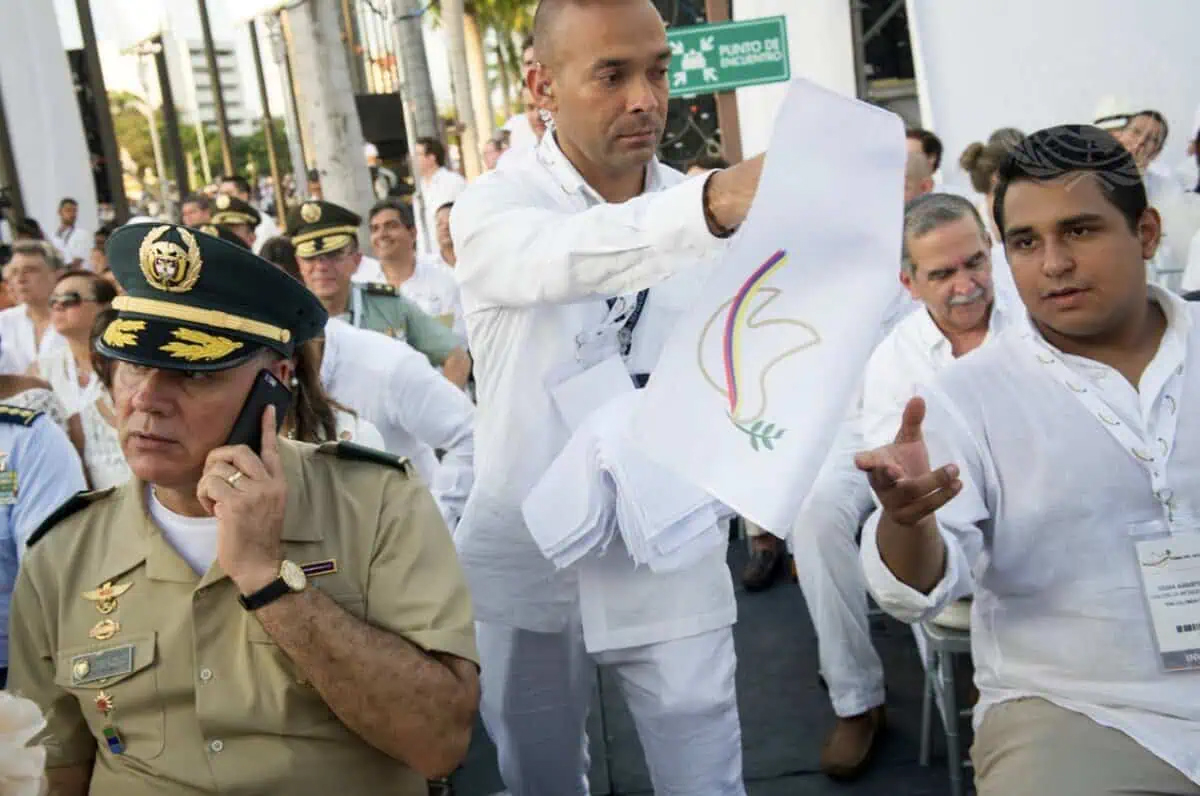
Travesí-Sanz: In Colombia, you’ve never had a real “past conflict.” The country has been negotiating the end of multiple conflicts that have never brought a clear-cut, post-conflict situation. There was the Colombian Constitution of 1991 and the Justice and Peace Law [2005], and the agreement with Revolutionary Armed Forces in Colombia [FARC], so there have been peace negotiations, which is very different from Syria. But other conflicts continued between different actors. When the paramilitary groups were demobilized under the Justice and Peace law, guerrillas were still fighting the state. When the government negotiated the peace agreement with FARC, other guerrillas were continuing the fight. So the country, unfortunately, has not enjoyed a true post-conflict situation.
The current government [under President Gustavo Petro] tried to negotiate this big project, which was part of that vision of achieving “total peace.” That has not happened, of course, and now we have new cycles of violence coming from new groups, old groups, as well as organized crime, which exercises a very big role in the security and politics of the country.
I would say that the Colombian process has succeeded in some parts. I think their transitional justice processes have brought an incredible amount of truthful information about the violations, the responsibility of the violator, and have triggered an uncountable number of prosecutorial processes. I think the country is completely different from 20 years ago, and that is greatly because of the different transitional justice processes that have happened. Has that changed the country to prevent violence from happening again? Clearly not. We are again in a situation where new groups control the territory, attack civil society, and co-opt local or regional authorities...
If there is a common pattern, I think it is that in every demobilization, every peace process, the state, not the government, has not moved fast enough to fill the gaps left by demobilized groups. It was not fast enough to go to the remote areas that were controlled by armed actors. Once they mobilized under a peace agreement, under some conditions, the state should have been there, delivering services, taking control of the monopoly of weapons security, delivering justice, to replace the role that the guerrillas or the military groups were exercising in those territories. That gap has been quickly replaced by new groups, or by dissident groups or organized crime groups, that have recreated the violence. That has been a big mistake. The areas of the country that were badly affected by the previous conflicts are still affected because the government didn’t deliver on their promise of being present, governing, delivering rights and basic services at the speed that was needed.
The current president represents a left political party, which I don’t think would have been possible without the demobilization of the FARC. I think the peace agreement with FARC created and opened up a political space in the country to express political ideas that were before co-opted and monopolized by the guerrillas. The guerrillas’ departure left a political space for other, peaceful political parties to be prominent in electoral cycles.
PassBlue: How have international organizations such as the UN intervened in post-conflict transition situations in Colombia, and how are they aiding Syria?
Travesí-Sanz: The UN has been present in Colombia for years. They established the political mission after the peace agreement to monitor its implementation. I don’t know how many UN agencies are working with the government and providing a lot of support to the government and civil society. That role is key, especially when there is so much support for the country.
I think in other countries, the UN can be perceived differently. It might not enjoy the same level of support or legitimacy in all the contexts where we work, and that makes its role more difficult. They have to understand that they might not be perceived as a neutral actor everywhere by all parties. Again, understanding the political dynamics of the conflict and mapping the different stakeholders to see who should and who shouldn’t intervene are very important. I think they were absolutely essential for the success of the peace negotiations in Colombia. It was also catalyzing a lot of support to organizations like ours, and others were also providing for the victims and the state. They need to create, first, that legitimacy, then the contacts, then the relationships that they had in Colombia after being established there for such a long time.
PassBlue: We’ve seen the UN increasingly discredited over the past couple of years by leaders, such as US President Trump, in his first term and intensified now. Have you felt any impacts of this delegitimization in your field and work?
Travesí-Sanz: That’s a tough question. The UN has become, in some countries, the target of very clear political agendas. There is a clear erosion of the role and the value of the UN; as a result, there is an attack on the international legal framework that the UN represents, which, for me, is the most important part. The institution has room for improvement, yes, but it plays a role in defending, embodying, and representing an international legal framework of rule of law, human rights, and humanitarian law that the world has agreed on. We should be abiding by the attack on the UN as an attack on the framework itself. Attacking the UN is not just attacking the institution. It’s attacking the principles, the values, the Charter, the international human rights framework. It’s an attack on multilateralism. It’s an attack on cooperation.
The US’ dismantling of its cooperation programs with the UN has impacted support for transitional justice processes all over the world. As soon as you dismantle international cooperation mechanisms, it affects humanitarian assistance, it affects global health, global education and global rule of law, justice and accountability, and protection of human rights. It affects financial support, but also the lack of attention or value to the principles of justice for all, accountability, and fighting for security.
PassBlue: What do governments owe their citizens in post-conflict transitional periods?
Travesí-Sanz: Using transitional justice language, they owe them the truth of all the violations and all the crimes that have been committed. They owe them reparations for those violations, individually and collectively, and they owe them to create a new system, a social contract, institutions, and a legal framework that guarantees that everyone is counted and protected, and everyone’s rights count.
It’s where they owe them, which is a lot. I like the expression actually, what they owe those who have suffered at an incredible level, in their personal life, their families, their work, their refugees, displaced, tortured, or killed. If the governments don’t pay attention to that debt, if we want to use that term, it’s very difficult for a democracy to emerge and succeed. It will always be like a pending debt they will have to pay at some point.
___________
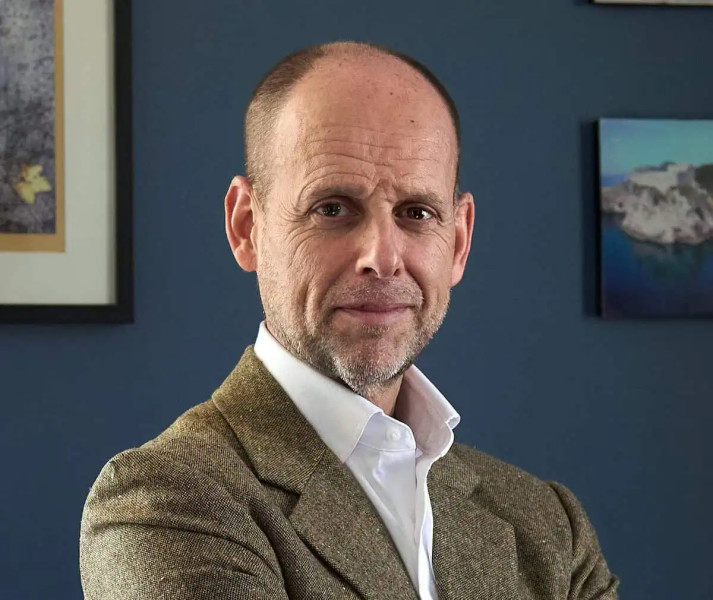
PHOTO: ICTJ Executive Director Fernando Travesí-Sanz is photographed in his office on January 8, 2026. (John Penney/PassBlue)

