341 results

Indigenous peoples are still some of the most marginalized and vulnerable communities around the world. In a conflict, they are often some of the most affected as their resource-rich territories are coveted by powerful and violent groups, their identity and loyalty perceived with mistrust, and their...

For years, ICTJ has championed the media and the role it plays in supporting truth-seeking and advancing accountability and redress for victims of conflict-related atrocities. In the places where we work, from South Africa, to the Gambia, Guatemala, Colombia and the Philippines, media projects and coverage—both mainstream and alternative—have been crucial in ensuring participation, mediating public discourse, contributing to acknowledgment for victims, and revealing long-hidden truths about crimes. This month, we share a dispatch from our work in Uganda.

In these convoluted times, when terrible news dominates the headlines and overwhelms our hearts and minds, it is sometimes comforting to remember the words of Martin Luther King, Jr.: “The arc of the moral universe is long, but it bends towards justice.” News from Spain on recent progress toward justice for victims of fascism may offer some inspiration, and it is why I picked this story from the many unfolding around the world to comment on in this month's World Report.

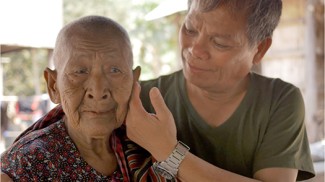
Angkar, screened on June 16 at the New York Human Rights Watch Film Festival, follows Khonsaly, a victim of the Khmer Rouge, on his journey to the village he fled almost 30 years ago. The film, produced by Neary Adeline Hay about her father's experience with torture and repression, is an intergenerational offering to truth and memorialization work that dances between the inheritance of abuse and its painful recollection by a survivor.

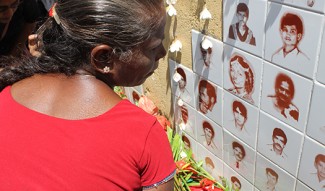
Life continues to stand still for the many families of the missing and disappeared in Lebanon. The Lebanese War ended 28 years ago, but for these families the war rages on. A recent legislative breakthrough, however, might finally pave the way for Lebanon to confront this legacy.

The 2030 Agenda for Sustainable Development establishes an ambitious set of goals and targets, the achievement of which will be a formidable challenge for any country struggling with poverty and inequality. This challenge increases dramatically for countries currently experiencing or emerging from violent conflict.

ICTJ sits down with Syria Expert Nousha Kabawat to pause and reflect on the progress made so far in building capacity, raising awareness, and initiating high-level dialogue to address what remains a perilous situation.

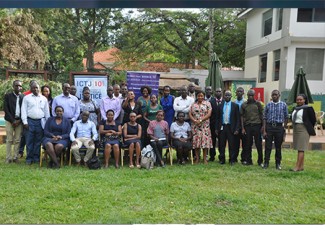
TUNIS—ICTJ hosted a conference on May 2 and 3 to address the current challenges facing Tunisia’s Specialized Criminal Chambers (SCC) as it proceeds to adjudicate cases of serious human rights violations committed under the former regime. The 90 guests who attended included members of Tunisia’s Truth...

Members of parliament from political parties opposed to extending the work of Tunisia’s truth commission today voted to end the commission’s mandate. This came after parliamentarians from parties that support the extension walked out of the proceedings because their position is that the Organic Law that created the Truth and Dignity Commission (TDC or Instance Vérité et Dignité in French) authorized the TDC to extend its mandate. Earlier, the TDC had voted to extend its mandate by a year in order to complete its work. In a position paper distributed to members of parliament and civil society activists, ICTJ and the Victims’ Coalition for Dignity and Rehabilitation jointly said that they supported the extension of the TDC’s mandate, despite internal issues among its commissioners. ICTJ pointed out that other truth commissions elsewhere have sought and been given extensions in order to carry out key parts of their work, such as public hearings, or to complete writing their reports. Both ICTJ and the Victims’ Coalition said that an extension would allow the TDC to hold public hearings on marginalization and unemployment – which was one of the grievances that drove the Arab Spring in Tunisia. It would also give the Commission time to finalize its report and recommendations, including those on reparations.

On Friday, the United Nations hailed the progress made since 2014 in Tunisia in terms of transitional justice, underlining the importance of “enabling the transitional justice process to achieve its objectives." "The United Nations Resident Coordinator in Tunis, Diego Zorilla, congratulates all...