

629 results

This publication is intended to facilitate the process of drafting a mandate for a truth commission charged with the nonjudicial investigation of serious human rights violations. It covers the different aspects of a legal mandate that are necessary to enable an effective truth-seeking...

Providing justice to victims of human rights abuses in fragile contexts such as the Central African Republic (CAR) is challenging for reasons related not only to the state’s stability, capacity, and political will, but also socioeconomic inequality in the country. This research report...

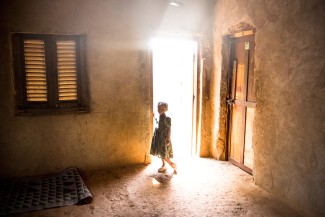
A young girl stands in the doorway to her house

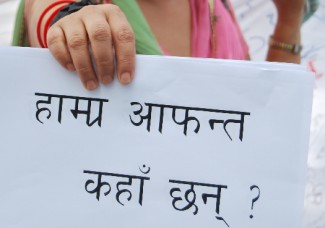
As attested by the arrest on January 3, 2013 in the United Kingdom of Kumar Lama, a Nepali Army Colonel suspected of torture, the government of Nepal’s failure to pursue truth and accountability for conflict-era violations can have serious consequences. Rather than resisting UK efforts to implement its obligations under international law, the Nepali government should develop a full transitional justice programme and redouble its efforts to provide truth, justice and reparations inside the country.

This report, part of a joint research project by ICTJ and UNICEF on the intersections of education, transitional justice, and peacebuilding, explores how a transitional justice framework can help to identify educational deficits relating to the logic of past conflict and/or repression...

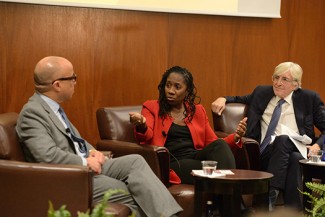
Do the concepts and strategies of transitional justice have a role to play in the United States? Our 2017 Emilio Mignone Lecture asked that question, with Darren Walker, President of the Ford Foundation, and Sherrilyn Ifill, President and Director-Counsel of the NAACP Legal Defense Fund, joining ICTJ's David Tolbert in conversation. Watch the full discussion here.

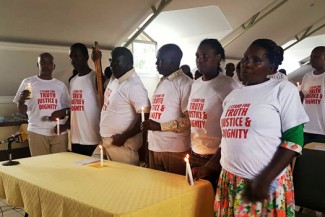
The right to the truth carries special resonance in Kenya, and so on March 24th Kenyan state agencies, survivors, civil society organizations, and international partners will join together in Nairobi to observe the International Day for the Right to the Truth. It provides an opportunity not just for remembrance, but also for greater dialogue between the government and victims about the implementation of reparations programs and of the findings presented in the Truth, Justice and Reconciliation Commission's final report.

In its primary findings, Kenya's Truth, Justice and Reconciliation Commission noted that women and girls have been subject to systematic, state-sanctioned discrimination in all spheres of their lives, and that the state has failed to take measures to end the practices that r...

“We women of Papua have been bruised, cornered, besieged from all directions. We are not safe at home, and even less so outside the home. The burden we bear to feed our children is too heavy. The history of the Papuan people is covered in blood, and women are no exception as victims o...

During this global pandemic, how do organizations such as ICTJ continue with their victim-centered and context-specific work, when their staff members cannot meet face to face with partners bilaterally, much less at organized convenings? The answer to these questions involves both rethinking how to use tools currently available and developing or finding new ones.

The democratic transition in Ethiopia is taking a worrisome turn. The sweeping reforms introduced by Prime Minister Abiy Ahmed in 2018 after decades of repressive rule and three years of deadly protests raised hopes for a more just and free society, one in which power is distributed equally among the country’s many ethnic groups. Worryingly, the failure to reach an inclusive political agreement on the way forward has triggered intercommunal violence and conflicts that have left hundreds of people dead and more than 2.7 million displaced throughout the country.