629 results

This study examines how transitional justice measures in Morocco have helped prevent state violence repression and social and economic exclusion. These measures included the Equity and Reconciliation Commission, which diagnosed some historical wrongdoings and called for reform to prev...

On November 28, 2023, ICTJ organized an international dialogue in Bogotá, Colombia, to share innovative strategies for advancing victims’ rights to redress for human rights abuses and for establishing more victim-centered development policies. The gathering also marked the official launch of ICTJ’s new report—Advancing Victims’ Rights and Rebuilding Just Communities Local Strategies for Achieving Reparation as a Part of Sustainable Development—which presents findings from a two-year comparative study of local efforts in Colombia, The Gambia, Tunisia, and Uganda to advance reparations.


Despite earlier efforts to envision a national transitional justice policy, Ukraine remains overly cautious about establishing one. This report provides a robust substantiation of why Ukraine should revive its holistic transitional justice policymaking. In the first part, it debunks t...

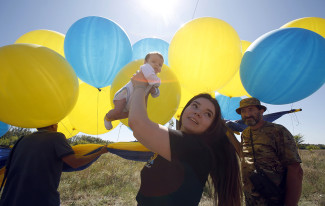
A women holds up an infant in the air on sunny day outdoors, surrounded by yellow and blue balloons

As Nepal’s parliament enters the final discussions on a draft Truth and Reconciliation Commission (TRC) bill, questions remain regarding the relationship between amnesty and reconciliation provisions within the bill.

During peace negotiations, there is often a belief that providing amnesties for certain crimes will help promote national reconciliation. Nepal's Truth and Reconciliation Commission (TRC) Bill currently contains provisions on both amnesty and reconciliation. However, the Bill itself i...

This report asserts that dealing with past abuses in Myanmar is essential to achieving genuine progress on peacebuilding and economic development in the country. Conflict and high levels of political repression have racked Myanmar for more than half a century. Both President Thein Sei...

The International Center for Transitional Justice (ICTJ) and the Barcelona International Peace Resource Center (BIPRC) are pleased to announce an Intensive Course on Transitional Justice and Peace Processes, taking place in Barcelona, Spain, June 6 - 10, 2016. It will focus on practical examples of recent or paradigmatic peace processes where the question of justice formed a significant part of the negotiating context.

In this opinion piece, Lucia Withers argues that Nepal's elected parties and their representatives should not limit their discussions to the establishment of a truth commission or whether it will provide for amnesties and/or prosecutions. Rather, they should focus on designing policies that are more comprehensive and that would better serve the rights and needs of conflict victims and contribute to broader peace-building efforts.

The survey sought to ascertain the opinions and expectations of the victims and their families in Nepal on a range of transitional justice issues, such as human rights violations, truth-seeking, justice, accountability, reparations, and reconciliation.

ICTJ and the Bridges of Truth project are launching Tomorrow We Continue, a new short animated documentary that follows a young mother of two whose husband was detained and disappeared by security forces in Syria some years ago. The film takes the viewer on her journey as a refugee searching for safety in Berlin and depicts the daily struggles she encounters once settled as she tries to earn a living and care for her children while continuing to search for her husband. Since the uprising in Syria began in 2011, more than 100,000 people have been disappeared or arbitrarily detained. The families they leave behind may move to safer places as refugees, but the search for their loved ones persists wherever they go. This film is one of their stories.