



79 results

A new ICTJ report urges the revitalization of Ukraine’s holistic transitional justice policymaking. Debunking the most common myths about transitional justice in Ukraine, the report presents the key legal, policy, and victim-centered arguments in favor of advancing a comprehensive transitional justice framework.

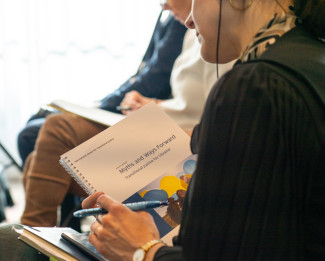
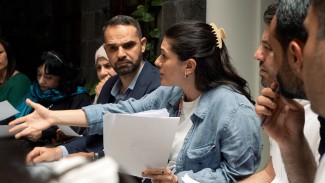
ICTJ and its partners in the Bridges of Truth project hosted an event in Damascus on October 7 to present findings from their recent report on the community dialogues held in April in Syria and to commemorate the project’s eighth anniversary.

ICTJ is pleased to announce the addition of three new members to its Board of Directors: Ms. Nina Lahoud, Ms. Rajakumari Jandhyala, and Mr. Max Gleischman. “These three individuals bring a wealth of expertise in law, economics, diplomacy, and strategic communication to ICTJ. Their diverse perspectives and proven leadership will help steer ICTJ as it continues to support victims, strengthen institutions, and foster inclusive societies in the aftermath of conflict and repression,” said Chairperson Robert Cusumano.

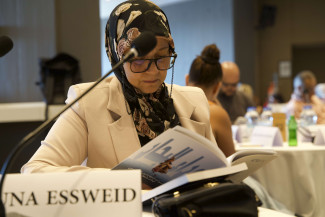
On July 10 and 11, ICTJ convened a high-level dialogue in Geneva that brought members of Syria’s newly established transitional justice commissions together with international experts and representatives from Syrian civil society represented by the Bridges of Truth project and victims’ groups and multilateral institutions. The two-day event provided guidance to the commissioners as they develop and implement their mandates and supported Syrian-led efforts to build transparent and inclusive institutions.

Abuja, June 19, 2025—The African Union (AU) and the European Union (EU), in collaboration with the Consortium implementing the Initiative for Transitional Justice in Africa (ITJA), led by the International Center for Transitional Justice (ICTJ) and co-implemented by the Africa Transitional Justice...

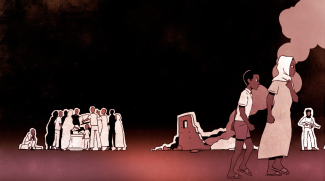
ICTJ has announced the digital release of its award-winning short animated documentary that explores the trauma and resilience of families of the disappeared in Syria. After an extensive tour of international film festivals in Asia, Europe, and North America, the acclaimed film recently returned home for its first screening in Syria. Now, it is available to audiences the world over on the ICTJ website and YouTube channel.

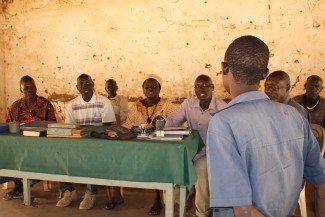
In countries where state institutions have limited reach, customary and informal justice is often the most common way in which people resolve disputes and seek justice. Given its prominence, it is considered to be an important element of a people-centered approach to building peaceful, just, and inclusive societies. An understanding of the relationship between customary justice and transitional justice, however, remains underdeveloped. A new ICTJ report provides valuable empirical, qualitative research on the topic, in the context of South Sudan.

The field of transitional justice increasingly recognizes the relevance of mental health and psychosocial support in contexts of massive human rights violations. Despite growing advocacy and awareness at the global policy level, however, the field lacks a systematic approach to the issue. Now, a new ICTJ report contributes to such an approach.

In the aftermath of armed conflict or repression, communities often struggle to rebuild social relations that have been damaged or destroyed by violence and abuse. Restorative justice can potentially play a valuable role in such societies, bringing together the people who have been harmed by crimes and the individuals responsible for those harms, often in the form of a dialogue, to address the offense and its consequences. A new ICTJ research report offers insight and guidance on the use of a restorative justice framework in responding to massive and grave human rights violations, drawing primarily from experiences in Colombia, Sierra Leone, Tunisia, and the Philippines’ Bangsamoro region.

ICTJ is pleased to announce the winners of its “Overseas” writing contest. In it, young people originally from or currently residing in Lebanon, Libya, or Tunisia who have left their home countries for political or socioeconomic reasons were asked to share their personal experiences of migration in the form of a short, written testimony.