


350 results

ICTJ is pleased to announce the addition of three new members to its Board of Directors: Ms. Nina Lahoud, Ms. Rajakumari Jandhyala, and Mr. Max Gleischman. “These three individuals bring a wealth of expertise in law, economics, diplomacy, and strategic communication to ICTJ. Their diverse perspectives and proven leadership will help steer ICTJ as it continues to support victims, strengthen institutions, and foster inclusive societies in the aftermath of conflict and repression,” said Chairperson Robert Cusumano.

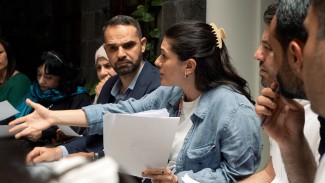
At the end of April in Syria, dozens of local residents in several cities and towns sat down together for the first time to finally speak about their experiences during the 14-year conflict that tore society apart and resulted in countless human rights violations. These community dialogues, organized by ICTJ in partnership with the Bridges of Truth project, provided a safe space for participants to share their stories and hardships, discuss their needs, and express their hopes for justice and reconciliation.

This report summarizes the key observations offered by Syrians during community dialogues in April 2025. Convened by Bridges of Truth, a collaboration of Syrian civil society organizations and ICTJ, the dialogues captured a wide spectrum of perspectives and experiences and provided va...

Some 20 people sit in chairs around a table located inside a courtyard.
Abuja, June 19, 2025—The African Union (AU) and the European Union (EU), in collaboration with the Consortium implementing the Initiative for Transitional Justice in Africa (ITJA), led by the International Center for Transitional Justice (ICTJ) and co-implemented by the Africa Transitional Justice...

From May 25 to June 1, 2025, ICTJ held a series of community dialogues in three rural regions of the Gambia on sexual and gender-based violence, including crimes committed during the Yahya Jammeh dictatorship. The dialogues brought together 122 individuals, including community leaders, victims, and young people, to share their experiences and discuss pathways for justice.

ICTJ welcomes the formation of two new independent institutions in Syria: the National Commission for Transitional Justice and the National Commission for the Missing. Established by presidential decree, these commissions represent a historic step forward in acknowledging the demands of victims and their families and formally responding to the widespread violations committed in Syria over the last decades.

ICTJ has announced the digital release of its award-winning short animated documentary that explores the trauma and resilience of families of the disappeared in Syria. After an extensive tour of international film festivals in Asia, Europe, and North America, the acclaimed film recently returned home for its first screening in Syria. Now, it is available to audiences the world over on the ICTJ website and YouTube channel.

On January 22, 2025, ICTJ launched its digital campaign, “Reparations Build Justice”, aiming to raise awareness about reparations and their vital contribution to sustainable peace and justice, particularly in countries grappling with legacies of mass atrocities.

On December 2 to 6, 2024, the International Criminal Court’s (ICC) Assembly of States Parties—the court’s management oversight and legislative body—held its 23rd session in The Hague. As in previous years, ICTJ took an active part, and its experts joined many of the discussions sharing their knowledge and insight. ICTJ organized two side events, one focusing on Syrian victims and another on reparations for victims in Northern Uganda.

Customary justice is the primary way in which most communities in South Sudan resolve disputes. Its ability, however, to deal with massive human rights violations is limited due to the complexity of intercommunal violence and a lack of clarity on its proper role. This report contends ...

A man stands facing a table around which several men are seated.