255 results

ICTJ welcomes the formation of two new independent institutions in Syria: the National Commission for Transitional Justice and the National Commission for the Missing. Established by presidential decree, these commissions represent a historic step forward in acknowledging the demands of victims and their families and formally responding to the widespread violations committed in Syria over the last decades.

ICTJ is pleased to announce the addition of three new members to its Board of Directors: Ms. Nina Lahoud, Ms. Rajakumari Jandhyala, and Mr. Max Gleischman. “These three individuals bring a wealth of expertise in law, economics, diplomacy, and strategic communication to ICTJ. Their diverse perspectives and proven leadership will help steer ICTJ as it continues to support victims, strengthen institutions, and foster inclusive societies in the aftermath of conflict and repression,” said Chairperson Robert Cusumano.

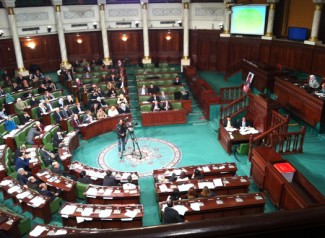
ICTJ welcomes the historic passage of the Draft Organic Law on the Organization of Transitional Justice Foundations and Area of Competence by the Tunisian National Constituent Assembly (NCA). In a nearly unanimous vote on Sunday, 125 of 126 deputies voted in favor of the law.

On December 2 to 6, 2024, the International Criminal Court’s (ICC) Assembly of States Parties—the court’s management oversight and legislative body—held its 23rd session in The Hague. As in previous years, ICTJ took an active part, and its experts joined many of the discussions sharing their knowledge and insight. ICTJ organized two side events, one focusing on Syrian victims and another on reparations for victims in Northern Uganda.

Ten years have passed since Tunisians took the streets to demand “Employment, Freedom, and National Dignity.” The revolution’s loud, courageous voice against corruption, extreme inequality, and repression echoed around the globe and inspired the “Arab Spring.” Today, Tunisians are still proud of their revolution. However, they continue to strive for goals, yet unattained, that the political class does not even seem to understand. It was thus not surprising to see large protests on the 10th anniversary, demanding concrete action and new public policies to advance social justice and better integrate marginalized regions and populations.

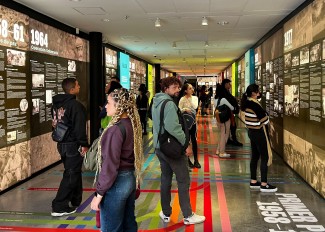
On February 13, 2024, the interactive cultural exhibit “If There Is Truth, There Is Future” opened to the public at Bogotá’s Center for Memory, Peace and Reconciliation. As part of the Colombian Truth Commission’s post-closure cultural and educational outreach activities, the exhibit aims to inform Colombians of all generations about the commission’s findings and inspire them to take action to prevent a recurrence of conflict.

As UN member states convene virtually this week for the annual General Assembly, they will likely focus on a narrow list of agenda items, topped by issues related to the deadly coronavirus pandemic and a global economic downturn. For this reason, ICTJ would like to recall the vital importance of justice for global peace, security, health, and development by sharing findings from an analysis of the open debate on transitional justice that the UN Security Council held on February 13, 2020, as part of its peacebuilding and sustaining peace agenda.

As we mark July 17, designated International Justice Day by the states parties of the International Criminal Court (ICC) just over two years ago, we should not limit our focus to the work of the court or criminal justice as such. Pursuing justice in the aftermath of atrocity presents an opportunity to do three crucial things: reaffirm a society’s shared values about basic ideas of right and wrong; restore confidence in the institutions of the state charged with protecting fundamental rights and freedoms; and recognize the human dignity of the victims of atrocities that have taken place.

Today the trial begins in the “Sepur Zarco” case of acts of sexual violence and domestic and sexual slavery committed from 1982 to 1986 by members of the Guatemalan army against Maya Q’eqchi’ women and the forced disappearance of several men. This will be the first time in the world that a national court has tried a case of wartime sexual slavery case.

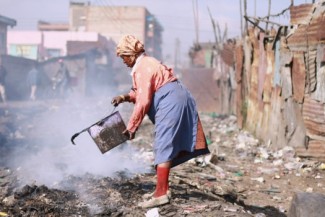
On April 11, 2019, Jaqy Mutere, cofounder and coleader of Grace Agenda, accepted an award from Physicians for Human Rights recognizing the work of the Survivors of Sexual Violence in Kenya Network and Grace Agenda, a leader in this movement. Jaqy cofounded Grace Agenda after she began working with women who, like her, had experienced sexual violence during the protests that erupted in Kenya after the contested December 2007 elections.