


255 results

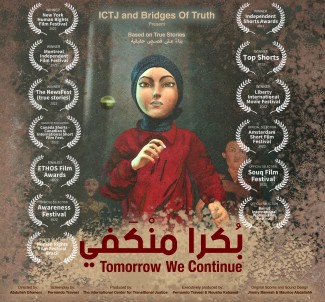
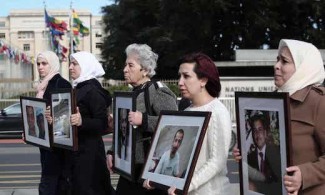
ICTJ and the Bridges of Truth project are launching Tomorrow We Continue, a new short animated documentary that follows a young mother of two whose husband was detained and disappeared by security forces in Syria some years ago. The film takes the viewer on her journey as a refugee searching for safety in Berlin and depicts the daily struggles she encounters once settled as she tries to earn a living and care for her children while continuing to search for her husband. Since the uprising in Syria began in 2011, more than 100,000 people have been disappeared or arbitrarily detained. The families they leave behind may move to safer places as refugees, but the search for their loved ones persists wherever they go. This film is one of their stories.

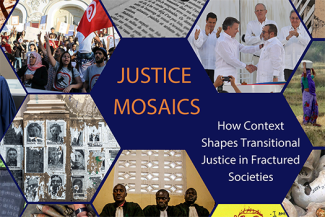
A new book by ICTJ titled Justice Mosaics: How Context Shapes Transitional Justice in Fractured Societies examines the challenges of responding to massive human rights violations in different and difficult circumstances in today's world.

The International Center for Transitional Justice (ICTJ) and the Committee of the Families of the Kidnapped and Disappeared in Lebanon (CFKDL) will release Windmills of Our Hearts, a new book of short stories by 15 women relatives of missing and forcibly disappeared persons in Lebanon. On June 1, ICTJ and CFKDL will host a public launch and book signing event at Dar el Wardieh in Hamra, Beirut.

New York, March 1, 2022—“There can be no peace in Syria until the rights of the wrongfully detained, disappeared, and their families are fully restored,” warns a new publication released today by the Bridges of Truth, a collaborative of eight Syrian civil society organizations and ICTJ. A Guide to...

New York, December 4, 2019—"Get ready to speak up and be heard because your voice matters!”—that is the message a new guidebook released today on transitional justice sends to Syrian youth. Produced by ICTJ and Dawlaty, a Syrian human rights organization based in Beirut, the guidebook introduces the concepts of transitional justice to young audiences in an engaging and interactive way while capturing the challenges of applying them in difficult contexts.

In the aftermath of massive human rights violations, the voices of young people carry enormous potential: they can tell the truth about the past while offering new paths forward as their societies pursue peace and justice. However, if institutions want the insights of young people, they must avoid pre-formulated solutions and instead engage with youth on their own terms. A new guide released by ICTJ today aims to provide the tools necessary to do so, offering recommendations about how to responsibly and effectively gather statements from young people.

ICTJ releases a new briefing paper, “Reflections on Victim-Centered Accountability in Ukraine.” The paper examines the various actions that have been taken or are under consideration to investigate and prosecute war crimes and other human rights violations in Ukraine. It explores the myriad challenges they face and how tools from the field of transitional justice can be applied in tandem to deliver justice and reparation to victims and lay the foundation for a more inclusive and democratic Ukraine.

The field of transitional justice increasingly recognizes the relevance of mental health and psychosocial support in contexts of massive human rights violations. Despite growing advocacy and awareness at the global policy level, however, the field lacks a systematic approach to the issue. Now, a new ICTJ report contributes to such an approach.

A new ICTJ report argues that discussions about a future return of refugees and coexistence among groups currently at war in Syria must begin now, even in the face of ongoing violence and displacement.

New York, January 25, 2021—"You cannot deliver 500 kilograms of transitional justice,” explains a high-level UN official in a new ICTJ report released today that explores the theoretical and practical challenges of measuring the results of transitional justice processes. These processes are complex and politically contested and are thus notoriously difficult to evaluate. The report offers key insights related to and tools for evaluating and monitoring transitional justice processes and assessing their impact.