255 results

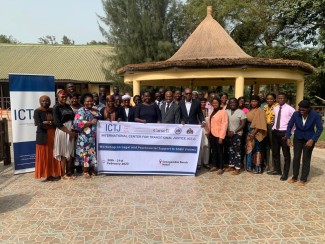
“Despite laws already in place, the number of sexual and gender-based violence [SGBV] cases is still rising, including cases of rape, female genital mutilation, sexual assault, and harassment. This means there is the need for enforcement of such laws,” asserted Didier Gbery, ICTJ’s head of program for The Gambia, at the opening of a workshop this past March on increasing SGBV victims’ access to justice. The workshop was one of two that ICTJ organized in early 2023 to strengthen the capacity of stakeholders in The Gambia to defend SGBV victims and provide them with vital gender-sensitive support.

During this global pandemic, how do organizations such as ICTJ continue with their victim-centered and context-specific work, when their staff members cannot meet face to face with partners bilaterally, much less at organized convenings? The answer to these questions involves both rethinking how to use tools currently available and developing or finding new ones.

On September 15, ICTJ organized a side event on the missing and disappeared in Syria, sponsored by the governments of Luxembourg and Finland, during the 77th session of the United Nations General Assembly. The event was a timely one, as it addressed a recent proposal for the creation of a new...

More than 20 years after the end of the Yugoslav Wars of the 1990s, Kosovo is still contending with unresolved ethnic tensions. Formerly an autonomous region of Serbia within the former Yugoslavia, Kosovo declared independence in 2008. Ethnic tensions were a root cause of the violent conflicts, during which an estimated 140,000 died and numerous atrocities were committed. ICTJ recently sat down with ICTJ's Anna Myriam Roccatello and Kelli Muddell to learn more about ICTJ's work and the present challenges to truth and justice in the country.

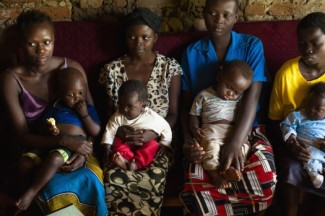
A new report from ICTJ provides insights on how women in northern Uganda have been affected by conflict, and gives recommendations on how transitional justice measures can recognize and redress the specific harms suffered by women as a result of the LRA conflict.

This paper examines the relationship between forced displacement and transitional justice in Colombia from a gender perspective. The text focuses on three main themes: first, the gendered impacts of forced displacement; second, the ways that official policy, as it has evolved from pro...

When Janet Arach was still a schoolgirl, she was abducted by Joseph Kony’s Lord’s Resistance Army (LRA) in northern Uganda. During her eight years in captivity, she was forced to marry an LRA rebel and gave birth to two children. Read more on Janet's journey to become an agent of change for her community in Uganda.

Banjul, June 12, 2019—“Never Again!” sings Awa Bling in her recently released song produced with the support of ICTJ. She is part of a movement of youth and prominent artists who are reclaiming this universal slogan by creating their own songs about transitional justice and bringing their voices to some of the most forgotten regions of The Gambia. Local and international fans can now access new music videos released on social media by five talented Gambian hip hop artists.

Banjul, The Gambia, December 11, 2019—Women from three rural areas of the Gambia will submit a report to the Truth, Reconciliation and Reparations Commission (TRRC) on December 16 that describes their experiences of sexual and gender-based violence during the dictatorship of former President Jammeh and the impact of the violations on their lives and families. In the report, the women join voices to offer recommendations to the TRRC and the Gambian government.

From May 25 to June 1, 2025, ICTJ held a series of community dialogues in three rural regions of the Gambia on sexual and gender-based violence, including crimes committed during the Yahya Jammeh dictatorship. The dialogues brought together 122 individuals, including community leaders, victims, and young people, to share their experiences and discuss pathways for justice.