609 results

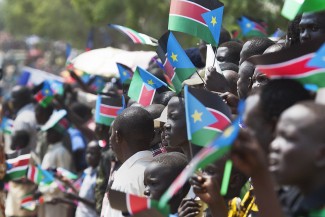
South Sudan’s transition to democratic governance through a highly anticipated, first-ever post-independence general election has to wait once again for another two years. Despite this latest extension, the country has achieved notable milestones in its transitional justice process.

This year’s Annual Emilio Mignone Lecture on Transitional Justice, coordinated by ICTJ and the Center for Human Rights and Global Justice at the NYU School of Law, focused on the intersection between transitional justice and international development.

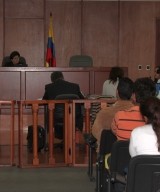
Colombia continues to endure a complex conflict spanning more than four decades that has resulted in almost 400,000 registered victims and has displaced more than three million people. In a podcast with ICTJ’s vice president Paul Seils, we explore the concepts of prioritization and selection of cases and their relevance to Colombia's Justice and Peace process.

It has been nearly seven years since the passage of the Justice and Peace Law (JPL) in Colombia. The process continues today amidst controversies and important reflections on the direction it should take. What progress has been made and what are the shortcomings of how the law has been implemented?

ICTJ convenes a high-level conference in Abidjan to discuss the progress in investigating and prosecuting serious crimes committed in Cote d’Ivoire during the 2010 post-election violence.

A Haitian court’s decision to drop charges of crimes against humanity against former president Jean-Claude Duvalier is a blow to the victims of his brutal dictatorship and sends a disturbing signal that the country cannot fulfill its basic legal obligations, ICTJ said today.

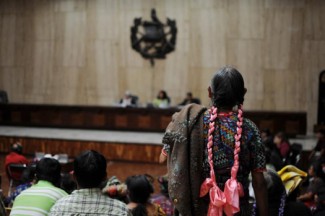
The world has turned its eyes to Guatemala, where the trial of retired generals Efraín Ríos Montt and José Mauricio Rodríguez Sánchez is drawing to a dramatic close. With a verdict expected soon, ICTJ spoke with Francisco Soto, executive director of the Center for Legal Action on Human Rights in Guatemala (CALDH). In this Q&A, Mr. Soto describes how civil society in Guatemala has been a crucial force in the long struggle for justice, and reflects on the historic significance of this trial, for both Guatemala and the world.

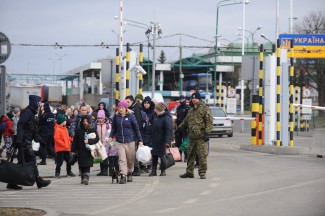
When the Syrian people took to the streets in March 2011, nobody could have predicted that the ensuing crisis would become the largest international calamity in recent history. Syrians’ calls for freedom and justice, which rode the wave of revolutions in neighboring countries, have be...

By looking at the documentation efforts of Syrian civil society organizations, this paper challenges the notion that criminal prosecution is the sole avenue of justice available for alleged crimes in Syria. Documentation could be used for important other avenues of justice, such as ac...

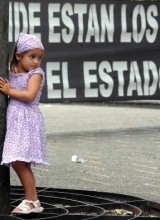
As the world marks August 30, the International Day of the Disappeared, we are reminded that forced disappearances and transitional justice share a common history. Indeed, processes working in concert that came to form the field of transitional justice were born from the search for truth and justice about the disappeared.