

605 results

The Task Force on Justice is gathering inputs in order to encourage greater provision of justice to people and communities outside the protection of the law. As the Task Force has pointed out, the “justice gap” that it seeks to reduce is greatest in conflict-affected countries, where only 3 percent of development assistance goes to justice.

Mali's Truth Justice and Reconciliation Commission has a mandate to examine violence dating back to 1960, but it faces serious challenges. Can it serve as a foundation of a peaceful future in Mali? We discuss with transitional justice expert Kora Andrieu, who is currently working with the TJRC as an independent consultant.

To commemorate the 20th anniversary of the Justice and Peace Law—which created Colombia's first transitional justice system—media outlet Verdad Abierta, the Friedrich Ebert Stiftung, and ICTJ partnered to produce an investigative four-part series in Spanish that critically assesses its legacy. Now translated into English, this second installment explores the unprecedented challenges the country faced as the process got underway.

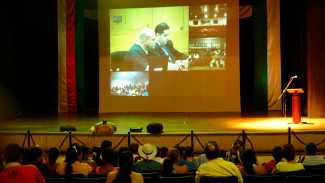
On November 25, 2021, The Gambia’s Truth, Reconciliation and Reparations Commission (TRRC) presented its 17-volume final report and recommendations to President Adama Barrow, after multiple delays. The final report includes a record of serious human rights violations committed under Jammeh’s repressive regime and recommendations for pursuing justice. Despite the challenges, steps have already been taken that offer hope that the TRRC’s recommendations will take effect.

Because transitional justice processes are complex, politically contested, and not necessarily linear, they present unique theoretical and practical challenges for measuring their results. This report seeks to improve monitoring and evaluation practices and support evidence-based proc...

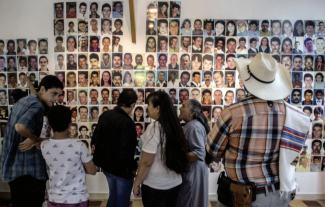
Children, women, and men look at a wall covered in faces of people.

Dr. Alex Boraine, founder of the ICTJ, was larger than life. In his long career, he touched the lives of thousands in his beloved South Africa and around the world.

The issuance of the first sentences by Colombia’s Special Jurisdiction for Peace marks a turning point for transitional justice in the country. These historic convictions against those most responsible for war crimes and crimes against humanity committed during the armed conflict constitute the realization of justice and express both judicial and moral condemnation.

Colombia's Special Jurisdiction for Peace (SJP) aims to achieve criminal accountability through a mixed system of restorative and retributive justice. Generally speaking, the SJP envisions large-scale restorative justice measures involving public acknowledgments of responsibility, as ...

Ahead of Pope Francis' visit to Bosnia Herzegovina, ICTJ's Communications Director, Refik Hodzic, asks the leader of the Catholic Church to actively contribute to "a genuine reckoning needed for a genuine peace" in a society still stuck in the past, even 20 years after the war.

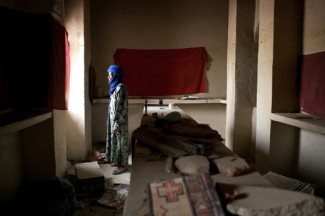
The month of January has a particular significance in the Middle East and North Africa. It was the month when the Arab uprisings were sparked five years ago. It was also the month when the transitional justice process was inaugurated in Morocco, 12 years ago. What can be learned from Morocco’s experience?