425 results

ICTJ and the Center for Memory, Peace and Reconciliation of Colombia are organizing an event on Memory: Public Policy for Transformation. Dialogue at the conference will serve as the basis for providing recommendations to the process of creating the Center for Historical Memory and designing public memory policy in the country.

Colombia's Special Jurisdiction for Peace (SJP) aims to achieve criminal accountability through a mixed system of restorative and retributive justice. Generally speaking, the SJP envisions large-scale restorative justice measures involving public acknowledgments of responsibility, as ...

Ahead of Pope Francis' visit to Bosnia Herzegovina, ICTJ's Communications Director, Refik Hodzic, asks the leader of the Catholic Church to actively contribute to "a genuine reckoning needed for a genuine peace" in a society still stuck in the past, even 20 years after the war.

Official public apologies are an important element of a transitional justice policy. As a form of symbolic reparation, an apology is a formal, solemn and, in most cases, public acknowledgement that human rights violations were committed in the past, that they caused serious and often ...

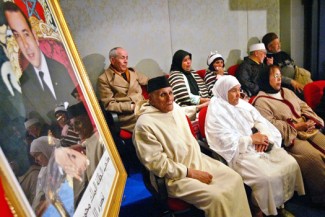
The month of January has a particular significance in the Middle East and North Africa. It was the month when the Arab uprisings were sparked five years ago. It was also the month when the transitional justice process was inaugurated in Morocco, 12 years ago. What can be learned from Morocco’s experience?

This study examines how transitional justice measures in Morocco have helped prevent state violence repression and social and economic exclusion. These measures included the Equity and Reconciliation Commission, which diagnosed some historical wrongdoings and called for reform to prev...

On November 28, 2023, ICTJ organized an international dialogue in Bogotá, Colombia, to share innovative strategies for advancing victims’ rights to redress for human rights abuses and for establishing more victim-centered development policies. The gathering also marked the official launch of ICTJ’s new report—Advancing Victims’ Rights and Rebuilding Just Communities Local Strategies for Achieving Reparation as a Part of Sustainable Development—which presents findings from a two-year comparative study of local efforts in Colombia, The Gambia, Tunisia, and Uganda to advance reparations.

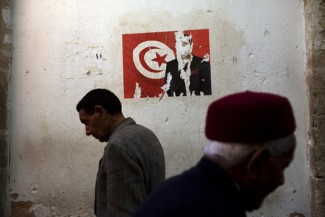
Despite earlier efforts to envision a national transitional justice policy, Ukraine remains overly cautious about establishing one. This report provides a robust substantiation of why Ukraine should revive its holistic transitional justice policymaking. In the first part, it debunks t...

A women holds up an infant in the air on sunny day outdoors, surrounded by yellow and blue balloons

ICTJ strongly advocates for a holistic transitional justice vision for Ukraine as part of its programmatic activities. Leading this work is the head of ICTJ’s Ukraine program, Kateryna Busol. She is the author of the new report, “Myths and Ways Forward: Transitional Justice for Ukraine." In this interview, Busol discusses the path toward holistic justice for the country.

This report asserts that dealing with past abuses in Myanmar is essential to achieving genuine progress on peacebuilding and economic development in the country. Conflict and high levels of political repression have racked Myanmar for more than half a century. Both President Thein Sei...