


193 results

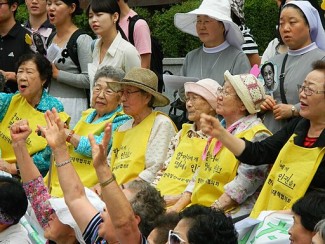
In February 2024, the Office of the United Nations High Commissioner for Human Rights hosted an event in Seoul, South Korea, marking the 10th anniversary of the release of the report of the United Nations Commission of Inquiry on Human Rights in the Democratic People's Republic of Korea. ICTJ Senior Expert Ruben Carranza spoke at the event and discussed lessons learned involving nonjudicial forms of accountability. In this interview, he talks about why a broader approach to transitional justice is necessary and how transitional justice measures can help promote peace and possible reunification on the peninsula.

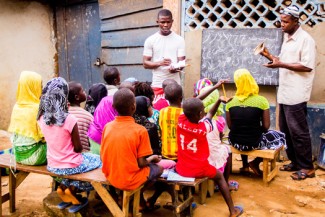
Transitions focuses on engaging new generations and the children's project. Virginie Ladisch, ICTJ Program Associate for the Children's Project, discusses children and justice efforts around the world.

As Tunisia concludes its final deliberations on the new constitution, transitional justice issues such as reparations for victims, truth about the past and the rights of women have been central to the legislative debates. Over the past month, ICTJ’s leading experts have been engaged with stakeholders on the ground on a variety of issues under deliberation, including truth-seeking, reparations, gender justice, and the role of children and youth.

ICTJ and its partners will hosted a national dialogue in Kampala, Uganda on the aftermath of sexual violence. The aim: to shift stigma from victims to perpetrators and end the culture of silence. Sarah Kihika Kasande, head of ICTJ's Uganda office, explains why such efforts are essential to ending impunity and securing a lasting peace in the country.

ICTJ sits down with Syria Expert Nousha Kabawat to pause and reflect on the progress made so far in building capacity, raising awareness, and initiating high-level dialogue to address what remains a perilous situation.

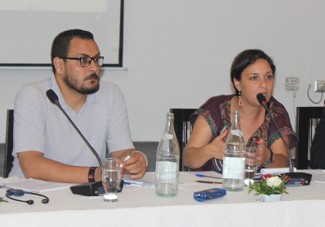
Tunis—Youth activists from across Tunisia, representatives of state institutions, and experts from international nongovernmental organizations gathered on July 10, 2019, to discuss challenges to pursuing accountability for corruption crimes committed during the Ben Ali dictatorship and practical steps that civil society and government can take to overcome these challenges.

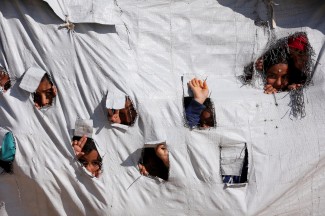
On March 22, Syrian victims and activists will gather in Geneva, Switzerland for a public hearing-style event examining the impact of the destruction of schools in the context of the Syrian conflict. The event will be hosted by the International Center for Transitional Justice and the ten Syrian organizations that together comprise the Save Syrian Schools project. A livestream will be available.

A new, photo-filled publication from the International Center for Transitional Justice details how photos taken by Lebanese young people across the country helped to spark discussion about the disturbing, often-overlooked legacy of the Lebanese civil war.

In a fast-changing world, ICTJ regularly reexamines and adapts its methodology to develop innovative solutions to emerging problems, advance its mission, and achieve justice for victims of human rights violations. In that spirit, ICTJ recently launched an exciting new website and newsletter design. After over a year of research, planning, surveying stakeholders, designing, and testing, we unveiled a site that better aligns with what ICTJ and transitional justice are today.

ICTJ talked to Kenyan youth leader Carine Umutoniwase to know how learning from a violent past inspires youth in countries recovering from conflict and repression to avoid past mistakes and to come up with solutions that contribute towards a more just and accountable society.