



13 results

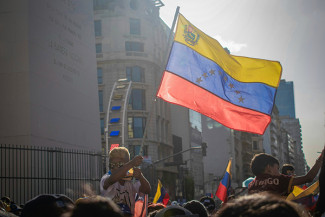
On February 19, 2026, Venezuela’s National Assembly passed the Amnesty Law for Democratic Coexistence, which seeks to extinguish criminal liability for certain acts committed in the country over the past 26 years. While the law has sparked debate, it undeniably represents a significant development in the country's political landscape.

Throughout 2025, ICTJ’s experts offered thoughtful analysis on conflicts and major political developments in more than 10 countries as part of the World Report newsletter. Their insightful commentaries shed light on the obstacles that victims, civil society, and their partners must navigate as they pursue sustainable peace and justice. In this edition, we look back on the past year through the Expert’s Choice column.

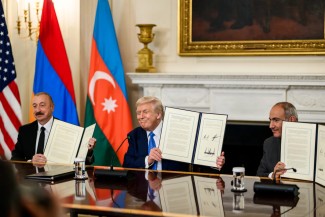
On August 8, Armenia and Azerbaijan signed the Joint Declaration on Future Relations. Hailed by some as a “historic peace deal,” it neither is a treaty nor ends the 37-year Nagorno-Karabakh conflict. Rather, it is a political framework that requires international support and attention.

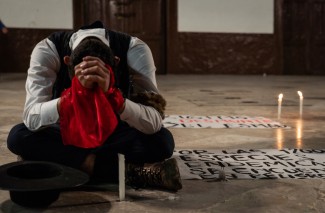
On June 8, Colombia woke up to the grim news that Miguel Uribe Turbay, a 39-year-old senator and presidential hopeful for the right-wing Centro Democrático party, had been gravely wounded after being shot. More than three weeks have passed since the attack and Uribe remains in critical condition, while Colombians, concerned about renewed democratic instability, have found themselves haunted by ghosts from the past.

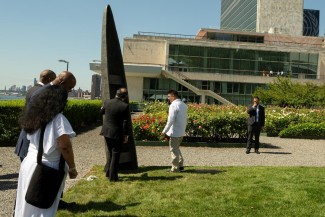
In July, Colombian President Gustavo Petro traveled to New York to address the UN Security Council on the status of the implementation of the 2016 peace agreement between the Colombian government and the guerrilla group Revolutionary Armed Forces of Colombia. During his visit, Petro also inaugurated a monument commemorating the country's enduring pursuit of peace.

Throughout 2023, ICTJ’s experts have offered their unique perspective on breaking news around the globe as part of the World Report. Their insightful commentaries have brought into focus the impact these events have on victims of human right violations as well as larger struggles for peace and justice. In this edition, we look back on the past year through the Expert’s Choice column.

Five years ago, in August 2018, to mark his 100 days in office, Armenian Prime Minister Pashinyan addressed a large rally in Yerevan’s Republic Square to officially announce his government’s intentions to incorporate transitional justice mechanisms into Armenian post-revolution reform agenda. Since then, Armenia has been pursuing a range of transitional justice initiatives alongside other democratic reforms, and it has made some limited headway, despite setbacks and major challenges including renewed conflict with Azerbaijan.

Colombia’s new president Gustavo Petro was elected to office on a progressive campaign to strengthen democracy, implement social reforms, and bring “total peace” to the country. His approach to peace encompasses political negotiations with all remaining insurgent groups and simultaneous dialogues with criminal organizations geared toward their voluntary submission to justice in exchange for punitive leniency. But eight months into his administration, Petro’s efforts to deliver on his campaign promise are facing numerous challenges.

On October 31, Armenian Prime Minister Nikol Pashinyan met with Russian President Vladimir Putin and Azerbaijani President Ilham Aliyev in Sochi to discuss steps to normalize relations between Yerevan and Baku and a longer-term peace deal that would finally end the decades-long, on-and-off conflict over Nagorno-Karabakh. This willingness on both sides to come to the negotiating table is without question welcome news. However, the two parties seem to want to talk about peace on different terms and without addressing core human rights issues in their respective countries in connection with the conflict.

When reflecting on peace agreements and their implementation, it is tempting to begin by saying that these processes are generally slow and complex. While that may be true in many contexts, it contributes little to the discussion about what has happened in Colombia since the government signed a final peace deal in November 2016 with the Revolutionary Armed Forces of Colombia, or FARC-EP—the oldest and largest guerrilla group in the county—that ostensibly ended 50 years of war.