




616 results

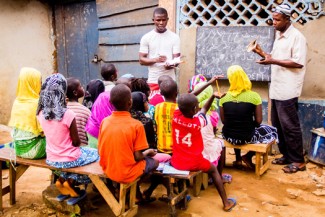
Understanding education as a form of both reconstruction and reparations is essential for societies in their efforts to address victims’ rights and help victims and their families overcome the consequences of a painful past.

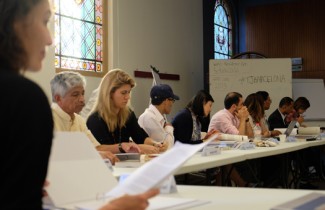
This summer, our Intensive Course on Transitional Justice and Peace Processes brought experts from around the world together in Barcelona to examine how transitional mechanisms can be integrated into peace negotiations. Read about the course and watch interviews with our experts.

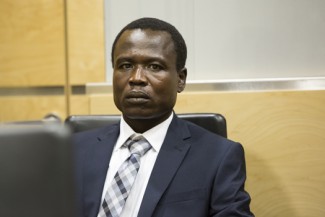
The long-awaited trials of two LRA leaders, Dominic Ongwen and Thomas Kwoyelo, will proceed in two different settings - but why? ICTJ's Sarah Kasande explains the significance of Ongwen's trial before the International Criminal Court and Kwoyelo's prosecution by the International Crimes Division of the High Court in Gulu, Uganda.

Tunisian activists have taken to the streets this month to protest the proposed Economic Reconciliation Law recently revived in parliament. If approved, the bill would offer a path for corrupt Ben Ali-era officials and business people to legalize their stolen assets and secure a form of amnesty.

The Tunisian government reintroduced a bill that, if passed, would grant a path for reconciliation to corrupt business people and Ben Ali-era officials. They claim it will stimulate the economy, but economics professor Dr. Abdeljelil Bédoui explains why this law is not the solution.

The brazen abduction and brutal murder of human rights lawyer Willie Kimani, his client, Josephat Mwenda, and their taxi driver, Joseph Muiruri, underlines once more the urgent need for police reform in Kenya says ICTJ's Christopher Gitari.

The struggle against impunity remains as important –and precarious –as ever as we celebrate International Justice Day on July 17. ICTJ marks the occasion with a look at complementarity, a concept critical to understanding the role that the ICC and national courts play in this struggle.

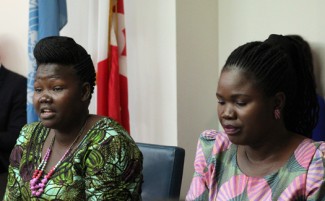
Workshop gathers survivors of gender-based wartime violence to share experiences with policymakers and practitioners.

The first piece in of our "Transitional Justice and Education" series examines the role of school systems in Bosnia and Northern Ireland.

More than 1,000 people remain unaccounted for in Nepal following a decade of violence that concluded in 2006, and a new official body aims to shed light on these abductions. To support this critical mandate, ICTJ hosted an intensive three-week course for the commission, providing the technical and operational support necessary to finally tell the truth about Nepal’s disappeared.

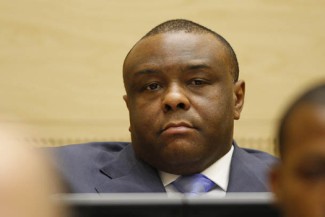
Jean-Pierre Bemba's sentencing is a landmark for the International Criminal Court. Paul Seils looks at how it may reverberate into the future.

The voices of Tunisian women were in danger of being lost in the country's transitional process. Salwa El Gantri explains how one network of women's organizations made sure that did not happen by helping women find their voice and fight for justice.

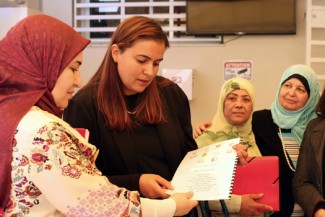
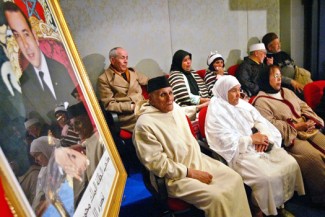
For decades, veiled women in Tunisia were deprived of their rights and discriminated against because of their religious beliefs. Now, they’re joining together to tell their stories and seek justice from the Tunisian government.

Myanmar may have a new government under Aung San Suu Kyi, but former political prisoners continue to face challenges throughout the country. A new report sheds light on prisoners' challenges and recommends steps the government can take to offer redress.

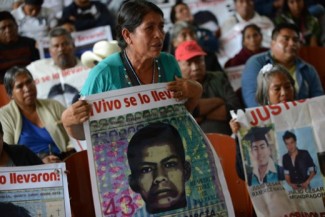
Carlos Martín Beristain is part of the panel investigating the disappearance of 43 students in Mexico. We sat down with him to discuss his work, the resistance the investigation has faced from the Mexican government and whether transitional mechanisms have a role in this context.

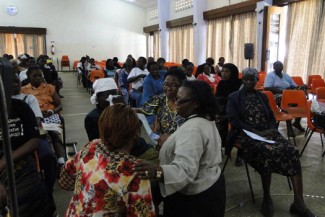
Civil society leaders, members of victims' groups and state officials throughout the Great Lakes region will convene in Kampala, Uganda next week at a conference hosted by ICTJ. Attendees will share their experiences working for redress in their communities and discuss what strategies have proven effective at the local level.

After a society is torn apart by conflict or repression, who decides whether to remember or forget the painful past? Can forgiveness happen without acknowledgement of wrongdoing? Is there a difference between forgetting and denial? Join us as ICTJ debates the impact of remembrance on reconciliation with David Rieff and Pablo de Greiff.

After consulting nearly 2,000 of their peers, youth activists in Cote d'Ivoire present their reparations policy recommendations in a special event on Friday.

What happens when a state refuses to acknowledge the suffering of victims of mass atrocities? Or when the public celebrates perpetrators as heroes? Earlier this month, a panel discussion hosted by The International Center for Transitional Justice and New York University’s Center for Global Affairs grappled with the impact of denial on justice.

In this editorial, Christopher Gitari argues that as the ICC case against Ruto and Sang comes to a halt, our focus must shift to other forms of justice in Kenya - including reparations for victims.

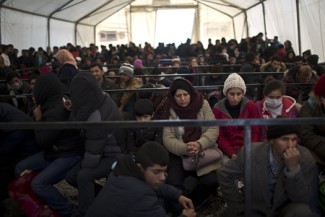
In this op-ed, ICTJ Vice President Paul Seils calls on the international community to prioritize the return of Syrian refugees to their homes instead of posturing about Assad's ouster.

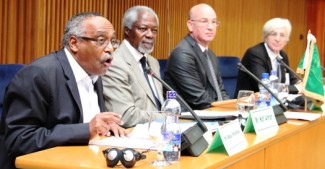
The African Union, the Kofi Annan Foundation and ICTJ opened a high-level conference examining the role of truth commissions in peace processes. The two-day conference, titled “Truth Commissions and Peace Processes in Africa,” has gathered senior staff from the African Union and member states as well as international and national experts to reflect on lessons learned from truth commissions that have emerged from peace processes in Africa and other continents.

Bosnian Serb leader Radovan Karadzic was recently sentenced by the ICTY to 40 years for genocide and crimes against humanity, crimes which have decisively shaped the society in Bosnia and Herzegovina. In this essay, ICTJ’s Refik Hodzic explores what would it take for this poisonous legacy to be dismantled and makes a case for acknowledgement and reparations as matters of moral imperative, but also of political necessity.

Mali's Truth Justice and Reconciliation Commission has a mandate to examine violence dating back to 1960, but it faces serious challenges. Can it serve as a foundation of a peaceful future in Mali? We discuss with transitional justice expert Kora Andrieu, who is currently working with the TJRC as an independent consultant.

In this op-ed, ICTJ's Aileen Thomson says the concerns of former political prisoners, ethnic minorities and conflict-affected communities must be taken into account if peace and democracy in Myanmar are to endure.

As we search for ways to halt the violence and foster lasting peace in societies grappling with a legacy of massive human rights abuse, there is arguably no more important day to reflect upon the importance of the struggle for truth and justice than today, March 24. Thus, we take a moment to mark the International Day for the Right to the Truth concerning Gross Human Rights Violations and for the Dignity of Victims.

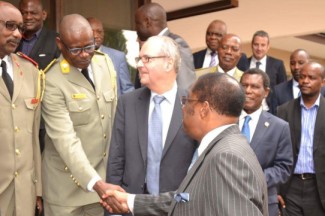
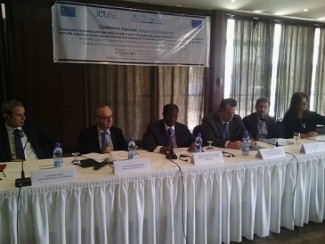
The International Center for Transitional Justice (ICTJ) and the UN Joint Office for Human Rights (UNJHRO), in collaboration with the Office of the UN Special Envoy on the Great Lakes Region and with the financial support of the European Commission, held a conference on March 15-16 to strengthen judicial cooperation in the fight against impunity for international crimes in the Great Lakes Region.

Eastern DRC continues to be affected by conflict and serious crimes continue to be committed against civilians living in the area by the national army (FARDC), national armed groups, and foreign armed forces. Holding perpetrators accountable is essential to dismantling the structures that allow the ongoing cycle of abuses to continue in the DRC.

The International Center for Transitional Justice (ICTJ) and the Barcelona International Peace Resource Center (BIPRC) are pleased to announce an Intensive Course on Transitional Justice and Peace Processes, taking place in Barcelona, Spain, June 6 - 10, 2016. It will focus on practical examples of recent or paradigmatic peace processes where the question of justice formed a significant part of the negotiating context.

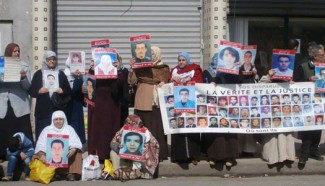
For more than two decades, some 40 women have been protesting every Wednesday against government inaction on the disappeared in front of Algeria’s official human rights commission. They stand on the sidewalk holding photos of their disappeared relatives — their children, fathers, and husbands — breaking the silence at a dangerous time in Algeria.

On International Women's Day, ICTJ Gender Justice Senior Associate Amrita Kapur highlights how insecurity affects women and is key to overcoming inequality across all dimensions of empowerment. "Without including institutional reform, we are condemning women to another century of inequality," she writes in this op-ed.

Earlier this month, the International Center for Transitional Justice (ICTJ) and its partners opened a two-week photo exhibit at the American University of Beirut’s Jafet Library, featuring vivid and often deeply personal photographs submitted for its “The War As I See It” youth photo contest. Students, professors, experts, and journalists packed into the library space lined with the 26 photographs in oversized frames.

ICTJ spoke with Patrick Walsh, an Australian human rights advocate who helped establish and advise East Timor's Commission for Reception, Truth, and Reconciliation (CAVR).

The month of January has a particular significance in the Middle East and North Africa. It was the month when the Arab uprisings were sparked five years ago. It was also the month when the transitional justice process was inaugurated in Morocco, 12 years ago. What can be learned from Morocco’s experience?

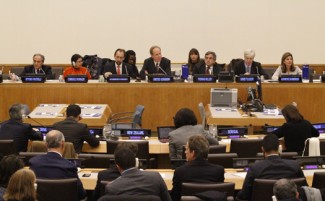
Seeking justice for victims of enforced disappearance is crucial to building peace and preventing recurrence of violence in societies emerging from conflict, ICTJ President David Tolbert told members of the United Nations Security Council and other diplomats last week.

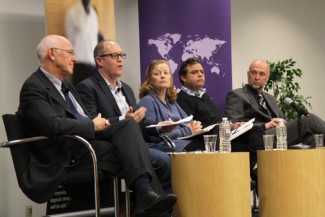
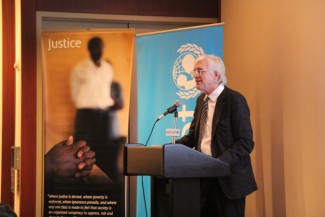
On January 21, ICTJ and UNICEF held a special event to launch an important new report on the links between education and transitional justice. The launch was accompanied by a panel discussion moderated by ICTJ President David Tolbert.

In this op-ed, ICTJ President David Tolbert argues that Japan's recent, controversial apology to South Korean "comfort women" falls short of international standards.

Ugandan victims of the LRA have waited over a decade to see the group’s leadership held accountable for crimes committed during the armed conflict with Uganda’s government. They saw it happen last week, when former LRA commander Dominic Ongwen appeared in court for an important hearing at the International Criminal Court.

In the coming months, after launching a joint report on education and transitional justice with UNICEF, ICTJ will present an array of content on this important topic.

For seven years, ICTJ has partnered with the Barcelona International Peace Resource Center to provide an intensive course on truth commissions for practitioners and policymakers from around the world. The course aims to provide participants with practical knowledge that they could bring back and apply in their home countries.

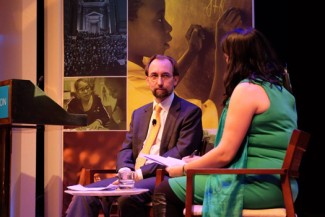
On December 8, ICTJ and the Center for Human Rights and Global Justice at New York University hosted UN High Commissioner for Human Rights Zeid Ra’ad Al Hussein for the 8th Annual Emilio Mignone Lecture on Transitional Justice.

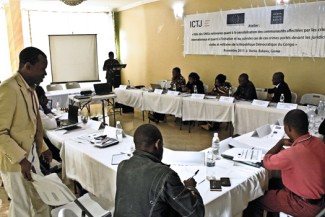
In meeting spaces in Goma, Bukavu, and Bunia, activists and magistrates are discussing ways that they can work together to improve the prosecution of international crimes in the region and address the concerns of local communities.

After years of waiting for the government to take action by implementing the recommendations of Kenya’s Truth, Justice, and Reconciliation Commission, victims of past human rights violations and mass violence are demanding that something be done.

In this op-ed, ICTJ's Aileen Thomson and Bo Kyi argue that in the wake of Myanmar's historic elections, the release of all political prisoners held by the government would be an important step towards national reconciliation.

In this op-ed, ICTJ Vice President Paul Seils discusses how education can be used to address legacies of mass violence and dictatorship.

Children are particularly affected by conflict and mass atrocities and have a unique perspective on how those events impact their communities. This makes their participation in transitional justice processes essential for countries to genuinely make a break with the past and successfully address legacies of mass violence.

In this op-ed, ICTJ President David Tolbert argues that President Alassane Ouattara should use his second term as president to address widespread atrocities committed in Cote d'Ivoire's recent past.

Sri Lanka may be undertaking a change of course towards accountability for atrocities committed during its 26-year civil war.

In this op-ed, Rim El Gantri, head of ICTJ's Tunisian office, discusses the challenges facing Tunisia's transitional justice process and argues that the government's failure to provide accountability for crimes committed under past regimes threatens the country's transition to democracy.