91 results

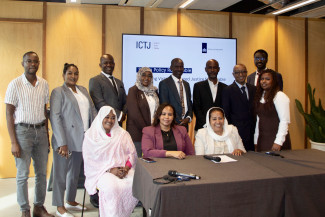
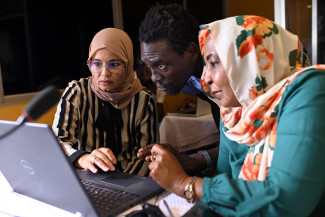
With the war in Sudan now in its fourth year and amid unspeakable atrocities, 12 Sudanese human rights defenders and experts recently gathered with international stakeholders for a policy roundtable in The Hague to discuss what can be done now to advance justice in Sudan.

Over 100 representatives of civil society organizations, victims’ associations, government institutions, and diplomatic missions recently gathered in Addis Ababa to discuss what an inclusive transitional justice process in Ethiopia should look like. Participants explored best practices, local approaches, as well as persistent challenges to ensuring that those most affected by injustice play a central role in any process designed to address it.

As Sudan’s devastating conflict enters its fourth year, the priorities of victims and Sudanese civilians must be central to efforts to end the violence and build sustainable peace. Against this backdrop, ICTJ and the Government of the Netherlands convened a policy roundtable in The Hague on advancing victim-centered justice for durable peace in Sudan.

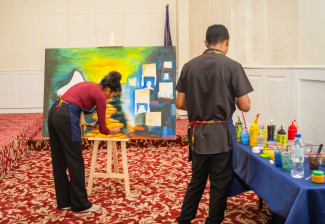
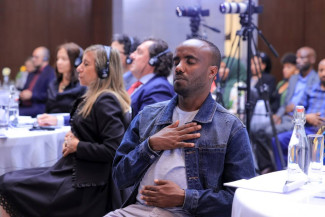
Victims, civil society advocates, policymakers, and development partners recently met for a high-level policy roundtable on integrating mental health and psychosocial support (MHPSS) in Ethiopia’s transitional justice process. Organized by ICTJ and the Advocacy Center for Democracy and Development, the convening offered a space for participants to discuss the need for MHPSS and how to improve access to it across the country.

In the United States, reparations efforts at the municipal level have demonstrated momentum, innovation, and progress in recent years. However, for many of these initiatives, how to make them sustainable and impactful remains a challenge. Drawing on domestic and international experien...

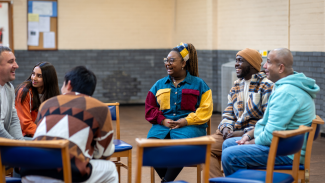
People seated in a circle speak and laugh

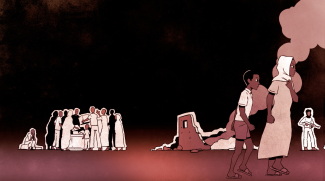
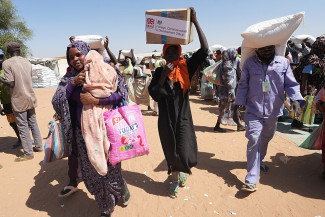
As the world marks the third anniversary of the brutal war in Sudan, it is a moment to reflect on a conflict that rarely receives the media attention it deserves and to consider the millions of Sudanese caught in cycles of violence.

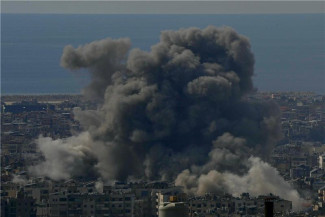
Recent Israeli strikes in Beirut and other populated areas in Lebanon, among the conflict's most intense so far, have destroyed critical infrastructure and devastated civilian communities. ICTJ stands unequivocally with the Lebanese people and all victims across the region and calls for an immediate end to all attacks on and threats to civilian communities and infrastructure.

ICTJ is watching with grave concern the unfolding war launched by the United States and Israel against Iran and its devastating ripple effects across the wider region. Over a month into the conflict, the human cost is staggering. We at ICTJ reaffirm the international principles that govern our shared world and stand unequivocally with all victims across the region.

ICTJ recently convened human rights defenders, journalists, and lawyers from Libya, Sudan, Syria, Tunisia, and Yemen for a workshop on digital, open-source investigations. Held on November 3-8 in Kampala, Uganda, the course trained participants on open-source tools with a view to strengthening their work investigating, documenting, and monitoring human rights violations.

Throughout 2025, ICTJ’s experts offered thoughtful analysis on conflicts and major political developments in more than 10 countries as part of the World Report newsletter. Their insightful commentaries shed light on the obstacles that victims, civil society, and their partners must navigate as they pursue sustainable peace and justice. In this edition, we look back on the past year through the Expert’s Choice column.