

256 results

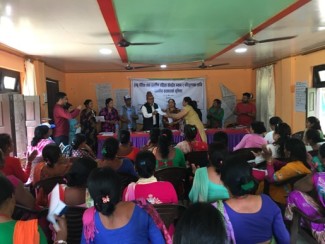
Criminal accountability and the search for truth about abuses committed during Nepal’s armed conflict have become inextricably intertwined, at the expense of victims’ broader rights to truth. But for conflict victims, the truth is more than just a pathway to criminal justice writes ICTJ's Aileen Thomson.

This publication provides an overview of the essential best practices guiding the main aspects of a truth commission, answering basic questions relating to its goals, powers, operations, framework, protections for commissioners and witnesses, and reporting. Its intention is to provide...

As we search for ways to halt the violence and foster lasting peace in societies grappling with a legacy of massive human rights abuse, there is arguably no more important day to reflect upon the importance of the struggle for truth and justice than today, March 24. Thus, we take a moment to mark the International Day for the Right to the Truth concerning Gross Human Rights Violations and for the Dignity of Victims.

This year, ICTJ's campaign for the International Day for the Right to the Truth centers around the theme, “Truth is the Foundation of Justice.” This notion, fundamental to the idea of a comprehensive approach to justice, is explored through several new releases from ICTJ.

ICTJ hosted its third Intensive Course, Truth-seeking and the Challenge of Sustainable Peace, on September 26–30. Based on concrete field experience, the participants explored the relationship between truth-seeking and peace in societies that have experienced or are still experiencing armed conflict.

Nepal’s new local government structure – comprised of districts, municipalities, sub-municipalities, and wards formed within the new federal system under the 2015 Constitution – offers the possibility of some individualized redress for victims at the community-level. This article by Elena Naughton was published in the Kathmandu Post on May 6, 2018.

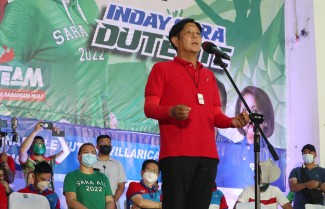
Thirty-six years after Ferdinand and Imelda Marcos were overthrown in a “People Power” revolution, the Marcos family is back in power, with Ferdinand Marcos Jr. elected as president (and Rodrigo Duterte’s daughter as his vice-president). While immediate as well as decades-late transitional justice...

In July 2008 the Timorese-Indonesian Commission of Truth and Friendship (CTF) submitted its final report on atrocities committed in East Timor in 1999. Previously the CTF had been criticized by human rights groups, especially in relation to its power to recommend amnesties and its con...

Timor-Leste has implemented a number of transitional justice mechanisms to address the legacy of human rights violations that occurred in relation to the 1975 Timorese civil war and 24-year Indonesian occupation.These mechanisms have failed to provide victims with meaningful reparatio...

The struggle against impunity remains as important –and precarious –as ever as we celebrate International Justice Day on July 17. ICTJ marks the occasion with a look at complementarity, a concept critical to understanding the role that the ICC and national courts play in this struggle.