

194 results

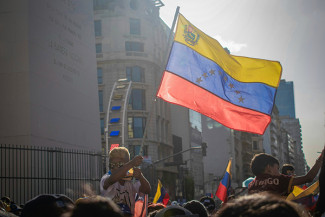
On February 19, 2026, Venezuela’s National Assembly passed the Amnesty Law for Democratic Coexistence, which seeks to extinguish criminal liability for certain acts committed in the country over the past 26 years. While the law has sparked debate, it undeniably represents a significant development in the country's political landscape.

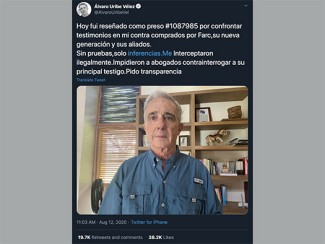
On August 4th, former President Alvaro Uribe surprised the country with a tweet announcing that he would be placed under house arrest for suspected witness tampering and obstruction of justice by the Special Instruction Chamber of the Supreme Court of Justice as part of an investigation that has been underway since 2018. According to the court, this decision was made out of a concern for possible obstruction of justice, which appears to be consistent with the ongoing investigation into these same charges. This is undoubtedly an unprecedented situation.

Why pursue transitional justice in the aftermath of massive human rights violations? This video provides a window into the debate about the relevance of transitional justice in today’s world.

Why pursue transitional justice in the aftermath of massive human rights violations? “The Case for Justice” provides a window into the debate about the relevance of transitional justice in today’s world.

This report is the result of research conducted by consultant Olga Lucía Gaitán for the International Center for International Justice (ICTJ) to analyze the rulings handed down by the Justice and Peace Chambers and the Criminal Chamber of the Supreme Court of Justice in Colombia. The ...

Justice and peace have been the highest aspirations of modern societies. Legislative bodies have enacted laws such as Law 975 of 2005, which ordered the State to provide instruments to resolve armed conflicts without neglecting fundamental social interests of truth, justice, and repar...

This is a compilation of cases from the Criminal Chamber of the Supreme Court of Colombia.

The International Center for Transitional Justice publishes a selection of excerpts from the Supreme Court's rulings and judgments regarding the Justice and Peace process.

Fifteen years ago, a young nurse named Cristina Cobo was forcibly disappeared by members of the paramilitary group United Self-Defense Forces of Colombia. Paulina Mahecha, her mother, preserves her memory and that of over 20 other disappeared women from the departments of Meta...

Throughout 2025, ICTJ’s experts offered thoughtful analysis on conflicts and major political developments in more than 10 countries as part of the World Report newsletter. Their insightful commentaries shed light on the obstacles that victims, civil society, and their partners must navigate as they pursue sustainable peace and justice. In this edition, we look back on the past year through the Expert’s Choice column.