

411 results

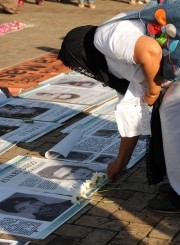
In a conversation dedicated to the International Day of the Disappeared, Eduardo Gonzalez, director of ICTJ’s Truth and Memory Program talks to Jose Pablo Baraybar, director of the Peruvian Forensic Anthropology Team. Gonzalez and Baraybar explore why it is crucial for societies in transition to address the issue of the disappeared, the tension between demands of conventional justice and the right to truth, and the need for a strategy in searching for the disappeared.

The outlet PassBlue recently interviewed ICTJ Executive Director Fernando Travesí-Sanz about the challenges and breakthroughs ICTJ has encountered while facilitating a victims-led path to transitional justice in post-Assad Syria. Travesí-Sanz compared the experience to the lessons learned from Colombia’s post-conflict transition, revealing the nuanced, fragile nature of both retroactive justice and long-term peacebuilding.

Throughout 2022, ICTJ’s experts weighed in on breaking news in more than 10 countries, offering incisive analyses of the political dynamics behind the coverage and the implications for justice, peace, and the rights of victims. In this December edition of the World Report, we look back at the year that was through our Expert’s Choice commentaries, bringing you all of our team’s valuable insights together in one place.

Throughout 2025, ICTJ’s experts offered thoughtful analysis on conflicts and major political developments in more than 10 countries as part of the World Report newsletter. Their insightful commentaries shed light on the obstacles that victims, civil society, and their partners must navigate as they pursue sustainable peace and justice. In this edition, we look back on the past year through the Expert’s Choice column.

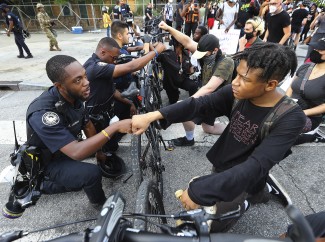
George Floyd’s death reignited existing anger over American society’s deep and festering racial wounds. His death triggered significant social uprisings that have challenged the methods of policing that have emerged over the course of several decades. With a growing awareness of polic...

Three police officers kneel with several protesters at a demonstration.

On International Criminal Justice Day, 2014, ICTJ joins the global celebrations marking the groundbreaking establishment of the Rome Statute in 1998, which created the International Criminal Court (ICC). To mark the day, we review five contexts where national systems proved it was possible to bring perpetrators to justice where it matters the most.

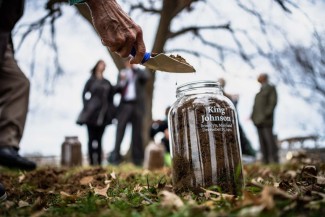
By Sean Yoes Terror on the Eastern Shore December 4, 1931, is a night that lives on in the minds of Black residents in Salisbury, Maryland, a small town along the state’s Eastern Shore. That cold winter night, a mob of more than 2,000 racist residents hung 18-year-old Matthew “Buddie” Williams from...

With the inauguration of Colombia’s new president last month, optimism for the country’s ongoing transitional justice process is at a high. Newly elected President Gustavo Petro has strongly affirmed his commitment to the implementation of the peace agreement and ensuring the institutions it created...

This year, Colombia commemorates the 20th anniversary of the Justice and Peace Law, which established the country’s first formal transitional justice mechanism. On this milestone anniversary, ICTJ reflects on the evolution that led to the groundbreaking law, the lessons that have been learned so far, and the challenges that lie ahead.

This book presents a series of essays on truth and criminal justice in Peru. It aims to contribute to analysis on how to strengthen and consolidate democracy there. The essays pay particular attention to the interests of individual victims' of human rights abuses, analyzing individual...