


410 results

Thousands of victims of Peru’s internal conflict are still awaiting compensation and benefits as part of a 2005 national reparations plan, says a report released today by ICTJ. “Reparations in Peru: From Recommendations to Implementation,” looks at the government of Peru’s mixed record of providing compensation to individuals and communities that suffered some of the most serious crimes during the conflict.

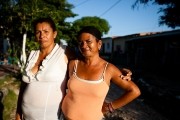
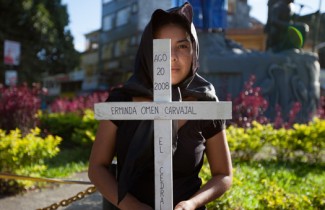
The story of two courageous women from Colombia, and their struggle for acknowledgement and redress in a country where more than four million people have been affected by decades of civil war.

Where states commit widespread and systematic crimes against their citizens, or fail to seriously try to prevent them, they have a legal obligation to acknowledge and address the suffering of victims. Reparations, both symbolic and material, publicly affirm that victims are entitled to redress. Through video and three photogalleries, ICTJ’s multimedia project Voices of Dignity tells the story of two courageous women from Colombia, and their struggle for acknowledgement and redress in a country where more than four million people have been affected by decades of civil war.

More than fifty years of conflict in Colombia have left hundreds of thousands of victims of multiple forms of violence, such as forced disappearance, murder, extra-judicial executions, kidnappings, torture and various forms of sexual and gender-based violence, including rape.

In a fast-changing world, ICTJ regularly reexamines and adapts its methodology to develop innovative solutions to emerging problems, advance its mission, and achieve justice for victims of human rights violations. In that spirit, ICTJ recently launched an exciting new website and newsletter design. After over a year of research, planning, surveying stakeholders, designing, and testing, we unveiled a site that better aligns with what ICTJ and transitional justice are today.

On September 14, the former Revolutionary Armed Forces of Colombia (FARC) publicly apologized to the victims of the kidnappings they perpetrated during the armed conflict. This unprecedented public declaration from a non-state armed group merits reflection from both the perspective of the transitional justice field as a whole and its implications for Colombia.

As grassroots efforts to confront the legacy of racial injustice in the United States take hold from New Orleans to Maine and beyond, how can transitional justice experiences around the world inform their work? That was a major focus of a recent conference ICTJ co-convened, hosted by Kean University.

In the wake of the agreement between Colombia and FARC to form a truth commission, ICTJ's Fernando Travesí and Félix Reátegui discuss the role such a body should be expected to fulfill.

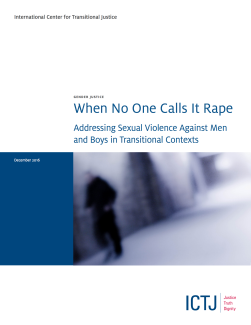
Sexual violence against men and boys in times of conflict or repression is alarmingly common— and takes a markedly consistent form across contexts in terms of how it affects victims and societies as a human rights violation that is taboo to talk about. It has been committed in all cul...

Sexual violence against men and boys is alarmingly common amidst conflict or repression, but these crimes are often mishandled. A new ICTJ report examines how transitional justice efforts in South Africa, Kenya, Cambodia, and beyond have responded to the needs of male victims of sexual violence. What lessons can be drawn from these approaches?