61 results

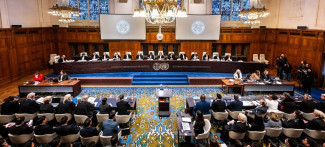
The International Court of Justice issued a historic ruling finding Myanmar committed genocide against the Rohingya group during the 2017 “clearance operations,” in violation of its international obligations. The judgment represents a long-awaited acknowledgment of the victims who have suffered repeated gross violations of human rights because of their ethnicity and later due to their displacement, as well as an opportunity to recognize and support The Gambia’s own pursuit of justice.

Why pursue transitional justice in the aftermath of massive human rights violations? This video provides a window into the debate about the relevance of transitional justice in today’s world.

In 2021, there were significant developments, some hopeful and some devastating, in the struggle for truth, accountability, and redress in countries around the world. ICTJ experts covered these events in commentaries and feature stories published on our website and in our newsletters. While 2022 is already underway and we at ICTJ are hard at work, we would like to pause a moment to take stock and reflect on the year that was.

Myanmar’s democratic transition was brought to an abrupt halt on February 1, 2021, with the seizure of power by the country’s armed forces. Public protests against the military coup d'état quickly swelled to some of the largest since 2007, to which the military has responded with deadly force. Given the deteriorating situation, restoring civilian rule appears to be an increasingly immense challenge.

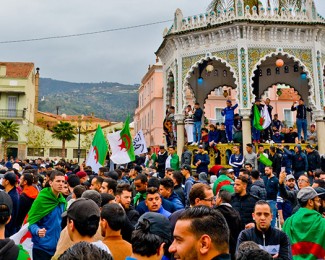
Throughout the week of April 23, I have been attentively following the news to know what would be the impact of this Friday’s hirak (Arabic for protests or mass rallies) in Algeria. The tenth consecutive Friday of protests that began on February 22 is a reaction to the announcement made by an invalid president, Abdelaziz Bouteflika, from a hospital in Geneva, of his intention to continue holding his position for a fifth term.

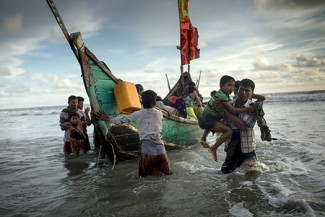
During the past month, over 400,000 members of Myanmar’s Rohingya Muslim community have been driven from their homes as part of an ethnic cleansing campaign led by the military. What lies at the root of the current violence, how is it connected to political transition, and does transitional justice have a role to play? ICTJ's Anna Myriam Roccatello answers those questions and more.

With enforced disappearances on the rise, ICTJ President David Tolbert says the path to prevention is clear: the international community must reorder its priorities and change its approach. The disproportionate attention on counterterrorism takes us further away from accountability and prevention, Tolbert writes. He urges the international community to lead the way in unequivocally censoring governments that use enforced disappearance as a political tactic — and ensuring there can be no impunity for this crime.

In Africa's Great Lakes region, countries face common challenges like bad governance, inequitable distribution of natural resources, and ethnic divisions. As nations like Burundi, Central African Republic and South Sudan work towards peacebuilding and accountability, they should learn from what has worked and what has not in neighboring countries, writes Sarah Kihika Kasande, ICTJ's Head of Office in Uganda.

For decades, successive Myanmar political and military leaders, including Aung San Suu Kyi’s, have flatly denied what millions of their citizens know: that the military has committed and continues to commit human rights violations. A new UN inquiry into those crimes is provides a moment of truth for Suu Kyi's commitment to justice, writes ICTJ's Aileen Thomson.

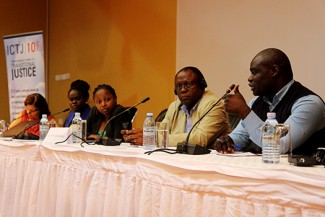
A new ICTJ report argues that in Africa's interconnected Great Lakes region, each country’s attempt to provide justice for past violations offers lessons for similar processes in others. We gathered civil society activists from across the region to discuss which strategies have worked for them, which have not, and opened up about the greatest challenges they face in securing justice.