14 results

South Sudanese refugees and displaced persons currently comprise 40 percent of the country’s total population. Yet, these groups have been largely excluded from ongoing policy discussions related to South Sudan's transitional justice process in South Sudan. A new ICTJ report aims to amplify the perspectives and expectations of these groups and ensure they are included in the process's design and implementation.

This study aims to communicate the perspectives, expectations, and needs of South Sudanese displaced persons to relevant policymakers and thereby inform the ongoing transitional justice efforts emanating from South Sudan’s 2018 revitalized peace agreement. It also provides lessons lea...

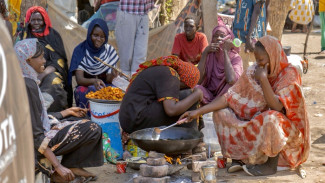
several women in colorful dresses crouch around an open fire pit, cooking food in a large pan.

Throughout 2025, ICTJ’s experts offered thoughtful analysis on conflicts and major political developments in more than 10 countries as part of the World Report newsletter. Their insightful commentaries shed light on the obstacles that victims, civil society, and their partners must navigate as they pursue sustainable peace and justice. In this edition, we look back on the past year through the Expert’s Choice column.

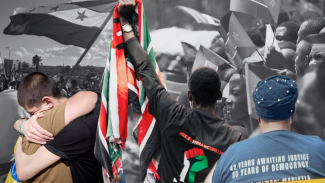
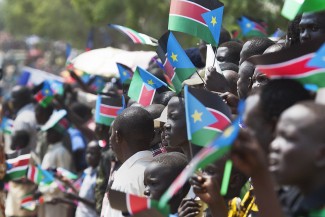
South Sudan’s transition to democratic governance through a highly anticipated, first-ever post-independence general election has to wait once again for another two years. Despite this latest extension, the country has achieved notable milestones in its transitional justice process.

Customary justice is the primary way in which most communities in South Sudan resolve disputes. Its ability, however, to deal with massive human rights violations is limited due to the complexity of intercommunal violence and a lack of clarity on its proper role. This report contends ...

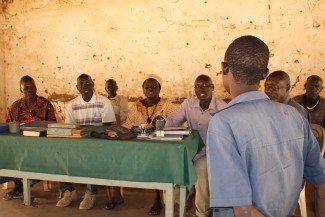
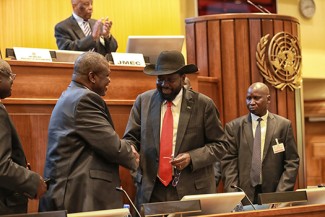
A man stands facing a table around which several men are seated.

In countries where state institutions have limited reach, customary and informal justice is often the most common way in which people resolve disputes and seek justice. Given its prominence, it is considered to be an important element of a people-centered approach to building peaceful, just, and inclusive societies. An understanding of the relationship between customary justice and transitional justice, however, remains underdeveloped. A new ICTJ report provides valuable empirical, qualitative research on the topic, in the context of South Sudan.

The recent move by the signatories to the Revitalized Agreement on the Resolution of Conflict in South Sudan (R-ARCSS) to extend the peace agreement’s life for another 24 months has not come as a surprise. While there have been some positive, though sporadic steps toward fulfilling the R-ARCSS, its...

This study explores specialized units established in 23 countries to investigate and prosecute serious international crimes. Notwithstanding the challenges faced by these units, the study concludes that countries with a specialized institutional approach are considerably more successf...

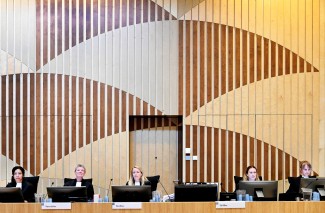
several judges dressed in black gowns sit on a judicial bench.

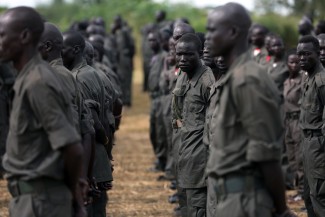
The signing of the Revitalized Agreement on the Resolution of the Conflict in the Republic of South Sudan on September 12, 2018, has been lauded as the best opportunity for peace in the country. However, the continued delays in implementing it, including the establishment of stipulated transitional justice mechanisms, have raised growing concerns within the international community. One essential part of the agreement that has not been executed is the consolidation of the military and the opposition and rebel forces into one army.

ICTJ calls on the Prime Minister of the Solomon Islands to make the report of the Solomon Islands Truth and Reconciliation Commission public without delay. Almost one year since the TRC handed its final report to the prime minister, it has still not been publicly released, contrary to the law that established the commission.

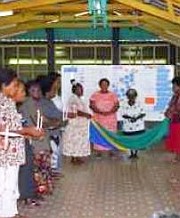
HONIARA, Oct. 30, 2011—Today women from Solomon Islands will come together to present their submission to the Solomon Islands Truth and Reconciliation Commission (TRC). More than 60 women from different regions of the country have collaborated in recording their experiences and sharing their vision for the future in this document.

Women played a crucially important role in brokering peace in Solomon Islands but they still face significant barriers to inclusion in transitional justice initiatives. ICTJ has been working closely with women groups to facilitate their formal contribution to the Truth and Reconciliation Commission (TRC).

Since the Solomon Islands period of unrest, known as the tensions, between 1998 and 2003 a number positive steps have been taken through the creation of several transitional justice initiatives. These have included prosecutions for crimes committed during this period, traditional reco...

FOCUS: The Solomon Islands Truth and Reconciliation Commission. The Solomon Islands experienced a period of extreme unrest, known as the tensions, between 1998 and 2003. Since then, a number of positive steps have been taken to move toward a more stable democracy, including the establ...