

102 results

The new ICTJ report, An Uncertain Homecoming: Views of Syrian Refugees in Jordan on Return, Justice, and Coexistence, presents findings from a study based on interviews with 121 Syrian refugees living in Jordan. It documents the views, expectations, and priorities of these men, women, and children on the prospects of returning home and on future coexistence and justice in Syria.

This report presents findings from a study based on interviews with 121 Syrian refugees living in Jordan. It aims to provide a better understanding of the impact the conflict in Syria has had on refugees, including the harms and losses they have suffered; their expectations, concerns,...

From February 22 to March 1, ICTJ held its annual retreat in Litchfield Hills, Connecticut. Staff members convened at the Wisdom House—an interfaith conference center that seeks to provide an environment conducive to introspection and teambuilding.

On January 15, 2019, victims of the 2010-2011 post-election violence in Côte d'Ivoire were shocked, yet again, to learn that the Trial Chamber I of the International Criminal Court in The Hague had acquitted former President Laurent Gbagbo and the former Youth Minister Charles Blé Goudé of crimes against humanity allegedly committed during the crisis.

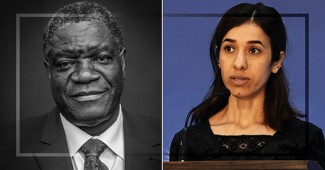
Recent recognition of the work of Nobel Laureate Nadia Murad has drawn global attention to the issue of sexual violence and gender-based violence in conflict. But, as ICTJ Expert Kelli Muddell argues, the nuances of gender norms and how they impact women, men, and vulnerable populations are still often missing from conversations about victims.

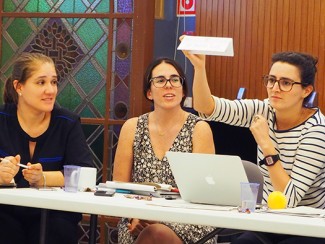
From October 1 to October 5, 2018, ICTJ hosted its eleventh intensive course on transitional justice in collaboration with the International Peace Center for in Barcelona. Participants included leaders in their respective fields, including human rights law, community justice and legal services, peacebuilding, education, and humanitarian affairs.

Diala Brisly and Hani Abbas, two cartoonists and contemporaries, know firsthand the power of images to document conflict, and of cartoons —consumed by children and adults alike —to promote action.

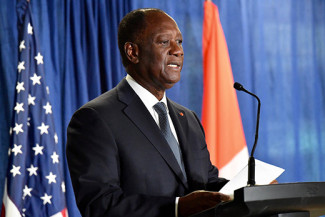
On the eve of Côte d'Ivoire’s 58th independence anniversary, in a dubious attempt at “social cohesion,” President Alassane Ouattara granted amnesty to 800 persons accused or convicted of crimes against the state during the post-election crisis of 2010-2011. Former First Lady Simone Gbagbo — who had been tried for undermining state security — and other high-ranking officials associated with former President Laurent Gbagbo’s party, the Ivorian Popular Front (FPI), were among those released. The lapses in accountability and acknowledgment in Cote d’Ivoire have emboldened perpetrators and made it impossible for many victims to move on with their lives. The challenges of transitional justice processes present clear obstacles to the sustainable peace that the people of Cote d’Ivoire have been working toward.

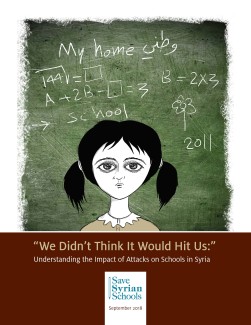
This report examines attacks on schools in Syria from multiple angles: from the legal implications of such attacks to the everyday impact on students, teachers, families, and society at large. It is the product of Save Syrian Schools, a collaborative project led by...

A new report on attacks on schools in Syria harnesses documentation to call attention to atrocities and advance storytelling, truth seeking, acknowledgment. It is the product of Save Syrian Schools, a collaborative project led by 10 Syrian civil society organizations and the ICTJ that demands an end to the killing of Syrian children and justice for the bombing of schools.